JD Vance: AI must not replace human judgment in warfare
Synopsis
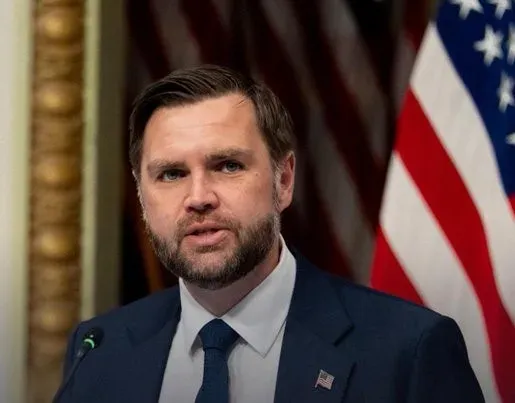
At the US Air Force Academy, Vice President JD Vance drew a moral red line: AI can reshape the battlefield, but humans must retain the final say over life and death. Invoking Pope Leo XIV and warning that adversaries are 'studying' America's new officers, Vance made the case that conscience — not code — must govern the future of warfare.
Key Takeaways
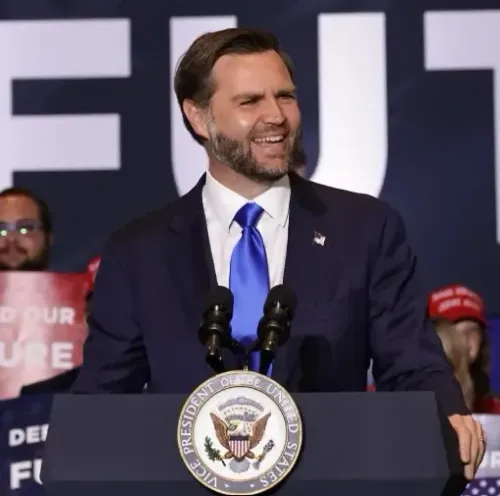
VP JD Vance addressed the US Air Force Academy Class of 2026 in Colorado Springs on 29 May 2025 .
Vance warned that decisions over life and death in warfare must remain with humans, not AI systems.
He cited Pope Leo XIV 's recent document cautioning against outsourcing moral decisions to digital technology.
The VP flagged autonomous systems, AI, and cyber operations as defining features of the future battlefield.
Vance highlighted US modernisation investments including the F-47 fighter and the Golden Dome missile defence programme.
He warned that adversaries are actively studying US military doctrine, industrial capacity, and political divisions.
US Vice President JD Vance on 29 May 2025 delivered a pointed warning about the risks of ceding battlefield decision-making to artificial intelligence, telling graduating officers at the US Air Force Academy in Colorado Springs that decisions over life and death must remain in human hands — not machines. The address to the Class of 2026 came as militaries worldwide are rapidly integrating AI into targeting, surveillance, and battlefield decision-support systems.
The Core Warning
Vance was direct about his primary concern. 'The thing I worry about most with AI is how it will change warfare,' he told the assembled cadets. He argued that while AI would inevitably become a larger part of military operations, technology must support — not supplant — human judgment.
'If the warfare of the future is to live up to the moral values of our ancestors, decisions over life and death must be made by humans and not machines,' he said. He urged the new officers to remain 'jealous and selfish' about their responsibilities as military leaders, adding: 'Use technology to make you better, but never submit to it.'
A Moral, Not Just Technological, Challenge
Vance framed the issue in explicitly ethical terms, invoking a recent document by Pope Leo XIV, who reportedly encouraged people not to outsource their most important moral decisions to digital technology. The Vice President said the challenge facing the new generation of officers was fundamentally one of conscience, not capability.
'You are the masters of warfare and both your minds, but also your hearts are the opposite of artificial,' he told the graduating class. This is notably one of the most senior US officials to publicly anchor AI-in-warfare concerns in moral philosophy rather than operational risk alone.
Geopolitical Stakes and Adversary Awareness
Vance warned the graduating officers that they were entering service during a period of acute geopolitical uncertainty and rapidly evolving military technology. 'You are graduating into one of those eras where that reality, that unpredictability of warfare, is becoming impossible to ignore,' he said.
He cautioned that adversaries were closely monitoring the United States — its military doctrine, industrial capacity, political divisions, and even the officers themselves. 'Our adversaries are studying this country every day… and new graduates they are studying you,' he said. The remarks reflect a broader US concern about strategic competition, particularly with China and Russia, both of which are investing heavily in autonomous and AI-driven military systems.
Modernisation Programmes and Military Investment
The Vice President also highlighted ongoing US military modernisation efforts, citing the F-47 next-generation fighter aircraft and the Golden Dome missile defence initiative as examples of the administration's commitment to maintaining technological superiority. He praised American airmen and Space Force guardians, arguing that US military power continued to redefine what was operationally possible.
'When the President needs options, it's our Air Force and our Space Force who provide them, redefining what is possible mission after mission through sheer human daring,' he said.
Broader Context
The speech arrives at a critical inflection point in global defence policy. Autonomous weapons and AI-assisted targeting have moved from theoretical debate to active deployment in multiple conflict theatres. International discussions on 'lethal autonomous weapons systems' (LAWS) remain unresolved at the United Nations level, with no binding treaty in place. Vance's remarks signal that the US, while investing heavily in AI-enabled defence, intends to keep human accountability at the centre of its military doctrine — at least in public posture. Whether that principle holds under battlefield pressure remains an open question.
Point of View
Anchored in papal teaching, is an unusual rhetorical choice for a US Vice President, and it signals an awareness that public trust in autonomous weapons is fragile. The harder question Vance did not answer is how 'human control' is defined when AI-assisted targeting operates at machine speed in a contested environment. A doctrine that sounds principled in a graduation speech needs to be enforceable in a kill chain.
NationPress
13 Oct 2026
Frequently Asked Questions
What did JD Vance say about AI and warfare at the Air Force Academy?
Vice President JD Vance told the US Air Force Academy Class of 2026 on 29 May that while AI will transform warfare, decisions over life and death must be made by humans, not machines. He urged the graduating officers never to surrender moral judgment to technology.
Why did Vance reference Pope Leo XIV in a military speech?
Vance cited a recent document by Pope Leo XIV that encouraged people not to outsource their most important moral decisions to digital technology, using it to reinforce his argument that the AI challenge in warfare is fundamentally ethical, not just operational.
What US military programmes did Vance highlight in his speech?
Vance referenced the F-47 next-generation fighter aircraft and the Golden Dome missile defence initiative as evidence of the administration's commitment to military modernisation and technological superiority.
Why does AI in warfare matter right now?
Militaries worldwide are actively integrating AI into intelligence gathering, surveillance, targeting, and battlefield decision-support systems. There is currently no binding international treaty governing lethal autonomous weapons, making policy statements like Vance's significant in shaping doctrine.
What did Vance say about adversaries watching the United States?
Vance warned the graduating cadets that adversaries are studying US military doctrine, industrial capacity, political divisions, and even the new officers themselves every day, underscoring the strategic stakes of the current geopolitical environment.