US Army warns drones and AI will dominate future wars, cites Ukraine lessons
Synopsis
The US Army's top officials told Congress on 16 May that drones have already rewritten the rules of war — and that America's industrial base is not yet ready to match the scale Ukraine and Russia have achieved. With 'Operation Jailbreak' running at Fort Carson and AI-assisted command systems in development, the Army is racing to close a gap it has publicly acknowledged for the first time at this level.
Key Takeaways
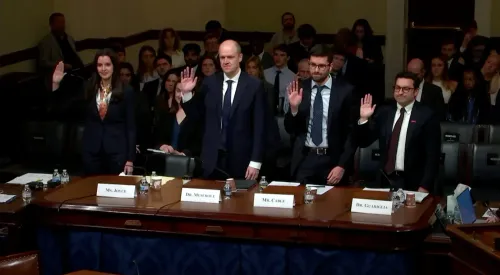
US Army Secretary Daniel Driscoll testified before the House Armed Services Committee on 16 May , warning that drones are reshaping warfare 'at a pace never witnessed in human history.' General Christopher LaNeve said lessons from Ukraine and Operation Enduring Freedom are being fast-tracked into Army training and doctrine.
The Army's 'Operation Jailbreak' initiative at Fort Carson, Colorado aims to break down software barriers preventing military systems from sharing battlefield data.
Driscoll warned that countering drone swarms will require AI-assisted decision-making , as human operators alone cannot react fast enough.
Ukraine and Russia are each producing approximately 5 million drones annually; the US strategy focuses on building rapid-scale industrial capacity rather than peacetime stockpiling.
Representative Eugene Vindman flagged that funding for small unmanned aircraft systems had declined year-on-year, raising questions about budget-rhetoric alignment.
The US Army has told Congress that drones, artificial intelligence, and autonomous systems are fundamentally transforming modern warfare, with senior military leaders drawing on battlefield lessons from Ukraine and warning that future conflicts will be shaped by low-cost, scalable unmanned technologies. The testimony came during a 16 May hearing before the House Armed Services Committee focused on the Army's fiscal year 2027 budget request.
What Army Leaders Told Congress
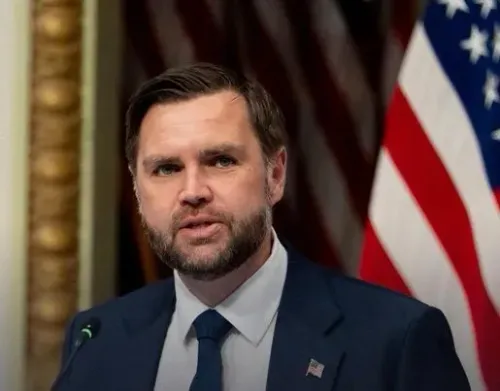
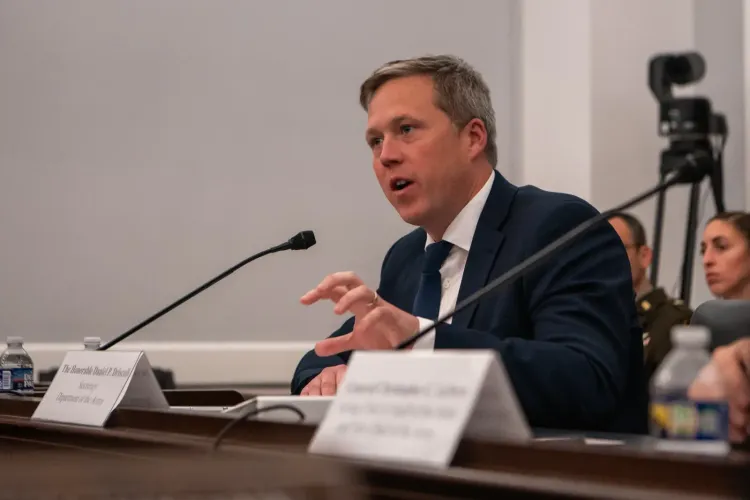
US Army Secretary Daniel Driscoll told lawmakers that the character of war was changing at unprecedented speed, and that militaries failing to adapt risk being left behind. 'Drones are reshaping how humans will inflict violence on each other at a pace never witnessed in human history,' Driscoll said. 'They are cheap, modular, precise, multi-role, and scalable.'
General Christopher LaNeve added that the Army was rapidly updating training and operational doctrine based on combat experiences from both Ukraine and the Middle East. 'We're taking a lot of lessons learned from both Ukraine and OEF,' LaNeve said, referring to Operation Enduring Freedom. 'It's moving at a much faster rate into our schoolhouse and into our doctrine.'
Operation Jailbreak and the Interoperability Push
Army leaders have launched a major integration effort called 'Operation Jailbreak', currently underway at Fort Carson, Colorado, where defence contractors and Army engineers are working to dismantle software barriers that prevent military systems from sharing battlefield data seamlessly. Driscoll described existing US military platforms as isolated 'walled gardens' that restrict interoperability.
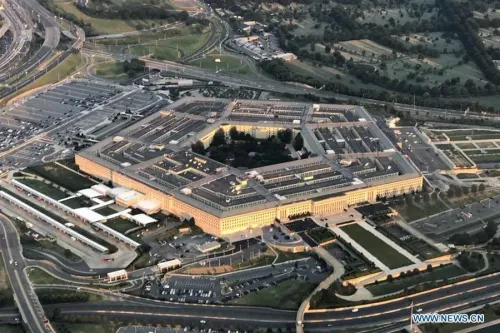
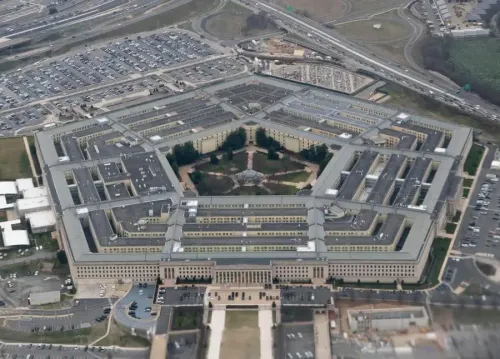
'Every single system that creates a piece of data should be able to share that data anywhere we, the United States Army, need it to go,' he said. The initiative reflects a broader Pentagon push to prepare for potential conflicts in the Indo-Pacific, where networked, AI-assisted operations are considered critical.
AI-Assisted Decision-Making Against Drone Swarms
Driscoll warned that countering modern drone threats — including drone swarms and electronic attacks — would require AI-assisted battlefield decision-making, because human operators alone cannot react fast enough. 'When you're thinking of drone swarms and the threats to react, a human being cannot do that alone,' he said.
This comes amid growing recognition across NATO militaries that the Ukraine conflict has accelerated the timeline for autonomous systems integration by years, if not decades. The sheer volume and variety of drone use in that theatre — from surveillance to mass strike operations — has rewritten assumptions about force ratios and logistics.
Budget Questions and the Industrial Ecosystem Argument
Lawmakers from both parties questioned whether the Army's proposed drone procurement budget matched its stated ambitions. Representative Eugene Vindman noted that funding for small unmanned aircraft systems had actually declined compared to previous years — a pointed contrast with the hearing's rhetoric on drone dominance.
Driscoll defended the approach, arguing that the Army's strategy was not to stockpile millions of drones in peacetime, but to build an industrial base capable of rapidly scaling production when conflict demands it. 'What Ukraine is producing, I think it's about 5 million drones. Russia is about the same,' he said. 'We are not going to be at a place where we need to manufacture as a nation 5 million drones until we're in conflict, but we need to be able to get there really quickly.'
What This Signals for Future US Military Strategy
The hearing underscores a significant doctrinal shift within the US Army — away from platform-centric warfare toward networked, software-defined, and AI-augmented operations. Notably, this is among the most direct public acknowledgements by senior Army officials that current procurement structures may not be keeping pace with the speed of technological change on the modern battlefield. How Congress responds to the budget request will be a key indicator of whether institutional priorities are shifting as fast as the rhetoric suggests.
Point of View
Not just engineering. Meanwhile, the budget numbers do not yet match the urgency of the words — small drone funding reportedly fell even as leaders invoked Ukraine's 5-million-drone production lines. Congress will need to decide whether this hearing marks a genuine doctrinal inflection point or another cycle of testimony that outruns appropriations.
NationPress
28 Sept 2026
Frequently Asked Questions
What did the US Army tell Congress about drones and future warfare?
US Army Secretary Daniel Driscoll told the House Armed Services Committee on 16 May that drones are reshaping warfare 'at a pace never witnessed in human history,' describing them as cheap, modular, precise, and scalable. He warned that militaries failing to adapt to autonomous systems and AI risk being left behind in future conflicts.
What is 'Operation Jailbreak' and why does it matter?
'Operation Jailbreak' is a US Army integration initiative underway at Fort Carson, Colorado, aimed at breaking down software barriers that prevent military systems from sharing battlefield data. Army leaders described existing platforms as isolated 'walled gardens,' and the effort is central to building the networked, AI-assisted command structure the Army says future warfare demands.
How are Ukraine war lessons shaping US Army doctrine?
General Christopher LaNeve testified that lessons from Ukraine and Operation Enduring Freedom are being fast-tracked into Army training and doctrine at an accelerated pace. The Ukraine conflict has highlighted the battlefield impact of cheap surveillance drones, mass drone strikes, and electronic warfare, prompting the Army to revise operational assumptions.
Why did lawmakers question the Army's drone budget?
Representative Eugene Vindman noted that funding for small unmanned aircraft systems had declined compared to previous years, creating a visible gap between the Army's rhetoric on drone dominance and its actual procurement allocations. Driscoll defended the strategy as focused on building industrial scale-up capacity rather than peacetime stockpiling.
How many drones are Ukraine and Russia producing, and how does the US compare?
According to Driscoll's testimony, both Ukraine and Russia are producing approximately 5 million drones annually. The US Army's position is that it does not need to match that output in peacetime, but must be capable of rapidly scaling to similar levels once conflict begins — a capacity-building rather than stockpiling approach.