Smriti Irani pays tribute on Partition Horrors Remembrance Day
Synopsis
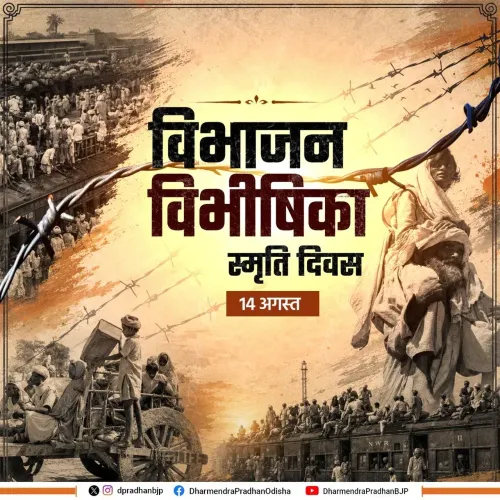
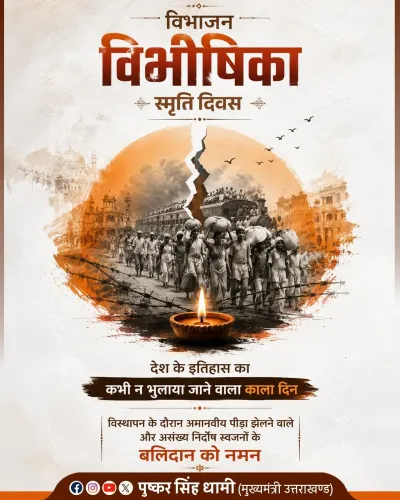
BJP leader Smriti Irani marked Partition Horrors Remembrance Day on 14 August 2026 with a solemn tribute to the millions who lost their lives or were displaced in the violence of India's 1947 Partition, observing the day first notified by the central government in 2021.
Key Takeaways
BJP leader Smriti Irani posted a solemn tribute on 14 August 2026 for Partition Horrors Remembrance Day.
She offered condolences to all innocent citizens who lost their lives or endured inhumanity during the 1947 Partition of India .
Partition Horrors Remembrance Day was officially notified by the central government in 2021 and is observed every year on 14 August .
The 1947 Partition triggered one of the largest forced migrations in history, with widespread communal violence and the displacement of millions of families.
Annual observances by senior BJP leaders on this day form a consistent pattern of official remembrance of the partition's human cost.
Every year, 14 August arrives carrying a wound that history cannot close. BJP leader Smriti Irani, former Union Minister of Women & Child Development, marked Partition Horrors Remembrance Day on Friday, 14 August 2026 with a solemn tribute to the millions uprooted and killed in the violence that accompanied the 1947 Partition of India.
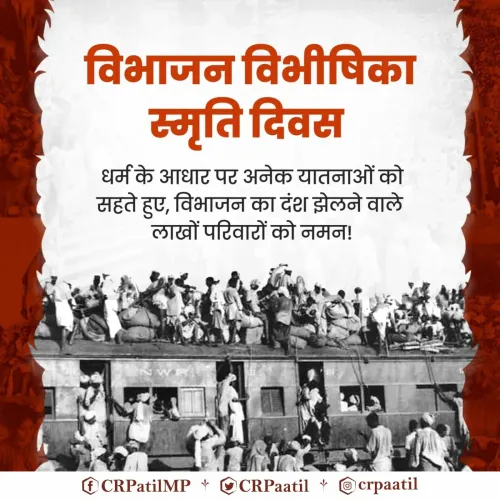
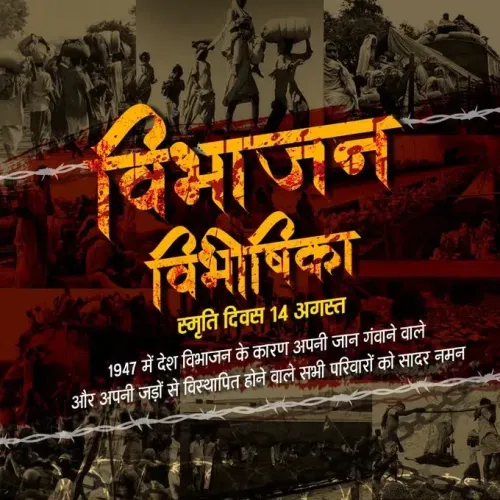
In her post, Irani wrote: 'प्रति वर्ष 14 अगस्त का दिन राष्ट्रीय इतिहास में एक ऐसी पीड़ा की स्मृति लेकर आता है, जो समय के लिए भी अविस्मरणीय है' — 'Every year, 14 August brings with it the memory of a pain in national history that even time cannot forget.' She offered her 'humble tribute to all innocent citizens who lost their lives or endured inhumanity in the tragedy of Partition,' and expressed 'deep sympathy for every family that bore the anguish of displacement and the loss of loved ones.'
The day India was divided — and what it cost
The Partition of British India in August 1947 cleaved the subcontinent along religious and political lines into the independent nations of India and Pakistan. What followed was one of the largest forced migrations in recorded history — entire communities uprooted overnight, families separated across newly drawn borders, and widespread communal violence that claimed hundreds of thousands of lives. The human cost was staggering, and for decades it remained largely unacknowledged in formal national memory.
How 14 August became a day of official remembrance
That changed in 2021, when the central government notified 14 August as Partition Horrors Remembrance Day — a formal, annual observance to honour victims of partition-related violence and displacement. The date was chosen deliberately: it is the eve of India's Independence Day, a juxtaposition that holds both the grief of division and the promise of freedom in the same breath.
Senior BJP leaders have since marked the day consistently each year, making it a fixture in the party's calendar of national commemorative observances. Irani's post follows that pattern — restrained, personal in register, and rooted in the human scale of the tragedy rather than its political dimensions.
Seventy-nine years on, the wounds of Partition still live in family memory across the subcontinent. As long as those families remain, 14 August will carry two stories at once — the birth of a nation, and the price it paid.
Point of View
Anchored to a government-notified observance introduced in 2021. For the BJP, marking 14 August as a day of sorrow rather than celebration reframes the eve of Independence Day around historical trauma and communal loss. The consistency of senior leaders' statements each year signals institutional commitment to the observance, not just personal sentiment. Over time, this shapes how a new generation understands the human cost embedded in the founding moment of the Indian republic.
NationPress
14 Aug 2026
Frequently Asked Questions
What is Partition Horrors Remembrance Day?
Partition Horrors Remembrance Day is an annual observance on 14 August , notified by the Government of India in 2021 , to honour the victims of violence and displacement caused by the 1947 Partition of British India into India and Pakistan.
Why is Partition Horrors Remembrance Day observed on 14 August?
14 August was chosen because it is the eve of India's Independence Day, placing the grief of Partition alongside the founding of the nation — acknowledging both the freedom gained and the immense human cost paid.
What did Smriti Irani say on Partition Horrors Remembrance Day 2026?
Smriti Irani offered a humble tribute to all innocent citizens who lost their lives or endured inhumanity during the 1947 Partition, and expressed deep sympathy for every family that suffered displacement and the loss of loved ones.
When was Partition Horrors Remembrance Day declared in India?
The central government officially notified 14 August as Partition Horrors Remembrance Day in 2021 .
How many people were affected by the 1947 Partition of India?
The 1947 Partition triggered one of the largest forced migrations in recorded history, uprooting millions of families across the newly drawn borders of India and Pakistan and resulting in widespread communal violence with hundreds of thousands of lives lost.