Assam CM Office Courts JETRO on Semiconductors, Tea and Japan Ties

Synopsis
The Chief Minister's Office of Assam announced on 14 August 2026 that the Chief Secretary met a JETRO delegation, as directed by CM Himanta Biswa Sarma, to explore Japanese investment in semiconductors, renewables, defence, and Assam's tea sector, including a possible State-to-State agreement with Shizuoka Prefecture.
Key Takeaways
The Chief Secretary of Assam met a JETRO delegation on 14 August 2026 at the direction of CM Dr.
Himanta Biswa Sarma .
Sectors discussed include semiconductors, electronics manufacturing, renewable energy, compressed biogas, logistics , and defence and aerospace .
Talks also covered Assam's tea and specialty tea ecosystem , including Matcha , and deeper linkages with Japanese tea culture.
A formal State-to-State cooperation agreement with Shizuoka Prefecture — Japan's premier tea and manufacturing region — was proposed.
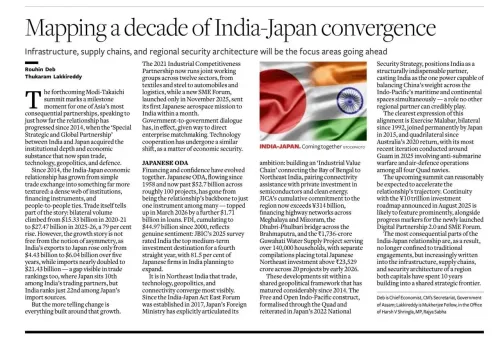
The outreach aligns with India's Act East Policy and builds on the India-Japan Comprehensive Economic Partnership Agreement of 2011 .
JETRO , Japan's official trade promotion agency, is the counterpart, signalling structured government-backed engagement rather than informal interest.
Northeast India's most ambitious state is reaching east — far east. On Friday, 14 August 2026, the Chief Minister's Office of Assam announced that Chief Secretary of Assam met a delegation from the Japan External Trade Organization (JETRO), acting on the direct directive of Chief Minister Dr. Himanta Biswa Sarma, to map out a new chapter in Assam-Japan economic relations.
Semiconductors, Biogas and Defence: The New Assam Pitch
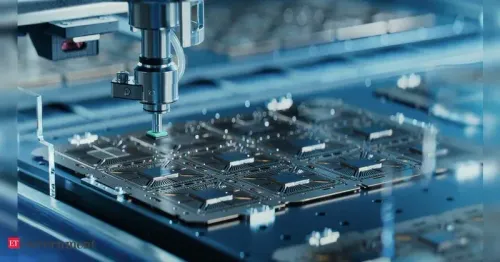
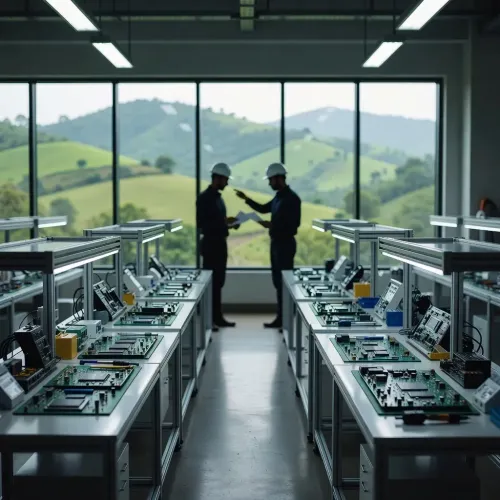
The meeting was no courtesy call. Discussions ranged across semiconductors and electronics manufacturing, renewable energy, compressed biogas, logistics, and defence and aerospace — a portfolio that signals Assam's deliberate push to shed its image as a single-commodity economy. The state has long been defined by tea and oil; the sectors now on the table represent a calculated leap toward higher-value industrial anchors that Japan is globally positioned to supply.
JETRO, the Japanese government's primary agency for promoting overseas trade and investment, brings both credibility and capital access to the table. Its involvement signals that this outreach has moved beyond diplomatic pleasantry into structured economic exploration.
Matcha, Assam Tea and a Shizuoka Connection
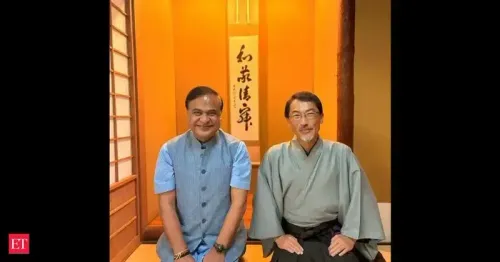
The most evocative thread in the talks may be the tea dimension. Shizuoka Prefecture — Japan's storied tea heartland and a hub of advanced manufacturing — emerged as a candidate for a formal State-to-State cooperation agreement with Assam. The symmetry is striking: two regions whose identities are inseparable from tea, now exploring whether that shared heritage can anchor a modern economic partnership that includes Matcha and specialty tea ecosystems alongside industrial collaboration.
Subnational agreements of this kind have become a quiet but potent tool in India's economic diplomacy. States bypass the slower rhythms of central-government negotiations to lock in direct technology transfers, investment pipelines and trade facilitation frameworks with foreign counterparts.
Act East, Invest Northeast
The outreach fits squarely within India's Act East Policy, which has long identified the Northeast as the natural gateway for deeper economic integration with Southeast and East Asia. The India-Japan Comprehensive Economic Partnership Agreement, signed in 2011, laid the legal scaffolding; what Assam is now building is the operational architecture on top of it — sector by sector, prefecture by prefecture.
Dr. Sarma's administration has consistently pursued targeted foreign partnerships to accelerate diversification. A formalised Shizuoka agreement, if it materialises, would be the most concrete subnational expression of that strategy yet — and a template other Northeastern states will watch closely.
The next test is whether exploratory discussions translate into signed frameworks. Japanese capital moves methodically, but it moves. Assam has put its best sectors on the table; the question now is which ones Tokyo decides to back.
Point of View
A model that could prove replicable across the Northeast. For the Himanta Biswa Sarma administration, tangible outcomes — a signed cooperation agreement, a semiconductor anchor investor — will determine whether this round of engagement becomes policy legacy or another round of exploratory talks. The broader pattern suggests Indian states that move fastest on subnational frameworks capture Japanese capital before it routes to Vietnam or Bangladesh.
NationPress
14 Aug 2026
Frequently Asked Questions
What did Assam discuss with JETRO in August 2026?
The Chief Secretary of Assam met a JETRO delegation to explore Japanese investment in semiconductors, electronics manufacturing, renewable energy, compressed biogas, logistics, defence and aerospace, and Assam's tea and specialty tea sector, including Matcha.
What is JETRO and why does it matter for Assam?
JETRO, the Japan External Trade Organization, is the Japanese government's official agency for promoting trade and investment abroad. Its direct engagement with Assam signals government-backed Japanese interest rather than informal business inquiries.
What is the proposed Shizuoka-Assam cooperation agreement?
Officials discussed the possibility of a formal State-to-State cooperation agreement between Assam and Shizuoka Prefecture, Japan's leading tea-growing and advanced manufacturing region, to facilitate investment, technology transfer and trade linkages.
How does this fit India's Act East Policy?
India's Act East Policy positions the Northeast as the primary corridor for economic integration with East and Southeast Asia. Assam's JETRO outreach is a direct expression of that policy, building on the India-Japan Comprehensive Economic Partnership Agreement signed in 2011.
Which sectors is Assam targeting for Japanese investment?
Assam is targeting semiconductors and electronics manufacturing, renewable energy, compressed biogas, logistics, defence and aerospace, and its established tea sector — including specialty teas and Matcha — for Japanese investment and technology partnerships.