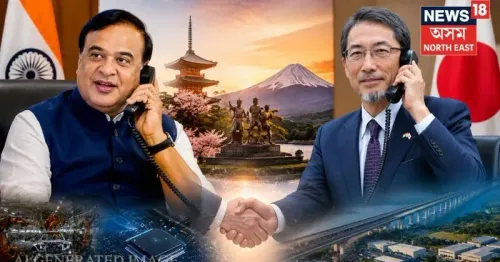
Assam CM Office eyes Japan ties in chips, clean energy

Synopsis
The Chief Minister's Office of Assam on 7 July 2026 flagged ambitions to deepen Japan ties in semiconductors and clean energy after the India-Japan Summit, leveraging the Act East Policy and India's Semiconductor Mission to attract high-value Japanese investment into the northeastern state.
Key Takeaways
The Chief Minister's Office of Assam publicly signalled intent to pursue Japan partnerships in semiconductors and clean energy on 7 July 2026 .
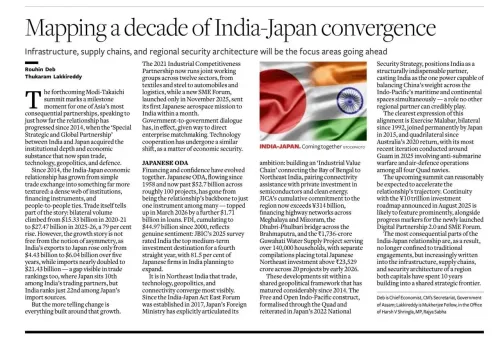
The push follows the latest India-Japan Summit , which reaffirmed the bilateral Strategic and Global Partnership established in 2005 .
India's India Semiconductor Mission (launched 2021 ) and the Act East Policy (launched 2014 ) form the policy backbone for this outreach.
The India-Japan Comprehensive Economic Partnership Agreement of 2011 provides an existing trade framework for state-level investment deals.
Successful deals could make Assam a template for other northeastern states seeking to enter global technology supply chains.
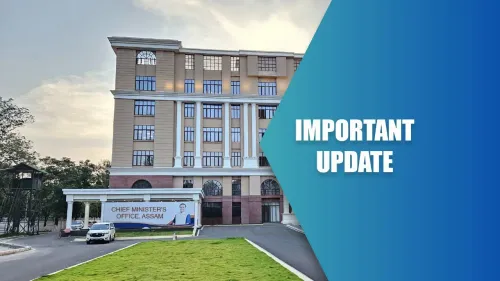
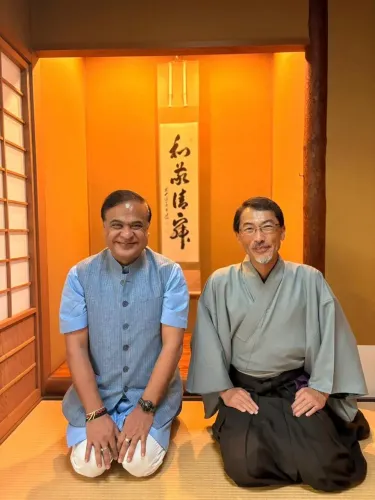
The Chief Minister's Office of Assam signalled on Tuesday, 7 July 2026 that the northeastern state is actively pursuing deeper cooperation with Japan in semiconductors and clean energy, riding momentum from the latest India-Japan Summit. The post, shared from the official CMO Assam account, pointed to bilateral opportunities that could reshape the state's industrial trajectory.
Context
The CMO's outreach follows the most recent India-Japan Summit, where both nations reaffirmed their Strategic and Global Partnership — a framework institutionalised since 2005 that covers technology transfer, infrastructure, and energy cooperation. Assam, as a northeastern state, sits at the intersection of India's Act East Policy and the broader push to attract high-value foreign investment into sectors beyond traditional industries.
Japan has been a consistent partner in India's northeast, backing earlier projects in roads, rail, and power generation. The latest CMO signal suggests the state government now wants to move up the value chain — from infrastructure to advanced technology sectors such as chip design and green energy.
Policy Backdrop
India's India Semiconductor Mission, launched in 2021, was designed precisely to build domestic chip design and manufacturing capacity through global partnerships, including with Japanese firms. The India-Japan Comprehensive Economic Partnership Agreement of 2011 provides a standing trade-and-investment framework that state governments can leverage to attract Japanese capital.
India has simultaneously deepened semiconductor supply-chain ties with the United States and Taiwan, positioning itself as a credible alternative hub in Asia. Northeastern states, including Assam, have been explicitly included in this diversification strategy under the Act East framework, which treats the region as a gateway rather than a periphery.
Stakeholders and Impact
The primary stakeholders are the Assam state government, prospective Japanese semiconductor and clean-energy investors, and the broader industrial workforce in the northeast. Successful investment flows could accelerate job creation in high-skill manufacturing and engineering, sectors where Assam currently has limited presence.
For Japanese firms, Assam offers proximity to Southeast Asian markets, improving supply-chain logistics under India's production-linked incentive schemes. India's net-zero commitments also create a policy environment that explicitly invites third-country capital into clean energy, making the state's pitch commercially coherent for Japanese clean-tech companies.
What's Next
Observers will watch for follow-up investment memoranda of understanding or state-level delegations to Japan in the coming months. The outcomes of the India-Japan Summit on supply-chain resilience are expected to provide a formal scaffolding for such state-level deals.
If Assam can convert the post-summit diplomatic momentum into signed investment commitments, it could set a template for other northeastern states seeking to plug into global technology supply chains — a development that would mark a significant shift in the region's economic identity.
Point of View
And where New Delhi's policy architecture (the Semiconductor Mission, PLI schemes, net-zero targets) provides credible sovereign backing. The CMO's public signalling immediately after a bilateral summit is a deliberate act of positioning, designed to attract Japanese corporate attention before competing states or countries make their own moves. If Assam can translate this diplomatic window into signed MoUs, it would mark the Act East Policy's most tangible upgrade from infrastructure-only to technology-led engagement. The broader implication is that India's northeast is slowly being reframed — from a connectivity corridor to a prospective high-tech investment destination.
NationPress
5 Oct 2026
Frequently Asked Questions
What did the Assam Chief Minister's Office say about Japan after the India-Japan Summit?
The Chief Minister's Office of Assam signalled on 7 July 2026 that the state is seeking stronger cooperation with Japan specifically in semiconductors and clean energy, capitalising on momentum from the latest India-Japan Summit.
What is India's Act East Policy and how does it relate to Assam?
India's Act East Policy, launched in 2014, prioritises engagement with East and Southeast Asian nations — including Japan — for infrastructure and connectivity projects in India's northeastern states, positioning Assam as a gateway region for such investment.
What is the India Semiconductor Mission?
The India Semiconductor Mission is a central government initiative launched in 2021 to build domestic chip design and manufacturing capacity by partnering with global technology leaders, including from Japan, the US, and Taiwan.
Why is Japan important for Assam's semiconductor and clean energy ambitions?
Japan is a leading global player in semiconductor technology and clean energy, and the India-Japan Strategic and Global Partnership provides an institutional framework for technology transfer and investment that Assam can leverage at the state level.
What could follow from Assam's post-summit Japan outreach?
Analysts expect possible investment memoranda of understanding or state-level delegations to Japan, with outcomes from the India-Japan Summit on supply-chain resilience likely to provide formal backing for such agreements.