CM Himanta Holds Talks With Japan Ambassador on Assam Ties
Synopsis
Assam Chief Minister Himanta Biswa Sarma received a call from Japan's Ambassador ONO Keiichi, who reaffirmed Tokyo's commitment to the state under India's Act East Policy. Both sides agreed to strengthen ties in electronics, semiconductors, infrastructure, manufacturing, and entrepreneurship, with follow-up engagement expected soon.
Key Takeaways
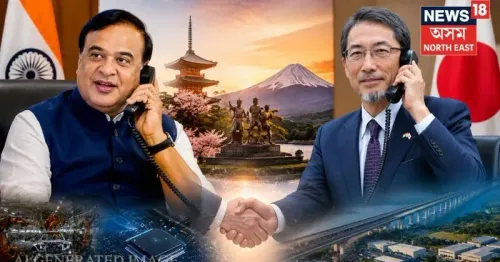
CM Himanta Biswa Sarma received a phone call from Japanese Ambassador ONO Keiichi on the evening of 25 June 2026 .
The Ambassador reaffirmed Japan's commitment to deepen its partnership with Assam under India's Act East Policy .
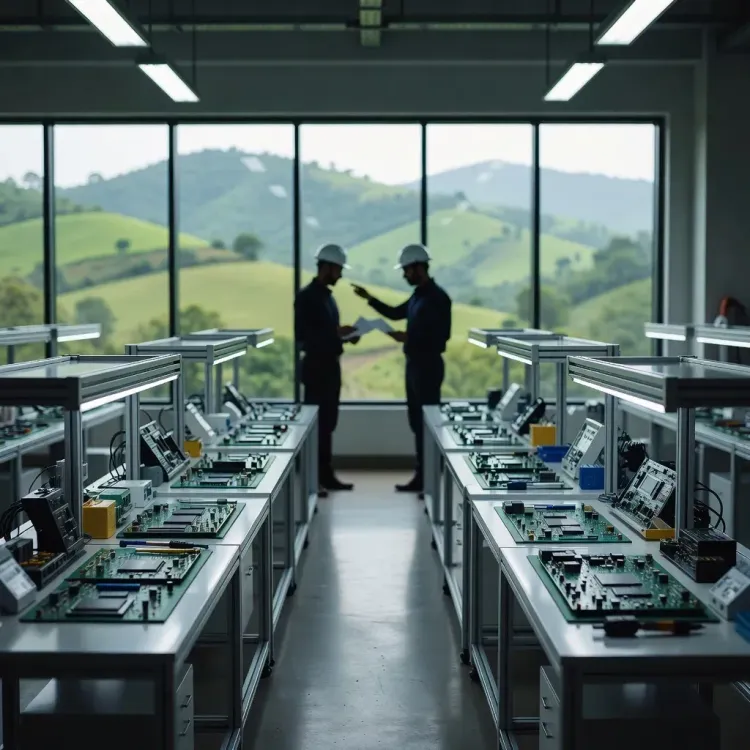
Both sides agreed to strengthen collaboration in electronics, semiconductors, infrastructure, manufacturing, and entrepreneurship .
Assam signalled intent to engage Japanese enterprises and institutions 'in the coming days' to boost investments and economic opportunities.
Japan has been extending official development assistance for connectivity and industrial projects in India's Northeast since the early 2000s .
The engagement aligns with India's broader push to attract Japanese capital beyond traditional industrial corridors in the west and south.
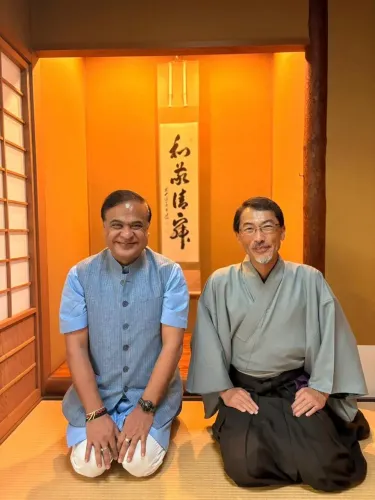
Assam Chief Minister Himanta Biswa Sarma on Friday, 26 June 2026, disclosed that he had received a phone call from H.E. ONO Keiichi, the Ambassador of Japan to India, in which both sides reaffirmed their commitment to deepen bilateral engagement under India's Act East Policy. The conversation centred on expanding collaboration in electronics, semiconductors, infrastructure, manufacturing, and entrepreneurship, with Assam signalling readiness to engage Japanese enterprises and institutions in the near term.
Context
In his post, CM Sarma described the call as productive, noting that Ambassador ONO Keiichi 'reaffirmed the Japanese Government's commitment to deepen its ongoing partnership with Assam.' The Chief Minister added that both sides 'agreed to further strengthen collaboration across key sectors,' and that Assam looks forward to engaging with Japanese enterprises 'to enhance both investments and economic opportunities for our people.' The exchange signals that state-level diplomatic outreach by Assam is gaining traction at the ambassadorial level.
Policy Backdrop
India's Act East Policy, launched in 2014 as an upgrade of the earlier Look East Policy, designates northeastern states as strategic gateways for economic integration with East and Southeast Asia. Japan has been a cornerstone of this framework, having concluded a Comprehensive Economic Partnership Agreement (CEPA) with India in 2011 that expanded trade, investment, and technology flows. Since the early 2000s, Japan has extended official development assistance for connectivity and industrial projects specifically in India's Northeast, making it one of the most active bilateral partners in the region.
The sectors highlighted in the call — electronics and semiconductors — reflect a broader global push for supply-chain diversification away from single-country dependence. Assam's geographic position, bordering Bangladesh, Bhutan, and Arunachal Pradesh, makes it a natural logistics hub for trade corridors linking South Asia with East Asia, a factor that aligns with Japanese industrial strategy.
Stakeholders and Impact
The primary beneficiaries of deeper Japan-Assam ties would be Assamese entrepreneurs and the state's emerging manufacturing sector, which has historically lagged behind western Indian industrial hubs in attracting foreign direct investment. Japanese enterprises entering Assam in electronics and semiconductor assembly could generate skilled employment and technology transfer in a state where youth unemployment remains a policy priority for CM Sarma's administration.
For Japanese investors, Assam offers competitive land costs, improving road and rail connectivity, and government incentives under state industrial policy. The engagement also supports Japan's own strategic interest in building resilient supply chains across South and Southeast Asia, reducing over-reliance on any single manufacturing geography.
What's Next
CM Sarma indicated that follow-up engagement with Japanese enterprises and institutions is expected 'in the coming days,' suggesting business delegations or institutional visits may be in the pipeline. Observers will watch for any formal memoranda of understanding on semiconductor or electronics parks in Assam, which would translate this diplomatic conversation into concrete investment commitments. The call also sets the stage for Assam to feature more prominently in upcoming India-Japan bilateral forums and trade summits.
Point of View
Moving state-level engagement from trade fairs to direct diplomatic dialogue — a shift that reflects CM Sarma's strategy of positioning the Northeast as a credible investment destination rather than a peripheral beneficiary of central schemes. By foregrounding semiconductors and electronics, Assam is inserting itself into one of the most strategically sensitive global supply-chain conversations at a time when both India and Japan are actively seeking to diversify manufacturing geographies. The explicit invocation of Act East Policy also serves a dual purpose: it anchors state ambition within a nationally sanctioned framework, lending institutional legitimacy to what might otherwise appear as routine bilateral pleasantries. Whether this call translates into signed agreements will be the real test of Assam's diplomatic momentum.
NationPress
25 Sept 2026
Frequently Asked Questions
Why did Japan's Ambassador call Assam Chief Minister Himanta Biswa Sarma?
Ambassador ONO Keiichi called CM Himanta Biswa Sarma to reaffirm Japan's commitment to deepening its partnership with Assam under India's Act East Policy and to discuss expanding collaboration in electronics, semiconductors, infrastructure, manufacturing, and entrepreneurship.
What is India's Act East Policy and how does it relate to Assam?
India's Act East Policy , launched in 2014 , upgraded the earlier Look East Policy to deepen economic and strategic integration with East and Southeast Asia. It designates northeastern states like Assam as gateways for trade and investment corridors linking South Asia with East Asia.
What sectors did Assam and Japan agree to collaborate on?
Both sides agreed to strengthen collaboration in electronics, semiconductors, infrastructure, manufacturing, and entrepreneurship , reflecting global trends in supply-chain diversification and technology transfer.
Has Japan previously invested in India's Northeast?
Yes. Japan has extended official development assistance for connectivity and industrial projects in India's Northeast since the early 2000s , making it one of the most active bilateral partners in the region.
What can we expect next from Assam-Japan engagement?
CM Sarma indicated that Assam would engage with Japanese enterprises and institutions 'in the coming days.' Observers are watching for business delegations and potential memoranda of understanding on semiconductor or electronics parks in the state.