Owaisi: UCC Uniformity Is Not Equality, Threatens Pluralism
Synopsis
AIMIM president Asaduddin Owaisi, writing in a national magazine on 14 August 2026, argues that 'uniformity' in the UCC debate masks majoritarian imposition, and that true equality must preserve India's pluralism — not erase it.
Key Takeaways
AIMIM president Asaduddin Owaisi published an article on 14 August 2026 opposing the Uniform Civil Code.
Owaisi argues 'uniformity' and 'equality' are distinct — uniformity has historically meant imposing the dominant community's norms.
Article 44 of the Indian Constitution directs the State to endeavour to secure a UCC but does not mandate a timeline.
Uttarakhand became the first state to pass a UCC bill in 2024 , with other BJP-ruled states signalling similar legislation.
The 21st Law Commission (2018) examined UCC conflicts with personal laws but did not recommend immediate legislation.
AIMIM has consistently opposed any central or state-level UCC that overrides Muslim personal law.
On the eve of Independence Day, AIMIM president Asaduddin Owaisi drew a sharp line between two words that often get used interchangeably in India's most charged civil-law debate: 'uniformity' and 'equality.' Writing in a national magazine, the Hyderabad MP argued that conflating the two is not just a semantic error — it is a political one with consequences for every minority community in the country.
Owaisi's post, shared on Friday, 14 August 2026, distilled his argument to a single pointed claim: 'Uniformity has often meant the imposition of the dominant community's attitudes.' Equality, he insisted, cannot come at the cost of India's pluralism — a word he placed at the centre of the debate over the Uniform Civil Code (UCC).
The Constitutional Fault Line Behind the Debate
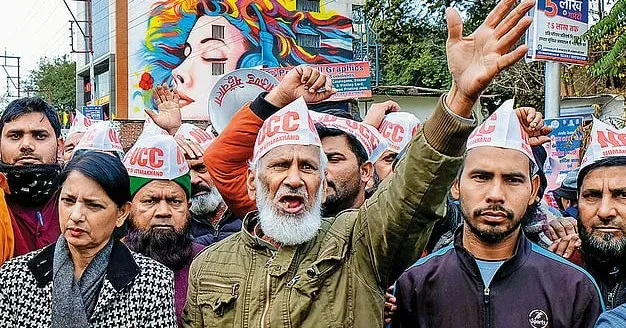
Article 44 of the Indian Constitution, a Directive Principle of State Policy since 1950, instructs the State to 'endeavour to secure' a Uniform Civil Code for all citizens. The provision has sat largely dormant for decades, surfacing periodically as a political flashpoint. Supporters frame the UCC as a tool for gender justice and national integration — a single, religion-neutral framework for marriage, divorce, inheritance, and adoption. Opponents, including Owaisi and AIMIM, argue it would effectively erase the legal distinctiveness of minority communities.
The 21st Law Commission of India examined the question in a 2018 consultation paper, acknowledging tensions between personal laws and gender equality but stopping short of recommending immediate legislation. The debate has since accelerated: Uttarakhand became the first state to pass a UCC bill in 2024, with several other BJP-governed states signalling similar moves.
Owaisi's Core Argument: Sameness Is Not Justice
The AIMIM chief's intervention is not new in direction, but the framing is deliberate. By separating 'uniformity' from 'equality,' he is pushing back against the most persuasive pro-UCC argument — that a single code is inherently fairer. His counter: a code built around the norms of the majority is not neutral, it is majoritarian. A country of over 1.3 billion people, he argued in his article, cannot be forced into sameness.
This is consistent with AIMIM's long-standing parliamentary position: that Muslim personal law — governing marriage, divorce, and inheritance within the community — must be reformed from within, not replaced by legislative fiat from a central government. The party has resisted every UCC proposal at both the state and national level.
What the Timing Signals
Posting this on 14 August — the night before Independence Day — is not incidental. The choice frames pluralism as foundational to the republic itself, not a concession to any one group. It is a reminder that the Constitution's framers consciously left personal laws intact even as they enshrined equality, a tension that has never been cleanly resolved.
With state-level UCC legislation expanding and the possibility of a central bill remaining live, Owaisi's article enters a debate that is moving — not standing still. The question of whether a single civil code advances or undermines constitutional equality is no longer theoretical. It is legislative.
India's pluralism was written into the republic's founding documents. Whether it survives the next round of civil-law reform is the question Owaisi is putting on the table — and no one in Parliament has yet given a definitive answer.
Point of View
He shifts the constitutional burden of proof back onto UCC proponents. The Independence Day timing amplifies the argument, anchoring pluralism in the republic's founding identity rather than in minority grievance. With state-level UCC legislation expanding, AIMIM's consistent opposition is evolving from parliamentary resistance into a broader public-discourse campaign — a sign the party sees the battle moving from legislatures to public opinion.
NationPress
14 Aug 2026
Frequently Asked Questions
What is Asaduddin Owaisi's argument against the UCC?
Owaisi argues that 'uniformity' and 'equality' are not the same thing — uniformity in the UCC context often means imposing the dominant community's norms on minorities, which he says destroys India's pluralism rather than advancing equality.
What is the Uniform Civil Code (UCC) in India?
The UCC is a proposed single set of civil laws — covering marriage, divorce, inheritance, and adoption — that would replace the religion-based personal laws currently governing different communities in India. It is directed by Article 44 of the Constitution as a Directive Principle.
Which state first passed a UCC bill?
Uttarakhand became the first Indian state to pass a UCC bill in 2024, setting a precedent that several other BJP-governed states have signalled they intend to follow.
What has the Law Commission said about the UCC?
The 21st Law Commission released a consultation paper in 2018 examining tensions between personal laws and gender justice but stopped short of recommending immediate UCC legislation.
Why did Owaisi post about the UCC on 14 August?
Owaisi posted his article on the eve of Independence Day, a choice that frames pluralism as foundational to the Indian republic — linking his opposition to the UCC to the country's founding constitutional identity.