Can India Lead the World in Responsible AI Development?
Synopsis
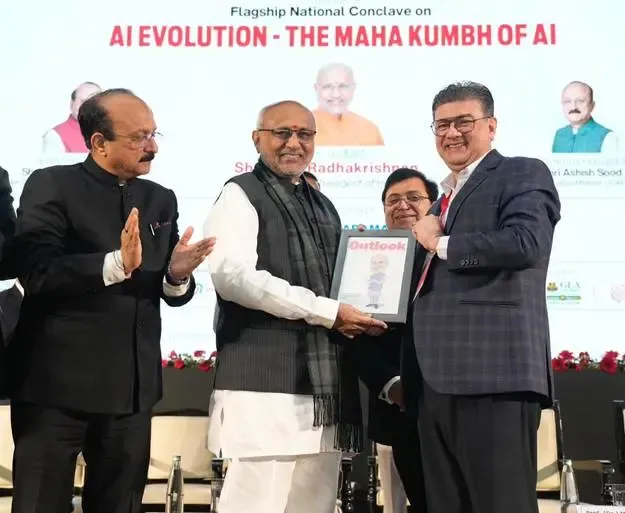
In a pivotal address at a national AI conference, Vice-President C.P. Radhakrishnan highlighted India's potential to lead globally in responsible AI development, emphasizing ethical practices and the need for educational integration to prepare future generations.
Key Takeaways
India has the potential to lead in responsible AI development .
Ethical principles should guide AI technologies.
Education is crucial for integrating AI into society.
AI impacts various sectors including healthcare and governance .
Staying updated with global advancements is vital.
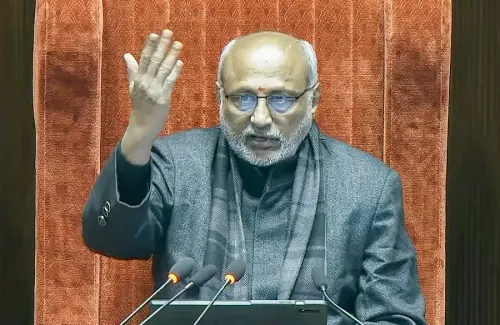
New Delhi, Dec 23 (NationPress) India possesses the expertise, vision, and principles to not only embrace Artificial Intelligence (AI) in a responsible manner but also to take the lead on a global scale, asserted Vice-President C.P. Radhakrishnan on Tuesday.
While addressing a national conference focusing on AI in the capital, he emphasized that AI should always prioritize humanity and adhere to rigorous ethical standards.
“India has positioned itself among the forefront nations in AI,” the Vice-President remarked.
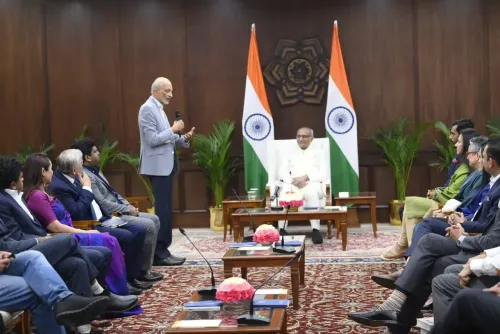
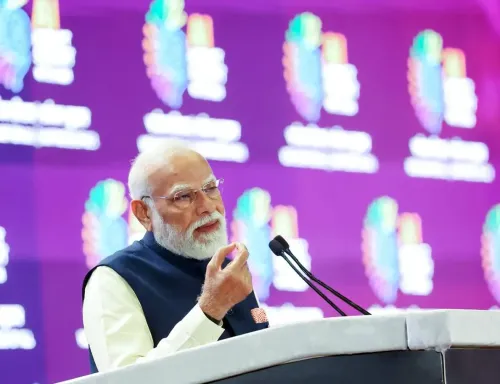
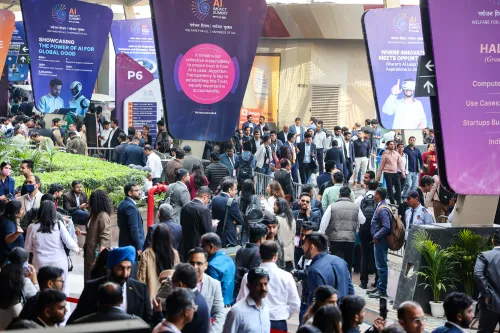
His address was part of the flagship event, “AI Evolution – The Mahakumbh of AI,” organized by Guru Gobind Singh Indraprastha University in partnership with the All India Council for Technical Education (AICTE) and Outlook magazine at Dr. Ambedkar International Centre.
“Artificial Intelligence is not just a futuristic technology; it is a current reality influencing sectors like healthcare, climate research, governance, education, finance, and national security,” he noted.
He cautioned against the fear and negativity surrounding emerging technologies, recalling similar sentiments that arose when computers were first introduced.
“With time, computers revolutionized the world and opened up new avenues,” he added, indicating that every technological advancement brings its own set of advantages and challenges.
“The critical factor is to utilize technology positively and constructively,” the Vice-President articulated.
Highlighting India’s increasing prowess in AI, he stated that the country has emerged as a key player in this domain.
He stressed that in a rapidly evolving environment, complacency can be detrimental and urged India to stay abreast of developed nations in AI research, innovation, and implementation.
The Vice-President expressed his satisfaction at the introduction of new AI curricula during this event. “AI should be an integral element of education from school to college levels,” he stated.
Early exposure to AI will enable students to cultivate critical thinking, problem-solving skills, and the future-ready competencies necessary in a technology-centric world,” he elaborated.
He underscored the need for educational institutions to continually adapt and evolve into centers of excellence and innovation.
Point of View
I see India's commitment to responsible AI development as a vital step in positioning the nation as a global leader in technology. Our focus on ethics and education will not only enhance our capabilities but also ensure that AI serves humanity effectively. In an era of rapid technological change, aligning AI with our values is crucial for a sustainable future.
NationPress
22 Oct 2026
Frequently Asked Questions
What is the significance of AI in today's world?
AI is transforming various sectors such as healthcare, education, finance, and governance, making it a critical technology in addressing contemporary challenges.
How is India positioned in the global AI landscape?
India is emerging as a leader in AI, leveraging its talent and values to guide responsible development and application of AI technologies.
What role does education play in AI development?
Integrating AI into educational curricula is essential for preparing future generations with the skills necessary to navigate a technology-driven world.