Modi at G7: Human-centric AI, child safety standards urged
Synopsis
At the G7 in Evian, Modi didn't just advocate for AI safety — he staked out India's claim as a global norm-setter. By linking child protection, Global South inclusion, and democratic access to AI infrastructure in a single address, he reframed what is often a technical debate into a values contest — and positioned India squarely on the human side of it.
Key Takeaways
PM Narendra Modi addressed the G7 Summit in Evian on 17 June at a session on safe and rapid AI rollout.
Modi cited India's AI Impact Summit and the MANAV Vision as expressions of its human-centric AI philosophy.
He warned that without proper standards, AI could expose children to misinformation , deepfakes , and exploitation .
Modi proposed safe-by-design AI systems, common testing frameworks, and regulatory sandboxes for global adoption.
He called for AI benefits to reach all Global South nations, framing inclusive access as essential to avoiding a divisive technology gap.
Modi invoked Pope Leo XIV's recent message on human values and AI as aligned with India's position.
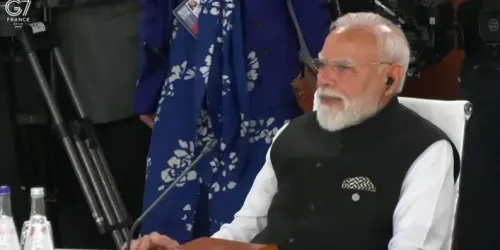
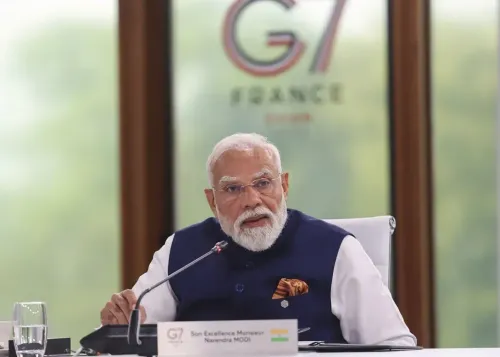
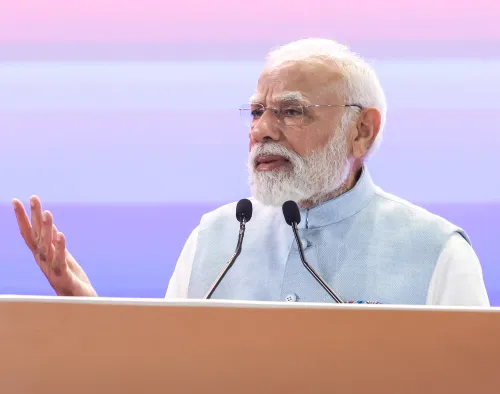
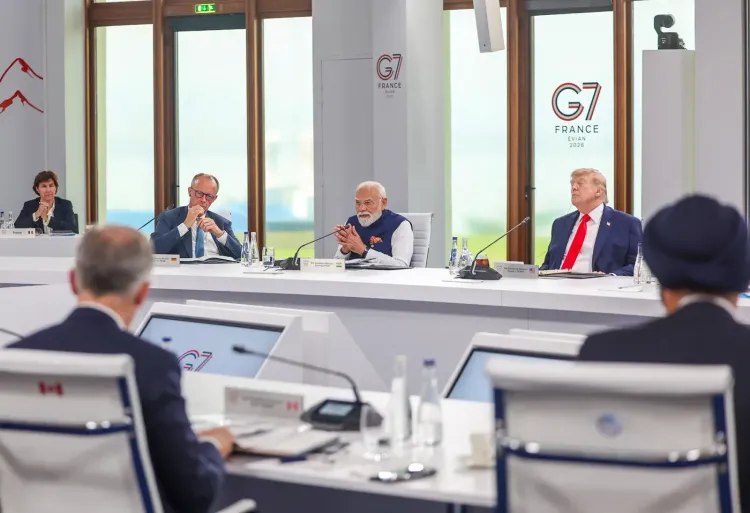
Prime Minister Narendra Modi on 17 June called for a human-centric approach to artificial intelligence at the G7 Summit in Evian, asserting that the true measure of AI's success lies not in machine capability but in how effectively it empowers ordinary citizens. Speaking at a dedicated session on 'Ensuring a Safe, Rapid and Efficient Rollout of AI', Modi positioned India as a proponent of inclusive, values-driven AI governance on the global stage.
India's Vision for Human-Centric AI
Modi cited two concrete expressions of India's philosophy: the AI Impact Summit held in New Delhi earlier this year and the MANAV Vision, a framework that places human welfare at the centre of AI development. He noted that numerous domestic initiatives reinforce this orientation, signalling that India's approach is not merely aspirational but already embedded in policy and programme design.
He also drew attention to a recent message by Pope Leo XIV, who emphasised human values, inclusivity, and meaningful human control as foundations for AI development. Modi said India's vision aligns closely with the Pope's position — a notable invocation of moral authority in a multilateral technology forum.
Child Safety at the Core of AI Governance
A significant portion of Modi's remarks focused on the protection of children during AI deployment. He warned that without robust standards, the same technology capable of educating children and amplifying their creativity could expose them to misinformation, deepfakes, and exploitation.
'The solution lies in value systems, design and governance,' Modi said, adding that 'the digital space must become a playground for learning for children and not a tool for manipulation.' The remarks underline growing international concern over AI-generated content targeting minors — an issue that has gained traction across multiple G7 member states.
Key Proposals on Global AI Standards
Modi put forward several concrete recommendations to the G7, including:
Promoting safe-by-design AI systems as a baseline requirement; developing common standards, testing frameworks, and regulatory sandboxes that allow innovation and governance to advance simultaneously; and fostering global cooperation against deepfakes, misinformation, and cyber fraud.
He also stressed that all democratic nations must have access to advanced AI models to protect their critical information infrastructure and respond effectively to escalating cyber threats — a pointed argument for equitable technology access among democracies.
AI Inclusion for the Global South
Modi argued that the benefits of AI must extend to all countries of the Global South, warning that without deliberate inclusion, AI risks becoming a divisive rather than unifying force. He reiterated that cyberspace must serve the global public good and that access to AI technologies must be broad and non-discriminatory.
This comes amid growing concern among developing nations that AI governance frameworks shaped by wealthy economies could entrench existing technological inequalities. India's advocacy at Evian positions it as a bridge between the G7 bloc and the broader Global South.
What Comes Next
The G7 session is expected to feed into broader multilateral discussions on AI regulation, including ongoing work at the United Nations and the Global Partnership on AI (GPAI). Whether Modi's proposals translate into binding commitments or remain aspirational declarations will depend on the degree of consensus among member states. India's active framing of the debate, however, signals its intent to be a standard-setter rather than a rule-taker in global AI governance.
Frequently Asked Questions
What did PM Modi say about AI at the G7 Summit?
PM Modi called for a human-centric approach to AI at the G7 Summit in Evian on 17 June, arguing that AI's true success lies in empowering ordinary citizens rather than maximising machine power. He proposed global standards, safe-by-design systems, and regulatory sandboxes to balance innovation with governance.
Why did Modi raise child safety in his G7 AI speech?
Modi warned that without proper AI standards, the same technology that can educate children could expose them to misinformation, deepfakes, and exploitation. He called for the digital space to be a learning environment for children, not a tool for manipulation.
What is India's MANAV Vision for AI?
The MANAV Vision is India's framework that places human welfare at the centre of AI development. Modi cited it at the G7 as evidence that India's human-centric AI philosophy is embedded in actual policy, alongside the AI Impact Summit held in New Delhi in 2025.
What did Modi propose for the Global South on AI?
Modi urged G7 nations to ensure that AI benefits reach all Global South countries, arguing that without deliberate inclusion, AI could deepen global inequalities rather than bridge them. He also called for democratic nations to have access to advanced AI models to protect critical information infrastructure.
How does Modi's G7 AI stance compare to other countries?
India's position emphasises human values, child safety, and inclusive access — distinct from the US market-driven approach and the EU's regulatory framework. By aligning with Pope Leo XIV's message and advocating for the Global South, Modi positioned India as a bridge between developed and developing nations in global AI governance debates.