PM Modi Calls for Safe-by-Design AI and Global Standards

Synopsis
Prime Minister Narendra Modi on June 17, 2026, urged the global community to adopt safe-by-design AI systems, shared testing frameworks, and regulatory sandboxes, positioning India as a proactive voice in shaping international AI governance norms.
Key Takeaways
PM Modi called for promoting safe-by-design AI systems as a foundational principle of global AI governance.
He proposed common standards, testing frameworks, and regulatory sandboxes to ensure innovation and oversight advance together.
The remarks build on India's National Strategy for AI (#AIforAll) , first released in 2018 .
The IndiaAI Mission provides the domestic policy backbone for India's international AI governance positions.
India has consistently sought a norm-shaping role in global technology governance, notably through its G20 presidency digital agenda.
Follow-up multilateral meetings on AI standards and domestic regulatory proposals will be the key developments to watch.
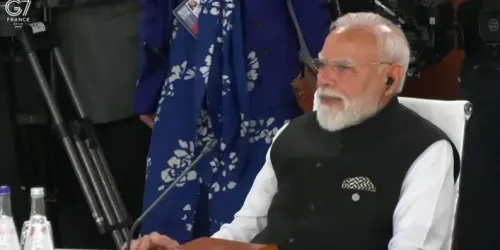
Prime Minister Narendra Modi on Wednesday, June 17, 2026, shared a set of concrete suggestions for shaping global artificial intelligence governance, calling for safe-by-design AI systems, common standards, testing frameworks, and regulatory sandboxes to ensure innovation and oversight advance in step.
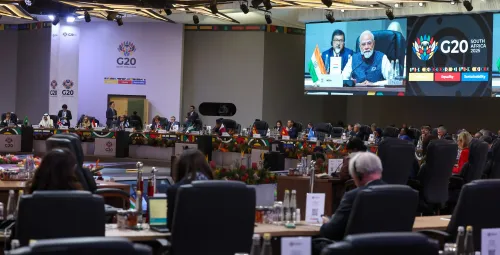
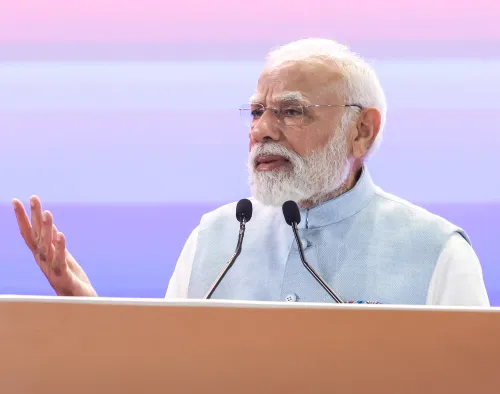
In remarks delivered at an international forum, Modi outlined a multi-pronged approach to responsible AI deployment. 'We should promote safe-by-design AI systems,' he stated, adding that 'common standards, testing frameworks and regulatory sandboxes for AI deployment' are essential so that 'innovation and governance progress together.'
Context
The remarks reflect India's long-standing push to be a norm-shaping voice in global technology governance rather than merely a rule-taker. Modi has consistently framed technology policy around inclusive growth and ethical guardrails, a thread running from early digital-infrastructure drives through to current AI initiatives.
India first articulated its AI philosophy in the National Strategy for Artificial Intelligence, released in 2018 under the banner #AIforAll, which emphasised responsible development, skilling, and equitable access as core principles.
Policy Backdrop
The IndiaAI Mission, a flagship government initiative, is designed to build domestic AI capabilities with a focus on inclusive growth, skilling, and ethical deployment. It provides the institutional scaffolding behind the kind of multilateral proposals Modi is now advancing on the world stage.
During India's G20 presidency, New Delhi pushed a 'data for development' agenda and multi-stakeholder governance models, positioning the country as a bridge between technology-exporting nations and the developing world. The current AI governance push is a direct continuation of that diplomatic arc.
Stakeholders and Impact
Global technology companies operating across jurisdictions stand to be directly affected by any convergence on common AI standards and testing frameworks. Regulatory sandboxes, in particular, have been championed by industry as a way to pilot AI products without triggering full compliance burdens prematurely.
For AI regulators and standards bodies, Modi's call signals that India intends to be an active participant in drafting the rules rather than adopting frameworks designed elsewhere. Developing economies that lack the resources to build independent AI oversight infrastructure could benefit from shared testing and certification norms.
What's Next
Attention will now turn to whether India translates these multilateral suggestions into concrete domestic regulatory proposals and how it engages in follow-up discussions at international AI forums. Progress on India's own AI regulatory architecture will be a key indicator of how seriously these principles are being institutionalised.
The call for a global framework also sets the stage for India to leverage its large developer base and growing AI startup ecosystem as proof-of-concept for the 'safe-by-design' approach Modi is advocating internationally.
Point of View
A posture consistent with the diplomatic capital it built during its G20 presidency. The emphasis on regulatory sandboxes and shared testing frameworks is notably industry-friendly, suggesting New Delhi is calibrating its position to attract global AI investment while still demanding ethical guardrails. By framing AI governance as a multilateral rather than a purely national exercise, India is also implicitly pushing back against the dominance of US and EU regulatory models. How much of this translates into binding domestic regulation will determine whether the rhetoric hardens into policy.
NationPress
16 Sept 2026
Frequently Asked Questions
What did PM Modi say about AI governance at the international forum?
PM Modi called for promoting safe-by-design AI systems, developing common standards and testing frameworks, and establishing regulatory sandboxes so that innovation and governance progress together.
What is India's National Strategy for AI?
India's National Strategy for Artificial Intelligence, released in 2018 under the hashtag #AIforAll, outlines principles for responsible AI development, inclusive growth, and equitable access to AI technologies.
What is the IndiaAI Mission?
The IndiaAI Mission is a Government of India initiative aimed at building domestic AI capabilities with a focus on inclusive growth, skilling, and ethical deployment of artificial intelligence.
What are regulatory sandboxes for AI?
Regulatory sandboxes are controlled environments where AI products can be tested and piloted without triggering full compliance requirements, allowing regulators and companies to assess risks before broader deployment.
How has India shaped global technology governance in recent years?
India used its G20 presidency to push a 'data for development' agenda and multi-stakeholder governance models, positioning itself as a bridge between technology-exporting nations and the developing world on digital policy.