PM Modi calls child safety 'utmost importance' in AI rollout

Synopsis
Prime Minister Narendra Modi on June 17, 2026 stressed that child safety must be central to India's AI rollout, warning that unchecked AI could expose children to deepfakes, misinformation and exploitation. The statement signals possible new regulatory guidelines under the IndiaAI Mission framework.
Key Takeaways
PM Modi declared child safety 'of utmost importance' in India's AI deployment strategy.
He warned that AI without proper standards can expose children to misinformation, deepfakes, and exploitation .
India's #AIFORALL national AI strategy, launched in 2018 , first articulated ethical principles for AI governance.
The IndiaAI Mission , approved in 2024 , emphasises responsible innovation alongside infrastructure and skilling.
Possible next steps include AI-specific child safety guidelines or amendments to the Digital Personal Data Protection Act .
India's stance aligns with G20 and Global Partnership on AI priorities on child online protection.
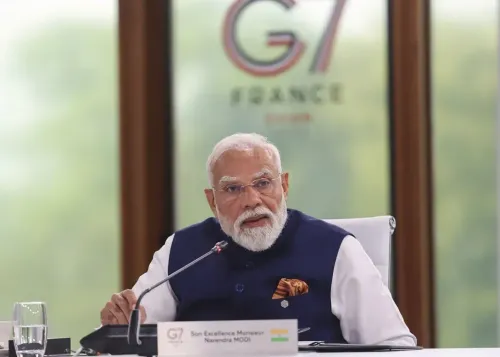
Prime Minister Narendra Modi on Wednesday, June 17, 2026, called for robust safety standards for children as artificial intelligence is deployed at scale, warning that without proper guardrails the same technology that educates and empowers children could expose them to misinformation, deepfakes, and exploitation.
Context
In his post, PM Modi wrote: 'I firmly believe that ensuring safety for children while rolling out AI is of utmost importance. Without proper standards, the same AI which can educate children and enhance their creativity can also expose them to misinformation, deepfakes and exploitation.' The post, which appeared to be the opening of a longer statement, signalled that the Prime Minister was about to outline a proposed solution, though the full text was not available.
The remarks come as India accelerates its AI ambitions while simultaneously grappling with the social risks of unregulated deployment, particularly for younger users who are among the most active consumers of AI-powered edtech and social platforms.
Policy Backdrop
India first articulated a national vision for responsible AI through its '#AIFORALL' strategy in 2018, which laid out ethical principles and emphasised the societal impact of AI systems. Building on that foundation, the government approved the IndiaAI Mission in 2024, a flagship programme aimed at building domestic AI infrastructure, datasets, and skilling with an explicit focus on responsible innovation.
Child online protection has also been a recurring theme in India's Digital Personal Data Protection Act, which places heightened obligations on platforms processing data of minors. Analysts have flagged that AI-specific amendments addressing deepfake generation and algorithmic targeting of children remain a potential next step in the regulatory pipeline.
Stakeholders and Impact
The groups most directly affected by any forthcoming standards include edtech platforms, which have scaled rapidly using AI-driven personalised learning, and the broader ecosystem of social media and content platforms frequented by children. Compliance requirements could reshape how these platforms design recommendation algorithms, content moderation tools, and data-collection practices for underage users.
At the global level, India's position mirrors discussions within the G20 and the Global Partnership on AI, both of which have identified child safety and deepfake risks as priority areas for coordinated governance. A strong domestic standard from the world's most populous nation could carry significant normative weight in multilateral forums.
What's Next
The Prime Minister's statement is widely expected to be followed by a concrete policy announcement, potentially in the form of AI-specific child safety guidelines or amendments to existing data protection legislation. Observers will watch for any formal consultation process involving edtech companies, civil society groups, and child rights bodies.
As India positions itself as a global voice on responsible AI governance, the standards it adopts for protecting children in digital spaces could set a precedent that resonates well beyond its borders.
Point of View
With children as the entry point — a framing that is both politically safe and internationally resonant. By invoking deepfakes and exploitation, the Prime Minister is building a moral foundation for what could become mandatory platform obligations, potentially giving the government significant leverage over edtech and social media companies operating in India. The timing, coming as the IndiaAI Mission matures, suggests the policy machinery is ready to follow the rhetoric. If India codifies strong child-safety AI standards, it could emerge as a rule-setter in the Global South rather than a rule-taker from Western regulatory frameworks.
NationPress
18 Sept 2026
Frequently Asked Questions
What did PM Modi say about AI and child safety?
PM Modi stated on June 17, 2026 that ensuring child safety during the AI rollout is of utmost importance, warning that AI without proper standards can expose children to misinformation, deepfakes and exploitation.
What is the IndiaAI Mission?
The IndiaAI Mission is a flagship government programme approved in 2024 to build India's AI infrastructure, datasets and skilling capabilities, with a specific focus on responsible and ethical innovation.
How does India currently regulate AI for children?
India's Digital Personal Data Protection Act places heightened obligations on platforms that process data of minors. AI-specific child safety guidelines are anticipated but had not been formally released as of this report.
What are deepfakes and why are they a risk for children?
Deepfakes are AI-generated synthetic media — images, audio or video — that can realistically depict people doing or saying things they never did. For children, they pose risks of identity manipulation, cyberbullying and exploitation.
What could India's next steps be on AI child safety regulation?
Analysts expect possible AI-specific child safety guidelines or amendments to the Digital Personal Data Protection Act, potentially requiring edtech and social media platforms to implement stricter safeguards for underage users.