Pradhan Joins MCL Review Meet on Mining Displacement, CSR
Synopsis
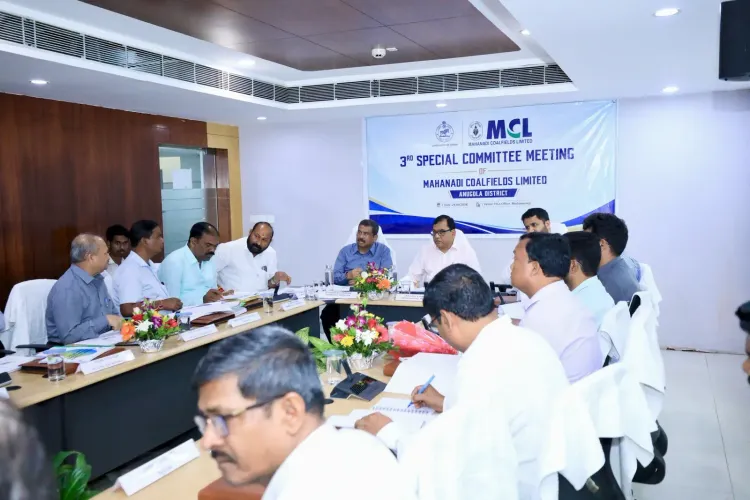
Union Education Minister Dharmendra Pradhan joined MCL's Angul district special committee meeting in Bhubaneswar on 30 September 2026, discussing displaced families' issues, local hiring, environmental protection, and CSR-funded infrastructure in the Talcher coalfield.
Key Takeaways
Union Education Minister Dharmendra Pradhan attended the MCL special committee meeting for Angul district in Bhubaneswar on 30 September 2026 .
Talcher and Chhendipada MLAs participated alongside Pradhan in the review session.
Key agenda items: displacement and rehabilitation of mining-affected families, accelerating local employment, and CSR fund utilisation for roads, water, health, and education.
The meeting also addressed dust and transport-corridor congestion caused by rising coal production, with tree-plantation drives proposed as mitigation.
CSR obligations for coal PSUs flow from Section 135 of the Companies Act, 2013 , requiring 2% of average net profits to be spent in project-affected areas.
Follow-up monitoring of CSR utilisation reports and local employment notifications will indicate whether Wednesday's commitments translate into action.
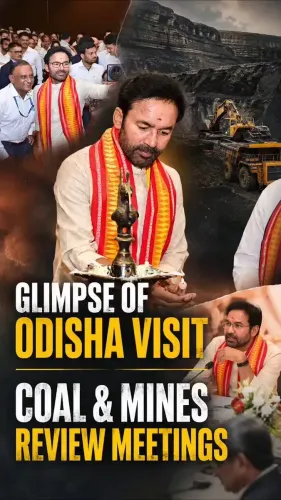
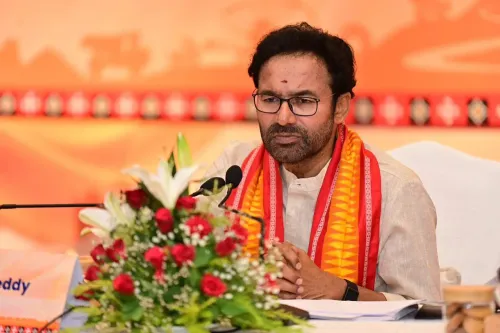
Coal, displacement, and accountability converged in Bhubaneswar on Wednesday, 30 September 2026, when Union Education Minister Dharmendra Pradhan joined the special committee meeting of Mahanadi Coalfields Limited (MCL) for Angul district — sitting alongside the legislators of Talcher and Chhendipada to confront the human cost of one of India's most productive coal belts.
Posting in Odia after the session, the Minister laid out the agenda without ambiguity: problems of displaced families in mining zones, local employment, environmental protection, and the on-ground implementation of CSR projects. 'Khani anchhalara bisthapita lokanka samasya' — the problems of displaced people in mining areas — headed his list, a signal that rehabilitation remains the sharpest political and human nerve in the Talcher coalfield.
What the Angul-Talcher coal belt demands
Talcher sits at the heart of Odisha's energy geography — a historic constituency in Angul district whose seams feed a significant slice of India's thermal power capacity. MCL, a subsidiary of Coal India Limited, operates the belt's largest opencast and underground mines. As output scales up, so do the pressures: land acquisition displaces families, coal transport clogs local roads, and dust hangs over villages that line the haul routes.
The meeting addressed each of these directly. On CSR, the discussion focused on deploying funds — mandated under Section 135 of the Companies Act, 2013, which requires coal PSUs to spend 2% of average net profits on project-affected communities — toward roads, drinking water, healthcare, and school infrastructure in mining-impacted villages. Compensation for families whose land was acquired, and speeding up local hiring, were taken up in the same breath.
Dust, pollution, and the transport corridor problem
On the environment, the Minister flagged the dual scourge of mining-generated dust and transport pollution — calling for tree-plantation drives as a frontline mitigation measure. The third cluster of issues was mobility: as coal production rises, heavy trucks and convoys increasingly choke the same roads that local residents depend on, and the meeting zeroed in on preventing that conflict from deepening.
Pradhan has deep roots in Odisha's energy sector — he represented Talcher as a Member of Parliament and served as Union Petroleum & Natural Gas Minister before his current education portfolio, giving him an unusually granular read on the district's competing interests. His presence alongside the two sitting MLAs underscores a pattern familiar to coal-belt governance: central PSUs, state legislators, and Union ministers must periodically sit at the same table to align production ambitions with the lived reality of mining-affected communities.
The CSR accountability gap at the centre of the debate
The Odisha Rehabilitation and Resettlement Policy, 2006 — and its later amendments — sets the legal framework for compensation and employment guarantees for land losers. But the gap between policy on paper and delivery on the ground in Angul-Talcher has been a persistent political flashpoint. District-level committee meetings like this one are the primary mechanism through which that gap gets surfaced and, in theory, closed — making the follow-up on CSR utilisation reports and fresh employment targets the real measure of whether Wednesday's session translates into change.
Point of View
And this meeting fits a pattern of periodic high-visibility reviews that raise community expectations but whose outcomes hinge entirely on follow-through in district-level monitoring reports.
NationPress
30 Sept 2026
Frequently Asked Questions
What is the MCL special committee meeting for Angul district?
It is a periodic review body convening Mahanadi Coalfields Limited officials, local legislators, and in this case a Union Minister, to address displacement, employment, CSR delivery, and environmental concerns in Angul district's coal-mining zones.
What did Dharmendra Pradhan discuss at the MCL meeting in Bhubaneswar?
He discussed rehabilitation and compensation for families displaced by mine acquisitions, acceleration of local hiring, CSR-funded development of roads, drinking water, health and education infrastructure, tree-plantation to control dust, and reducing transport disruption for local residents.
What is MCL and where does it operate?
Mahanadi Coalfields Limited (MCL) is a subsidiary of Coal India Limited that operates major opencast and underground mines in the Angul-Talcher belt of Odisha, one of India's most productive thermal-coal regions.
What is the CSR obligation for coal PSUs in mining-affected areas?
Under Section 135 of the Companies Act, 2013, coal public-sector undertakings are required to spend 2% of their average net profits on CSR activities, with priority given to project-affected communities in the vicinity of their mines.
What laws govern compensation for families displaced by coal mining in Odisha?
The Odisha Rehabilitation and Resettlement Policy, 2006, and its subsequent amendments form the primary legal framework governing compensation, land entitlements, and employment guarantees for families whose land is acquired for mining projects.