Giriraj Singh hails UP's shift from illicit arms to BrahMos production
Synopsis
Union Textiles Minister Giriraj Singh highlighted Uttar Pradesh's transformation from illegal katta arms manufacturing to producing BrahMos missiles and fighter jets, calling the state's industrial rise proof of new India's defence manufacturing ambitions.
Key Takeaways
Union Textiles Minister Giriraj Singh posted on 30 September 2026 citing UP's industrial shift from katta production to BrahMos missile and fighter jet manufacturing.
The Uttar Pradesh Defence Industrial Corridor , announced in 2018 , spans six districts and targets an integrated defence manufacturing ecosystem.
BrahMos Aerospace , the India-Russia supersonic cruise missile joint venture, is a flagship name associated with the corridor.
The corridor operates within the national Make in India framework launched in 2014 to reduce defence import dependence.
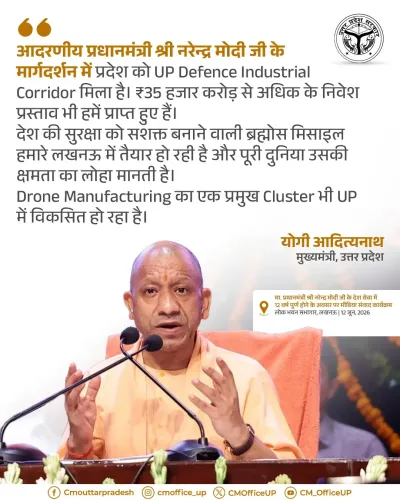
Chief Minister Yogi Adityanath has used successive Investors' Summits since 2017 to attract domestic and international defence investment to UP.
Node-wise corridor execution and investor participation remain the real-world tests of the transformation Singh highlighted.
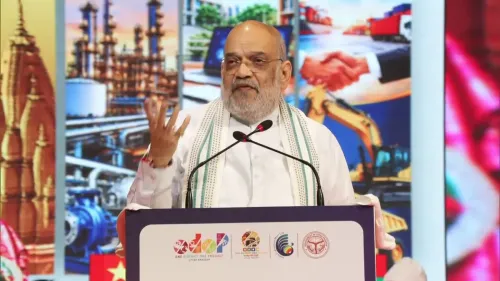
From backyard katta workshops to supersonic cruise missiles — Union Textiles Minister Giriraj Singh invoked one of India's starkest industrial transformations on Wednesday, 30 September 2026, pointing to Uttar Pradesh as proof that 'new India's' manufacturing ambitions are not merely slogans.
In a post on X, Singh wrote: 'From the katta industry to the manufacture of BrahMos missiles and fighter jets, the changing face of Uttar Pradesh reflects the industrial power of new India. Youth power, better infrastructure, and rising investment are taking the state to new heights. A strong Uttar Pradesh is the identity of a strong India.'
The corridor that replaced the katta
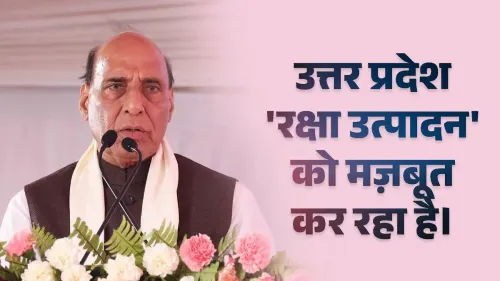
The contrast Singh draws is deliberate and loaded. For decades, districts in eastern Uttar Pradesh were synonymous with illegal crude firearms — locally called katta — manufactured in unregulated workshops. That informal, often criminal economy is now being held up against a different kind of manufacturing: the Uttar Pradesh Defence Industrial Corridor, a multi-node project announced in 2018 to build an integrated defence manufacturing ecosystem spanning six districts across the state.
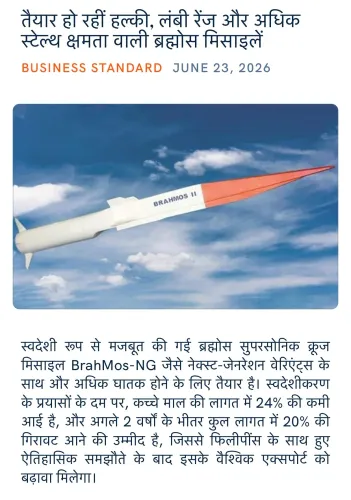
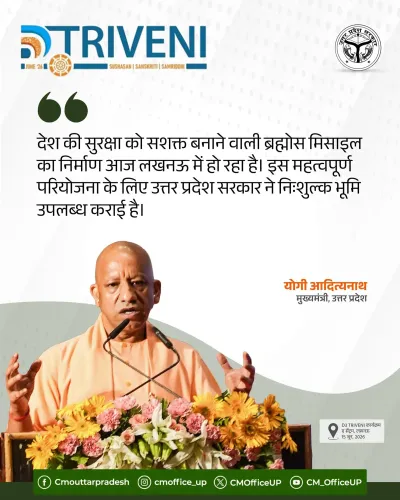
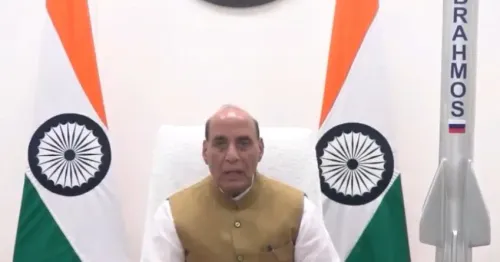
BrahMos Aerospace, the India-Russia joint venture behind the world's fastest supersonic cruise missile, has been among the marquee names linked to the corridor. Component manufacturing and assembly nodes tied to BrahMos represent the kind of high-value, high-technology anchor investment that planners envisioned when the corridor was conceived under the broader Make in India framework launched in 2014.
Youth, infrastructure, and the investment pitch
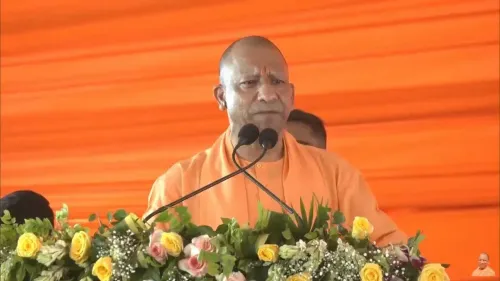
Singh's framing — youth power, infrastructure, investment — tracks closely with the state government's own pitch under Chief Minister Yogi Adityanath, who has positioned UP's large young workforce and successive infrastructure pushes as the twin engines of industrial revival since 2017. Periodic Investors' Summits have been the showcase vehicle for that pitch, drawing pledges from domestic and international firms.
India's broader defence indigenisation drive has sought to flip a long-standing import dependence. Revised procurement policies, production-linked incentives, and state corridors like the one in UP are the instruments. The shift from informal local industries to advanced platforms reflects a coordinated state-central effort — and Singh's post frames Uttar Pradesh as the most vivid symbol of that shift.
What the transformation still needs to prove
The rhetorical arc from katta to BrahMos is powerful, but execution remains the metric that matters. Node-wise progress reports for the corridor and participation levels at forthcoming investors' conclaves will test whether the transformation Singh celebrates is accelerating or stalling. A strong UP, as he puts it, still has ground to cover before the corridor's full promise is met.
For now, the minister's message lands as both a political signal and an industrial one: India's most populous state is staking its identity on making things that fly fast and fly far — not on the crude weapons that once defined its manufacturing reputation.
Point of View
He ties the BJP's governance record in Lucknow directly to national security prestige. The framing serves both state-level electoral messaging and the Centre's indigenisation agenda ahead of any future defence budget cycle. It also signals that the UP Defence Industrial Corridor — whose node-level execution has moved slowly — is being elevated as a flagship story worth defending publicly. The real watch-point is whether this rhetorical investment translates into verifiable production milestones at the corridor's six nodes.
NationPress
30 Sept 2026
Frequently Asked Questions
What is the Uttar Pradesh Defence Industrial Corridor?
The Uttar Pradesh Defence Industrial Corridor is a multi-node project announced in 2018 to create an integrated defence manufacturing ecosystem across six districts of the state, designed to attract defence and aerospace companies under the Make in India framework.
What is BrahMos and how is it linked to Uttar Pradesh?
BrahMos is a supersonic cruise missile developed by BrahMos Aerospace, an India-Russia joint venture. Component manufacturing and assembly nodes tied to BrahMos have been associated with the Uttar Pradesh Defence Industrial Corridor.
What did Giriraj Singh say about Uttar Pradesh's industrial transformation?
On 30 September 2026, Union Textiles Minister Giriraj Singh posted that UP's shift from katta (illicit crude arms) manufacturing to producing BrahMos missiles and fighter jets reflects new India's industrial strength, calling a strong UP the identity of a strong India.
What is the Make in India programme and why does it matter for UP's defence sector?
Launched in 2014, Make in India aims to increase domestic manufacturing in defence and aerospace to reduce import dependence. The UP Defence Industrial Corridor was established as part of this national effort.
Who is the Chief Minister overseeing UP's defence investment push?
Yogi Adityanath has been Chief Minister of Uttar Pradesh since 2017 and has championed Investors' Summits and infrastructure upgrades to position the state as a high-value manufacturing hub.