Kishan Reddy highlights MCL First Mile Connectivity push

Synopsis
Union Coal Minister G. Kishan Reddy has spotlighted Mahanadi Coalfields Ltd.'s First Mile Connectivity drive, which replaces road haulage with enclosed conveyors and direct rail loading to cut dust, reduce diesel use, and raise dispatch efficiency across Odisha's major coalfields.
Key Takeaways
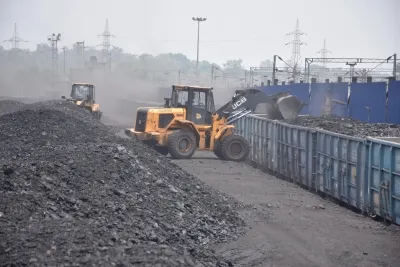
Mahanadi Coalfields Ltd. , a Coal India subsidiary, is deploying First Mile Connectivity (FMC) projects featuring rapid loading systems, enclosed conveyor belts, and seamless rail linkages.
FMC corridors reduce road movement of coal, cutting dust emissions and diesel consumption in mining areas of Odisha .
Coal India has been rolling out FMC infrastructure since 2015 ; the pace accelerated after the 2020 coal sector reforms mandated subsidiary-level upgrades.
The initiative aligns with Indian Railways' freight expansion goals by providing faster, higher-volume loading at mine sidings.
The ministry frames FMC as both a logistics upgrade and a sustainability measure, positioning India's coal sector as committed to responsible resource management.
Quarterly Coal India FMC completion reports and parliamentary queries will be key indicators of on-ground progress.
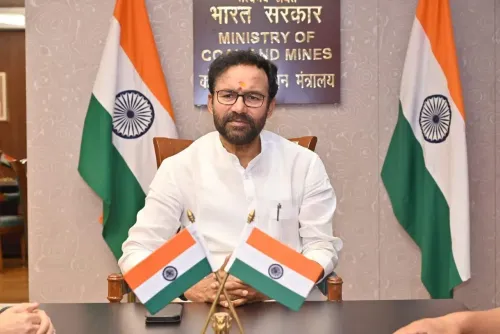
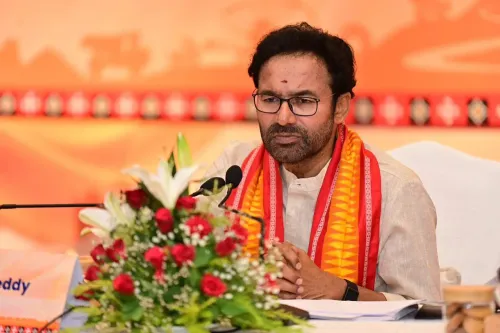
Union Coal and Mines Minister G. Kishan Reddy on Wednesday, 27 May 2026 highlighted how Mahanadi Coalfields Ltd. (MCL) is overhauling coal evacuation through First Mile Connectivity (FMC) projects, citing rapid loading systems, enclosed conveyor networks, and direct rail linkages as central to a cleaner, more efficient supply chain.
Context
In his post, the minister stated that FMC initiatives are 'ensuring efficient, eco-friendly, and sustainable coal transportation' by 'reducing road movement, minimising dust emissions, and improving operational efficiency.' He linked the push to the broader infrastructure vision of Prime Minister Narendra Modi, tagging Coal India Ltd. and the Ministry of Coal alongside MCL.
Mahanadi Coalfields Ltd. is a subsidiary of Coal India Ltd. and operates some of the country's largest opencast mines in Odisha. The subsidiary has been a key testing ground for mechanised evacuation corridors given the scale of its output and its proximity to dense residential and forest zones.
Policy Backdrop
Coal India began rolling out FMC projects from 2015 onward, replacing truck haulage with mechanised conveyor belts and rapid loading stations that feed directly into railway rakes. The model cuts diesel consumption, limits fugitive dust, and raises dispatch volumes simultaneously.
The 2020 coal sector reforms widened private participation in coal mining and mandated infrastructure upgrades across subsidiaries, accelerating the FMC rollout. Enclosed conveyor systems — a defining feature of the newer corridors — prevent coal dust from dispersing into surrounding areas, addressing a long-standing grievance of communities near coalfields.
The government's push on FMC also dovetails with Indian Railways' capacity-expansion programme, which requires mine-end loading infrastructure to match the higher throughput of upgraded rail lines. Seamless rake availability and faster turnaround at mine sidings are among the operational metrics that the ministry tracks quarterly.
Stakeholders and Impact
For Coal India subsidiaries, FMC corridors reduce dependence on road transport that is both costlier per tonne and a source of community complaints about dust, noise, and road damage. Mining-area residents in Odisha's coalfield districts stand to benefit most directly from lower particulate levels.
Indian Railways gains more predictable freight volumes at loading points, which helps in rake scheduling and improves revenue visibility. Power utilities at the downstream end of the supply chain benefit from more consistent coal dispatch timelines, reducing the risk of inventory shortfalls at thermal plants.
The minister's emphasis on 'responsible resource management' signals that the government is positioning FMC not merely as a logistics upgrade but as a sustainability credential for the coal sector — relevant as India faces international scrutiny over its coal dependence even while expanding renewable capacity.
What's Next
Observers will watch Coal India's quarterly FMC completion reports for data on how many mine sidings have been converted and what share of total dispatch now moves via conveyor-to-rail rather than road. Parliamentary standing committee sessions on coal are another forum where dust-emission reductions and rail rake availability are likely to be examined.
With MCL serving as a flagship case, the ministry is expected to push other Coal India subsidiaries — including those in Jharkhand and Chhattisgarh — to accelerate their own FMC timelines, making the Odisha model a template for the sector's logistics modernisation at scale.
Point of View
Modern logistics. By anchoring the narrative to PM Modi's infrastructure vision, the BJP is signalling that coal modernisation is not in tension with green goals but is part of the same governance story. The FMC push also serves a political purpose in Odisha, where MCL's operations are a source of both employment and community grievance over pollution. Expect the ministry to use FMC milestones as a counter-narrative whenever coal's environmental costs come under parliamentary or international scrutiny.
NationPress
10 Oct 2026
Frequently Asked Questions
What is First Mile Connectivity in coal mining?
First Mile Connectivity (FMC) refers to infrastructure — enclosed conveyor belts, rapid loading stations, and direct rail sidings — that moves coal from the mine face to railway rakes without using road transport, cutting dust and truck traffic.
What does Mahanadi Coalfields Ltd. do?
Mahanadi Coalfields Ltd. (MCL) is a subsidiary of Coal India Ltd. that operates large opencast coal mines primarily in Odisha, making it one of the highest-output coalfield regions in the country.
How do FMC projects reduce pollution near coal mines?
Enclosed conveyor systems prevent coal dust from dispersing into the air, while eliminating heavy truck movement reduces diesel emissions and road dust, directly improving air quality in mining-area communities.
When did Coal India start First Mile Connectivity projects?
Coal India began rolling out FMC projects from 2015 onward, with the 2020 coal sector reforms further mandating infrastructure upgrades including FMC corridors across subsidiaries.
What is G. Kishan Reddy's role in the coal sector?
G. Kishan Reddy is India's Union Minister of Coal and Mines and also serves as the BJP's Telangana state president, making him the cabinet-level authority overseeing Coal India and its subsidiaries.