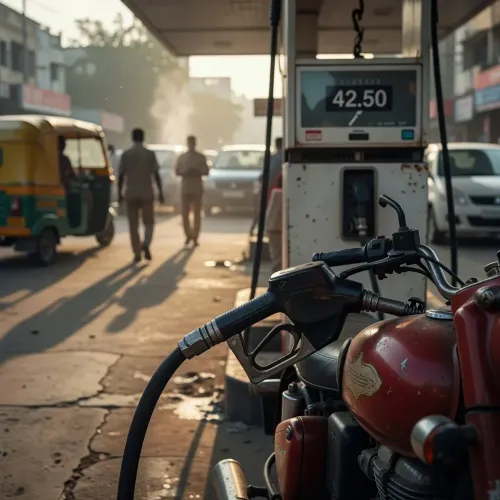
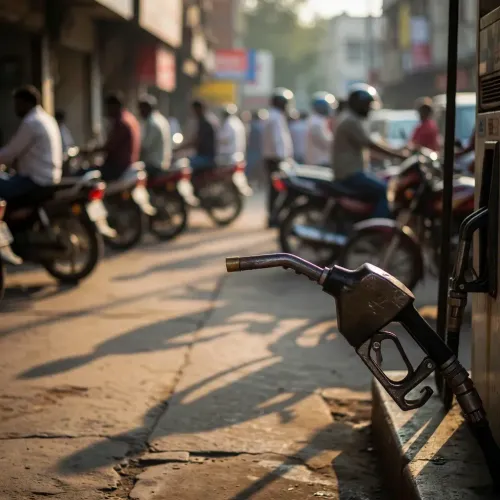
Kejriwal visits Delhi petrol pump, calls E20 fuel claims 'white lies'
Synopsis
AAP convenor Arvind Kejriwal visited a Delhi petrol pump on 11 July 2026 and accused the central government of 'speaking white lies' about E20 ethanol-blended petrol, citing widespread mileage drops and vehicle faults reported by ordinary users at the ground level.
Key Takeaways
Arvind Kejriwal conducted a field visit to a Delhi petrol pump and service station on 11 July 2026 to assess E20 complaints.
He accused the central government of 'speaking white lies' about the impact of E20 ethanol-blended petrol on vehicles.
Kejriwal claimed that 'almost all' vehicle owners he spoke to reported a drop in mileage after the switch to E20 fuel.
India's ethanol blending programme, launched in 2003 and accelerated in 2021 , targets a 20 per cent ethanol blend in petrol to cut crude imports and emissions.
Older vehicles not designed for high ethanol content are particularly vulnerable to mileage loss and fuel system damage.
The visit signals growing opposition political pressure on the central government over the consumer impact of its biofuel policy.
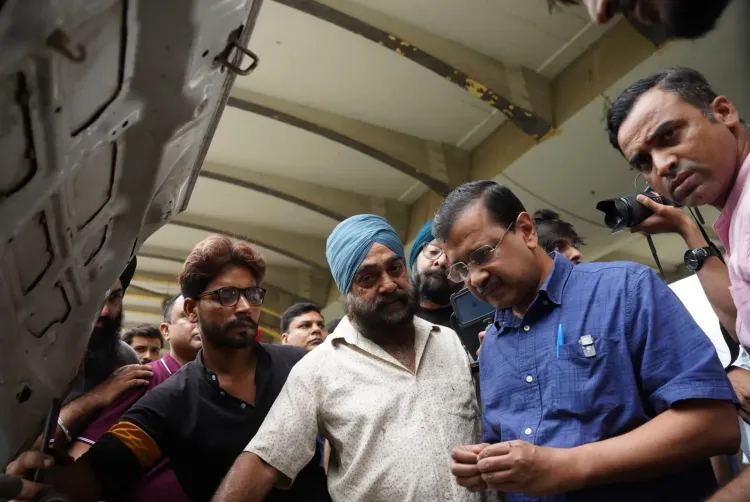
AAP convenor Arvind Kejriwal on Saturday, 11 July 2026, visited a petrol pump and service station in Delhi to assess ground-level complaints about the government's E20 ethanol-blended petrol programme, declaring that the central government was 'speaking white lies' about the fuel's impact on vehicles.
What Kejriwal said
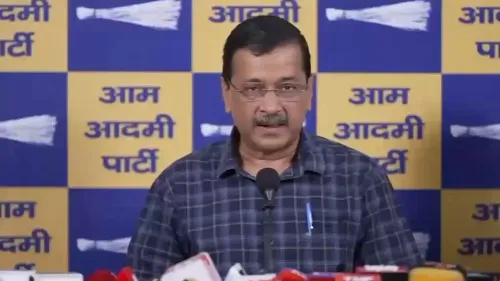
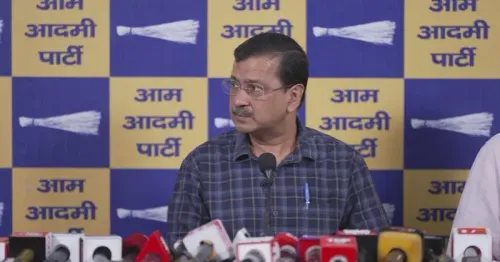
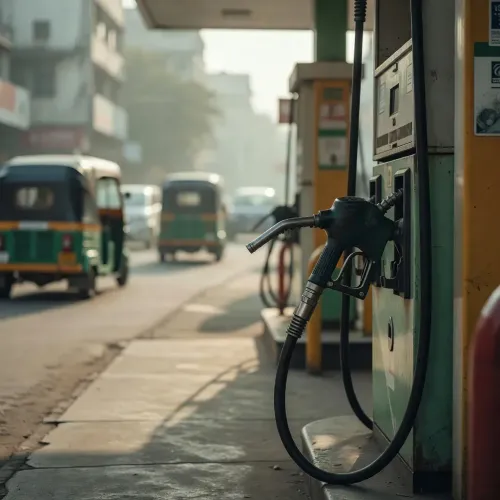
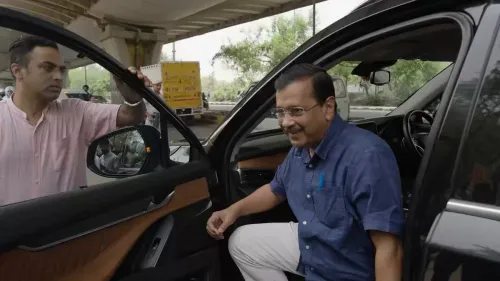
Posting on X with four images from his field visit, Kejriwal wrote: 'aaj maine Delhi ke ek petrol pump aur service station par jakar zamini haqeeqat jani' ('Today I went to a petrol pump and service station in Delhi to learn the ground reality'). He alleged that E20 fuel is causing genuine problems in vehicles and that ordinary people are 'very distressed' by ethanol blending. He added that 'almost all people' have experienced a drop in mileage and that 'many vehicles' have reported mechanical faults.
The former Chief Minister did not name the specific petrol pump or cite quantified data, but framed the visit as direct citizen outreach against what he called official misinformation about the blended fuel's performance.
Context: India's ethanol blending push
India's Ethanol Blended Petrol (EBP) Programme was launched in 2003 and was significantly accelerated in 2021, with the central government advancing the deadline to achieve a 20 per cent ethanol blend target to 2025. The programme is designed to reduce India's dependence on crude oil imports, provide an additional revenue stream for sugarcane farmers, and lower vehicular carbon emissions.
Oil marketing companies were mandated to progressively increase ethanol content in petrol sold at pumps across the country. As blending levels climbed from E5 and E10 toward E20, concerns about engine compatibility and fuel efficiency began surfacing among vehicle owners, particularly those with older or carburettor-based engines not optimised for higher ethanol concentrations.
Policy backdrop and compatibility concerns
Automobile manufacturers have broadly supported E20 compatibility norms for new vehicles, with industry bodies and the Ministry of Road Transport and Highways issuing guidelines on engine tuning and material compatibility. However, the existing fleet — comprising millions of older two-wheelers and four-wheelers — was not designed for fuel with a high ethanol content.
Ethanol has a lower energy density than petrol, which means vehicles running on higher ethanol blends can experience reduced kilometres per litre under real-world conditions. Engine seals, fuel lines, and carburettors in older vehicles may also be susceptible to degradation. These technical concerns have been raised periodically by mechanics and consumer groups since blending targets were raised.
Stakeholders and impact
The most directly affected group is everyday vehicle owners — particularly middle- and lower-income commuters who depend on two-wheelers and small cars and for whom even a modest drop in mileage translates into a meaningful increase in monthly transport costs. Service station operators and mechanics are also at the frontline, fielding complaints about engine performance and fuel system issues.
Sugarcane farmers and ethanol producers, on the other hand, have benefited from the blending programme through guaranteed procurement and better prices. The Government of India has maintained that E20 is safe for compatible vehicles and that the programme's long-term benefits — lower import bills and reduced emissions — outweigh transitional concerns.
What's next
Kejriwal's field visit and public challenge to the government's narrative is likely to intensify political scrutiny of the E20 rollout, especially as opposition parties seek accountability on consumer-facing policies. Statements from automobile industry bodies on fleet-wide compatibility and any regulatory review of blending targets will be closely watched. A formal parliamentary or regulatory audit of consumer complaints related to E20 could be the next pressure point in this debate.
Point of View
Relatable consumer grievance. The E20 programme sits at the intersection of energy security, farm income support, and environmental policy, making it difficult for the opposition to oppose wholesale; targeting implementation quality and consumer impact is a more surgically effective line of attack. If mileage complaints become a sustained public conversation, the government may face pressure to accelerate vehicle compatibility support or slow the blending ramp-up for the existing fleet. This episode also reflects a broader pattern of AAP positioning itself as a watchdog on central government consumer policies in the post-Delhi-government phase of Kejriwal's political career.
NationPress
10 Oct 2026
Frequently Asked Questions
What is E20 fuel and why is it controversial in India?
E20 is petrol blended with 20 per cent ethanol, promoted by the Indian government to cut crude oil imports and lower emissions. Controversy has grown because older vehicles not designed for high ethanol content can experience reduced mileage and fuel system damage.
Why did Arvind Kejriwal visit a petrol pump in Delhi?
Kejriwal visited a Delhi petrol pump on 11 July 2026 to gather first-hand accounts from vehicle owners and mechanics about problems caused by E20 ethanol-blended petrol, which he then used to accuse the government of spreading misinformation.
Does ethanol blending reduce mileage in Indian vehicles?
Ethanol has a lower energy density than pure petrol, so vehicles running on higher ethanol blends like E20 can experience reduced kilometres per litre, particularly older two-wheelers and cars whose engines were not tuned for such blends.
What is India's ethanol blending target and when did it start?
India's Ethanol Blended Petrol Programme began in 2003. The government accelerated the timeline in 2021, setting a target of achieving a 20 per cent ethanol blend — known as E20 — by 2025.
Which vehicles are most affected by E20 ethanol-blended petrol?
Older two-wheelers and small cars with carburettor-based engines or fuel system components not rated for high ethanol content are most susceptible to mileage loss and mechanical issues from E20 fuel.