Sacks Backs Zuckerberg: AI Power Must Not Be Centralized

Synopsis
White House AI and Crypto Czar David Sacks backed Mark Zuckerberg's argument that restricting superintelligence to a handful of labs is the defining danger of the AI age, calling centralized control 'not safety — it's control' and championing open-source decentralization as the real check on power.
Key Takeaways
David Sacks , White House AI and Crypto Czar, publicly endorsed Mark Zuckerberg's open-access AI philosophy on July 29, 2026 .
Sacks declared that concentration of AI power in a small number of labs is 'the biggest risk of AI,' not a safety solution.
He argued that open-source transparency, as demonstrated by decades of software history, produces more security and resilience than closed, gated systems.
Sacks explicitly criticised 'bureaucratic approval regimes' and 'mandatory gatekeeping,' language that targets frameworks like the Biden-era 2023 AI Executive Order.
His stated alternative: 'personal superintelligence in everyone's hands, with competing models and real data sovereignty.' As the sitting US AI policy chief, Sacks's position signals Washington's likely resistance to international licensing regimes and centralized AI oversight frameworks.
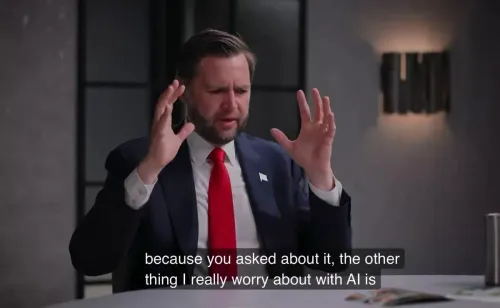
The man shaping America's AI policy just drew a line in the sand — and he drew it on the side of open access. White House AI and Crypto Czar David Sacks on Wednesday, July 29, 2026 amplified a pointed argument from Meta CEO Mark Zuckerberg, declaring that concentrating superintelligence in the hands of a few institutions is the single biggest risk AI poses to humanity.
Zuckerberg's Question, Sacks's Answer
Sacks quoted Zuckerberg directly: 'The defining question of our age isn't whether superintelligence will exist, but who will have access to it.' It is a question that cuts to the bone of every AI governance debate running in Washington, Brussels, and Beijing right now. Sacks's answer is unambiguous — broad access wins.
In his post, Sacks argued that when a 'small number of labs, working hand-in-glove with the administrative state, decide who has access to which model capabilities, they inevitably shape what can be said, known, and built.' His verdict: 'That's not safety. It's control.' Four words. Hard landing.
Open Source as a Security Argument, Not Just an Ideology
Sacks reaches for history to make the case. The open-source software movement — Linux, Apache, the internet's own architecture — demonstrated that transparency and broad participation tend to produce more resilient, more audited, and ultimately more secure systems than closed alternatives. He applies that lesson directly to AI: decentralization creates checks and balances; centralization creates cartels.
Zuckerberg's Meta has put institutional weight behind this position with its Llama family of open-weight models, releasing them broadly so developers worldwide can inspect, modify, and deploy AI without routing every request through a commercial gatekeeper. Sacks is, in effect, lending the White House's policy credibility to that philosophy.
The Target: 'Bureaucratic Approval Regimes' and 'Self-Appointed Guardians'
The post takes direct aim at two governance architectures Sacks rejects. First, 'bureaucratic approval regimes and mandatory gatekeeping' — a clear reference to frameworks like the Biden administration's 2023 Executive Order on AI safety, which imposed reporting and evaluation requirements on frontier model developers. Second, and more pointedly, 'self-appointed guardians who claim to be aligned with all of humanity' — language aimed squarely at the safety-focused AI labs and advocacy groups that have pushed for licensing and access controls on powerful models.
Sacks's preferred alternative: 'personal superintelligence in everyone's hands, with competing models and real data sovereignty.' The vision is explicitly pluralist — many models, many providers, no single chokepoint that a government or a corporation can squeeze.
Why This Matters for the Global AI Race
The person saying this is not a podcaster or a venture capitalist today — he is the sitting White House AI and Crypto Czar, the official who translates AI philosophy into executive action inside the Trump administration. When Sacks frames open-source AI access as the bulwark against dystopia, he is signalling the policy direction the United States is likely to pursue: fewer restrictions on model weights, resistance to international licensing regimes, and pressure on the EU and UN frameworks that lean toward centralized oversight.
For India — which is simultaneously building its own AI compute infrastructure, debating a Digital India Act with AI provisions, and positioning itself as a global AI talent hub — the direction Washington sets on open versus closed AI will shape the options available to Indian startups, researchers, and policymakers for years ahead. An open-access US posture is, broadly, good news for the Global South's ability to participate in the AI era on its own terms.
The real contest is not Sacks versus Zuckerberg — they agree. The contest is their vision of distributed AI power versus the closed-lab, government-partnered model championed by rivals. That fight is just getting started.
Point of View
Sacks is building a philosophical architecture that could justify rolling back Biden-era AI reporting mandates and opposing international licensing frameworks. The alignment between Sacks and Zuckerberg — a government official and the CEO of the world's largest open-weight AI developer — creates a powerful coalition that will be difficult for centralization advocates to counter without engaging the substance of the argument. For emerging economies including India, this debate has direct consequences: an open-access US posture expands the policy space for domestic AI development, while a closed-model world would entrench dependency on a handful of Western or Chinese gatekeepers.
NationPress
27 Oct 2026
Frequently Asked Questions
What did David Sacks say about AI and centralization?
Sacks argued on July 29, 2026 that concentrating control of superintelligence in a small number of AI labs — especially those working closely with governments — is the biggest risk of AI, calling it 'control' rather than safety. He advocated for open-source, decentralized AI access instead.
What is David Sacks's role in the US government?
David Sacks serves as the White House AI and Crypto Czar in the Trump administration, making him the principal official responsible for shaping US policy on artificial intelligence and cryptocurrency.
Why is Sacks supporting Zuckerberg on open-source AI?
Sacks endorsed Zuckerberg's view that broad access to AI — through open-source models like Meta's Llama — creates healthier checks and balances than closed, gated systems controlled by a few powerful labs or government-backed institutions.
What is the risk of centralized AI according to Sacks?
Sacks warns that when a small group of labs decides who can access which AI capabilities, they inevitably control what can be said, known, and built — a dynamic he compares to regulatory capture, where powerful incumbents use rules to entrench their own dominance.
How does this US AI policy debate affect India?
If the US adopts an open-access AI posture as Sacks advocates, Indian startups, researchers, and policymakers gain broader access to frontier models without routing through commercial gatekeepers, strengthening India's ability to build sovereign AI capabilities.