Akhilesh claims double win in Kashi, eyes 2027 UP polls
Synopsis
Samajwadi Party president Akhilesh Yadav claims a 'double victory' in Varanasi, attacks BJP over Manikarnika demolition, Namami Gange budget, weaver neglect, and an unfulfilled Kyoto promise — framing the wins as a 2027 launchpad.
Key Takeaways
Akhilesh Yadav claims SP candidates Ashutosh Sinha and Lal Bihari Yadav won both contested Varanasi seats by 'historic votes' in November 2026 .
He frames the result as 'double engine turned double zero' — a direct inversion of BJP's own campaign slogan.
Yadav listed ten specific local grievances including demolition at Manikarnika Ghat , alleged disrespect to a statue of Ahilyabai Holkar , and neglect of Banaras weavers, boatmen, and artisans.
He accused the BJP of wasting the Namami Gange programme's budget with no visible benefit to the river or its dependent communities.
SP has promised to build a metro rail in Varanasi and demonstrate 'heritage conservation alongside development' if voted to power in 2027 .
The post signals an early, ground-level campaign narrative targeting Uttar Pradesh assembly elections 2027 .
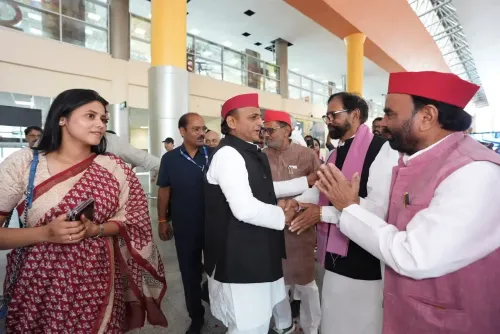
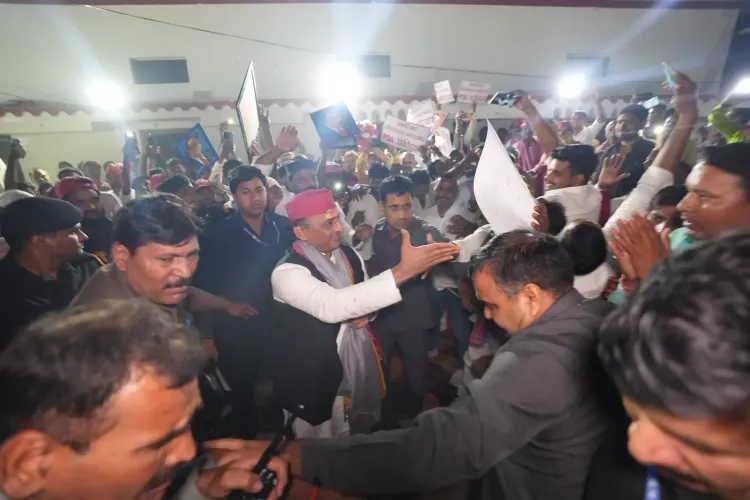
Two seats. One ancient city. And a message aimed squarely at the heart of Bharatiya Janata Party's most symbolic constituency — Varanasi. Samajwadi Party president Akhilesh Yadav on Wednesday, November 4, 2026, declared a 'double victory' in Kashi and laid out a pointed political reckoning for the BJP, invoking the city's ghats, its weavers, its boatmen, and its unfulfilled Kyoto dream.
SP's Kashi sweep — what Akhilesh is claiming
Addressing his post to the people of Kashi, Yadav opened with a bow to Baba Vishwanath before declaring that candidates Ashutosh Sinha and Lal Bihari Yadav had won by 'historic votes.' His verdict on the BJP was blunt: 'Kashi ne double engine ko double zero kar diya hai' — 'Kashi has turned the double engine into a double zero.'
The 'double engine' phrase — a BJP slogan arguing that having the same party at the state and centre accelerates development — was turned on its head. For Akhilesh, the results were proof that the formula had run out of fuel in Uttar Pradesh's most storied city.
A list of grievances from the ghats to the loom
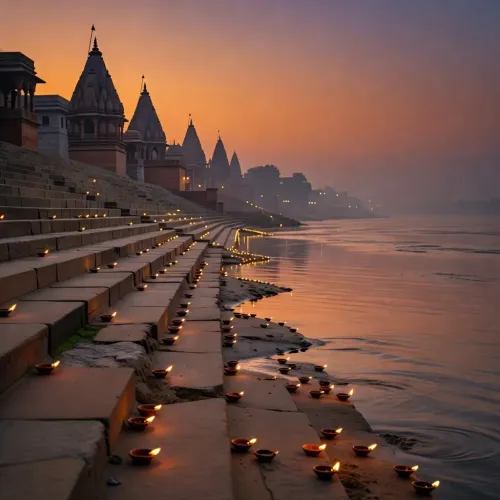
Yadav's post reads less like a victory speech and more like a charge sheet. He cited a series of local flashpoints he says drove voters away from the BJP. The demolition of the Manikarnika Ghat — one of Hinduism's most sacred cremation sites — was called 'a sin that has now been punished.' He accused the ruling dispensation of disrespecting a statue of 18th-century Maratha queen Ahilyabai Holkar, who is historically credited with rebuilding the original Kashi Vishwanath temple and constructing several ghats, including at Manikarnika.
The indictment widened quickly. Akhilesh referenced an alleged lathi-charge on the Pal community, 'atrocities' in the Daal Mandi area, and the neglect of Banaras's weavers and artisans — communities whose silk and handloom trade has defined the city's identity for centuries. 'Banaras ke bunakaaron ka haal poochne koi nahi aaya' — 'No one came to ask after Banaras's weavers' — was his sharpest line on economic abandonment.
He also trained his fire on the Namami Gange programme, the NDA government's flagship Ganga conservation scheme launched in 2014 with thousands of crores allocated for rejuvenation. 'Billions in the Namami Gange budget — no one knows where it all flowed,' he wrote, echoing a long-standing opposition argument that visible riverfront improvements have not translated into genuine ecological or livelihood gains for those who depend on the Ganga.
The Kyoto jab — and the 2027 promise
Perhaps the sharpest rhetorical flourish came over the promise to transform Varanasi into a heritage city on the scale of Kyoto, Japan — an aspiration voiced by BJP leaders in earlier election cycles. 'You didn't build Kyoto, and you've ruined Kashi,' Yadav wrote. 'If you couldn't build a Kyoto, you could at least have put up a photo of Kyoto.' The line landed as mockery of what SP frames as style-over-substance governance.
In its place, Yadav dangled concrete pledges for the 2027 Uttar Pradesh assembly elections: a metro rail network for Varanasi to ease its legendary traffic, and a promise to demonstrate that 'heritage conservation and development can go together' using modern technology. The closing line leaned into the city's sacred mythology: 'BJP jayegi, Kashi muskurayegi' — 'When the BJP goes, Kashi will smile.'
Why Varanasi matters beyond the ghats
Varanasi is not just any constituency. It is the parliamentary seat of Prime Minister Narendra Modi, making every electoral shift there carry outsized symbolic weight. The Kashi Vishwanath Corridor, inaugurated in 2021, was one of BJP's most high-profile cultural infrastructure projects — a direct attempt to cement the party's identity as the guardian of Hindu heritage. Any SP inroads in this city therefore cut at the very heart of that narrative.
With 2027 now firmly in the crosshairs, Akhilesh Yadav has used this Kashi moment to build an early frame: that BJP's grandest promises — to the river, to the craftsmen, to the city's sacred fabric — have been left unfulfilled. Whether Varanasi's voters agree again, in a general assembly contest, is the question that will define the next chapter.
The city that is said to never let you leave has, by Akhilesh's telling, already issued the BJP its walking papers — the only question is whether the rest of Uttar Pradesh follows suit in 2027.
Point of View
Boatmen, ghats, river funds) rather than abstract ideology, he attempts to peel away the cultural credibility BJP has built in Kashi since 2014. The 'Kyoto taunt' is particularly pointed: it reframes BJP's development rhetoric as performance without delivery, a charge the party will need to rebut with visible Varanasi progress before 2027. If SP can hold this Kashi foothold into the general assembly cycle, it reshapes the competitive map in eastern UP — a region that historically anchors statewide majorities.
NationPress
4 Nov 2026
Frequently Asked Questions
Which candidates did Samajwadi Party win with in Varanasi in November 2026?
Akhilesh Yadav named Ashutosh Sinha and Lal Bihari Yadav as the two SP winners in Varanasi, claiming they won by 'historic votes.' These results are reported by Akhilesh in his post dated November 4, 2026 .
What does 'double engine double zero' mean in UP politics?
'Double engine government' is a BJP slogan implying faster development when the same party governs both the state and the centre. Akhilesh Yadav flipped it, saying Kashi's results made the double engine 'double zero' — meaning the BJP was shut out in both contests.
What is the Namami Gange programme and why is it being criticised?
Namami Gange is the central government's flagship Ganga conservation scheme launched in 2014 with thousands of crores allocated. Akhilesh Yadav alleges that billions in the budget have disappeared without meaningful benefit to the river or communities dependent on it.
What is the Kashi Vishwanath Corridor and what is the Manikarnika controversy?
The Kashi Vishwanath Corridor was a major BJP-led heritage redevelopment project inaugurated in 2021 . Akhilesh Yadav alleges that the project involved demolishing parts of the ancient Manikarnika Ghat — Hinduism's most sacred cremation site — which he calls a punishable act.
What is Samajwadi Party promising for Varanasi ahead of 2027?
Akhilesh Yadav has promised to build a metro rail network in Varanasi to address traffic congestion, and pledged to use modern technology to show that heritage conservation and urban development can proceed together — positioning this as an SP manifesto plank for the 2027 UP assembly elections .