Akhilesh declares BJP's UP council loss a 2027 preview
Synopsis
Samajwadi Party president Akhilesh Yadav declared that BJP lost the UP Vidhan Parishad election twice — including a recount in Varanasi — and said the result is a prologue to SP's 2027 assembly victory, citing a widened PDA social base and BJP's alleged organisational collapse.
Key Takeaways
Varanasi recount : Akhilesh Yadav claims BJP lost both the initial count and a subsequent recount in Varanasi in the Vidhan Parishad election. 'Double defeat' : Yadav inverts BJP's 'double engine government' slogan, calling the result a 'double defeat for the double engine.' PDA base at 95% : Yadav asserts his Pichhda-Dalit-Alpsankhyak alliance now represents 95 per cent of the voter base, framing every aggrieved community as a PDA supporter.
Teacher and graduate vote : The post credits teachers and unemployed graduates — who vote in Vidhan Parishad teacher and graduate constituencies — as key drivers of the result.
BJP candidate drought : Yadav claims BJP can no longer find willing assembly candidates, calling its 'ticket window empty.' 2027 signal : Yadav frames the council election outcome as the 'decisive foundation' for forming an SP government in the 2027 Uttar Pradesh assembly elections .
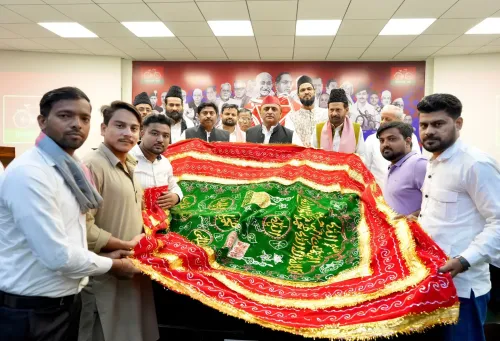
A double count in Varanasi and the same result both times — that, Samajwadi Party president Akhilesh Yadav argues, is all voters need to know about where Uttar Pradesh is headed. On Thursday, 29 October 2026, Yadav posted a lengthy open letter to voters, framing the Uttar Pradesh Vidhan Parishad election outcome as a decisive referendum on BJP's decade in power — and a written prologue to the 2027 assembly elections.
Varanasi recount, same defeat — Akhilesh's central charge
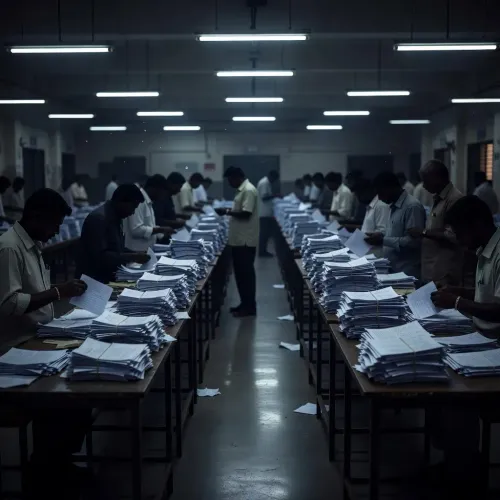
The sharpest line in the post targets Varanasi directly. Yadav writes that BJP 'first lost the counting, then lost the re-counting' — meaning the recount demanded after the initial result still went against the ruling party. 'ये डबल इंजन की डबल हार है' ('This is a double defeat for the double engine'), he declares, turning BJP's own 'double engine government' slogan — the party's claim that aligned state and central governments amplify development — into an accusation of compounded failure.
The Vidhan Parishad, Uttar Pradesh's upper legislative house, elects a portion of its seats through teacher and graduate constituencies. Yadav explicitly thanks 'respected teachers and youth anxious about their futures' for voting against BJP and — crucially — for staying at polling stations until certificates were issued to guard against any last-minute manipulation.
The PDA arithmetic Yadav is banking on
The post makes a striking electoral claim: Yadav says the PDA — his alliance formula for Pichhda (backward classes), Dalit and Alpsankhyak (minority) communities — now commands 95 per cent of the popular base. His formulation: 'जो पीड़ित, वो पीडीए' ('whoever is aggrieved is PDA'). The logic is expansive — it claims every community BJP has, in Yadav's words, 'victimised, saddened, or humiliated' has now consolidated behind his party.
The PDA framework was the Samajwadi Party's central mobilisation tool through the 2022 assembly elections and subsequent contests. Yadav is signalling it has grown, not shrunk, in the intervening years.
BJP's 'existential crisis' and the empty ticket window
Yadav goes further than electoral arithmetic — he claims an organisational collapse inside BJP itself. 'Those within BJP know that even the seats they won were won through manipulation,' he writes, arguing internal dissent and what he calls 'double engine friction' have left the party unable to find assembly candidates. His image is vivid: BJP, which once surveyed prospective candidates, is now 'searching with binoculars — and finding no one. The ticket window is empty.'
The combative language extends to his own losing candidates. Yadav refuses to concede any SP defeat as legitimate: 'No candidate of ours actually lost — they simply could not win against BJP's rigging.' He calls them 'winners without certificates' and offers them the same formal congratulations as the declared victors.
Why council elections map onto 2027's battlefield
Teacher and graduate constituency seats in the Vidhan Parishad have long been read as a proxy for educated, mid-income voter sentiment in UP — a demographic that overlaps significantly with the unemployed-graduate vote that Yadav is explicitly courting here. Opposition parties routinely use these contests, and intervening local body polls, to stress-test their ground networks ahead of the full assembly cycle.
With UP assembly elections due in early 2027, every intermediate contest carries outsized symbolic weight. Yadav's post is pitched as both a victory address and a mobilisation order: the 'alertness and unity' that held polling stations on count day, he writes, will be 'the decisive foundation for forming our government in 2027.'
The scoreboard from one recount in Varanasi may not settle anything permanently. But in Akhilesh Yadav's telling, it just wrote the opening chapter of the next election.
Point of View
And an SP win there — especially after a demanded recount — hands Akhilesh Yadav a legitimacy narrative he will carry into 2027. His 'PDA as 95 per cent' claim is politically maximalist, but it signals a strategy of turning every grievance community into a coalition member rather than targeting specific blocs. The 'empty ticket window' taunt is also a pressure tactic: if it takes root, it could make BJP candidate recruitment genuinely harder in marginal seats. Ultimately, this post doubles as a voter-mobilisation document, asking supporters who guarded polling stations on count day to see themselves as the advance guard of a future government.
NationPress
29 Oct 2026
Frequently Asked Questions
What happened in the Varanasi Vidhan Parishad election recount?
Akhilesh Yadav claims BJP lost both the original count and a recount in Varanasi during the UP Vidhan Parishad elections, describing it as a 'double defeat.' The specific results of the 2026 Vidhan Parishad contest have not been independently detailed in available records.
What is the PDA alliance in UP politics?
PDA stands for Pichhda (backward classes), Dalit, and Alpsankhyak (minorities) — a social coalition formula championed by the Samajwadi Party. Akhilesh Yadav has used it as his primary electoral mobilisation framework since the 2022 UP assembly elections.
What is the 'double engine government' slogan Akhilesh is mocking?
BJP uses the term 'double engine government' to describe having the same party in power at both the state and central levels, arguing it accelerates development. Yadav is inverting the phrase to call the Vidhan Parishad defeat a 'double engine double loss.'
When are the next Uttar Pradesh assembly elections?
The next Uttar Pradesh legislative assembly elections are due in early 2027 . Both BJP and the Samajwadi Party are treating every intermediate contest, including Vidhan Parishad and by-elections, as a rehearsal for that poll.
Why do UP Vidhan Parishad teacher and graduate seats matter politically?
These special constituencies are elected by registered teachers and graduates rather than the general public, making them a proxy for educated and professional voter sentiment. Parties closely watch their outcomes because this demographic significantly overlaps with the unemployed-graduate and youth vote that will be decisive in 2027.