Daryl Mitchell: 'Like batting on a trampoline' after NZ bowled out for 134 vs India
Synopsis
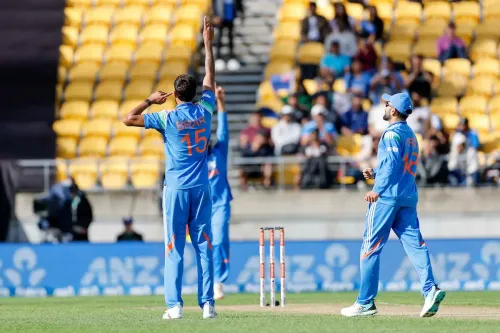
New Zealand's Daryl Mitchell top-scored with 55 but could not stop the hosts from being bowled out for just 134 in the second ODI against India at Wellington. His 'batting on a trampoline' remark captures just how awkward the drop-in surface was — variable bounce and no room to rotate strike left batters gambling on big shots as their only viable option.
Key Takeaways
New Zealand were bowled out for 134 in the second ODI against India at Wellington on 7 November 2026 .
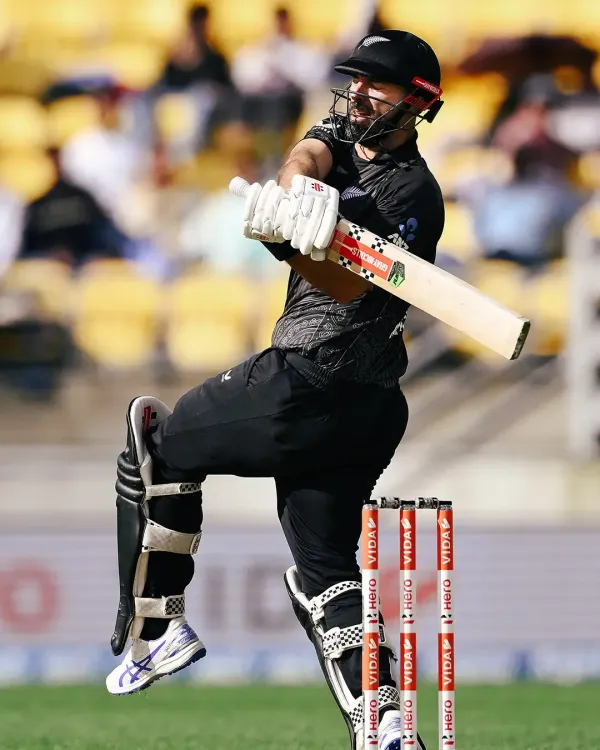
Daryl Mitchell top-scored with 55 off 104 balls and called the surface like 'batting on a trampoline'.
New Zealand slipped to 53 for 5 before a 59-run sixth-wicket stand between Mitchell and Mitchell Santner provided brief resistance.
The drop-in pitch's variable bounce and difficulty in rotating the strike were cited as key obstacles by Mitchell.
Mitchell said early wickets in the field could still bring New Zealand back into the match despite the low total.
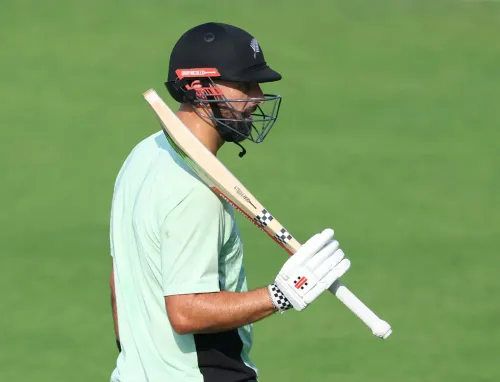
Daryl Mitchell described the Wellington surface as one of the most challenging he has batted on, after New Zealand were bowled out for 134 in the second ODI against India on Saturday, 7 November. The right-hander, who top-scored with 55 off 104 balls, said unpredictable bounce and the difficulty of rotating the strike combined to make batting a severe test throughout the innings.
Mitchell's Take on the Surface
'It's pretty challenging out there. Obviously, we'd always like a few more, but yeah, it's like batting on a trampoline at times. We weren't quite sure what height the ball was going to come through at. We scraped. We tried to do all we could and hopefully something special with the ball and you never know,' Mitchell told broadcasters after the dismissal.
The all-rounder pointed to the nature of the drop-in pitch as a specific complicating factor, explaining that the absence of worn turf on either side of the surface made quick singles almost impossible to execute. 'It's really hard, I guess, to drop and run and it just stops. So you add that to the bounce, sometimes, yeah, the only best option was to try and give it a hoe and see what happens,' he said.
How New Zealand's Innings Unravelled
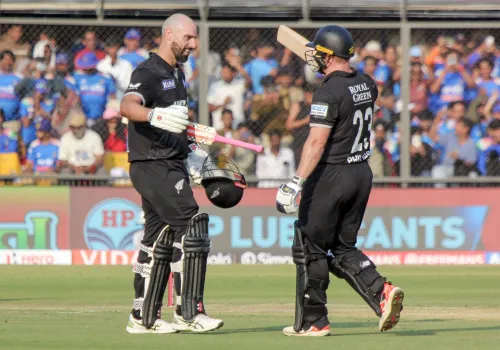
The hosts slipped to 53 for 5 before Mitchell and Mitchell Santner put together a 59-run sixth-wicket partnership that provided some much-needed resistance. That stand, however, proved to be the high-water mark of the innings. New Zealand were unable to build on subsequent partnerships, with wickets tumbling each time the side appeared to find some rhythm.
'Every time we felt like we got a partnership, we'd lost the wicket,' Mitchell acknowledged. Despite his own half-century, he conceded the total fell below what the side had hoped to defend.
Trying to Read the Indian Attack
Mitchell said he focused on identifying India's bowling plans and playing to his strengths rather than attempting to force the pace on a treacherous surface. 'I guess just trying to stick to your strengths, and for me, it was when I kind of tried to get a read on what they were trying to do. I was trying to maximise that,' he explained.
The challenge of maintaining concentration on a pitch offering variable bounce made stroke-making a high-risk proposition throughout New Zealand's time at the crease. The Indian bowling attack exploited the conditions effectively, dismissing the entire New Zealand side for a below-par score.
New Zealand's Hopes With the Ball
Despite the modest total, Mitchell expressed cautious optimism about New Zealand's prospects in the field, arguing that an early breakthrough or two could bring India's middle order into play and shift the pressure. 'There's plenty there, first and foremost. Obviously, there's not the run-rate pressure that we would have liked, but yeah, if we can knock off a couple early, get into the middle order, you never know what can happen,' he said.
The result of the second ODI will determine whether the India-New Zealand series remains alive heading into the final fixture, making New Zealand's bowling effort on the challenging Wellington surface crucial.
Point of View
Or simply an unplayable pitch? The drop-in factor is real — Wellington's surface has a history of doing this — but India's ability to bowl New Zealand out suggests the visitors read the conditions far better than the hosts. For New Zealand, the deeper concern is a brittle middle order that collapsed to 53 for 5 before two lower-order batters had to rescue the innings. If Mitchell Santner and Mitchell are the sixth-wicket pair providing the top score, the batting structure has a serious problem that surfaces before spin or bounce even enters the equation.
NationPress
7 Nov 2026
Frequently Asked Questions
What score did New Zealand post in the 2nd ODI against India at Wellington?
New Zealand were bowled out for 134 in the second ODI against India at Wellington on 7 November. It was a below-par total that the hosts themselves acknowledged fell short of what they had hoped to defend.
Who top-scored for New Zealand in the 2nd ODI?
Daryl Mitchell top-scored for New Zealand with 55 off 104 balls. His innings was the anchor of the batting effort, though he conceded the side had wanted to finish with more runs.
What did Daryl Mitchell say about the Wellington pitch?
Mitchell described it as like 'batting on a trampoline,' explaining that variable bounce left batters unsure of the ball's trajectory, while the drop-in surface made rotating the strike extremely difficult.
What was New Zealand's best partnership in the innings?
New Zealand's best stand was a 59-run sixth-wicket partnership between Daryl Mitchell and Mitchell Santner, made after the hosts had slipped to 53 for 5.
Does New Zealand still have a chance of winning the 2nd ODI?
Mitchell said New Zealand still had an opportunity if they could take early wickets and expose India's middle order. He acknowledged the low total meant there was no run-rate pressure on India, but felt early breakthroughs could change the game.