Netanyahu urges unity government to counter Iran nuclear revival threat
Synopsis
Netanyahu's prerecorded unity appeal is as much a political gambit as a security warning. With his coalition defeated at the polls and Eisenkot — his sharpest critic — now holding the keys to government formation, the former PM is leaning on Iran's nuclear threat to stay relevant. Eisenkot's 'shameful' rebuke suggests the path to any coalition is narrower than Netanyahu's rhetoric implies.
Key Takeaways
Benjamin Netanyahu renewed his call for a national unity government in a prerecorded address on Saturday , citing Iran's reviving nuclear programme.
Netanyahu warned Israel could face international pressure to accept a nuclear-armed Iran in the 'very near future'.
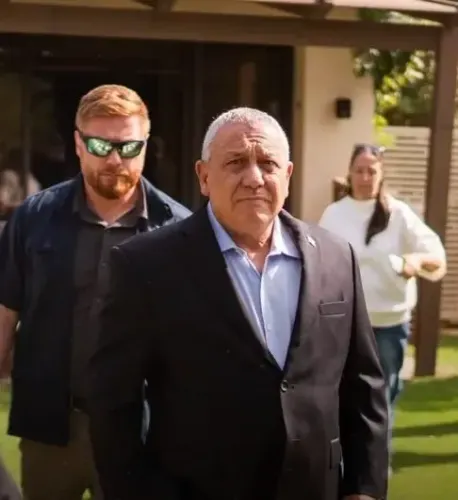
Gadi Eisenkot , a former IDF chief, has been given 28 days (with a possible 14-day extension ) by President Isaac Herzog to form a new government.
Netanyahu's right-wing coalition lost its parliamentary majority in the October election; he remains caretaker prime minister.
Eisenkot dismissed Netanyahu's speech as 'shameful' and questioned his suitability to continue in office.
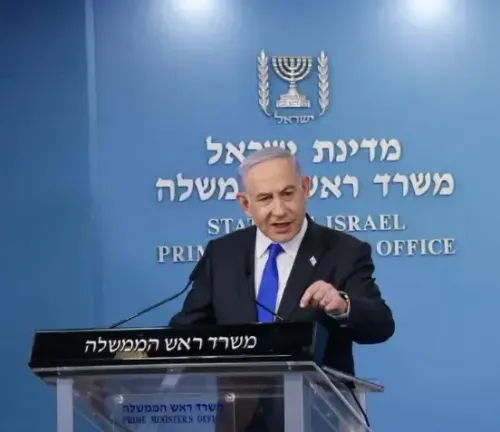
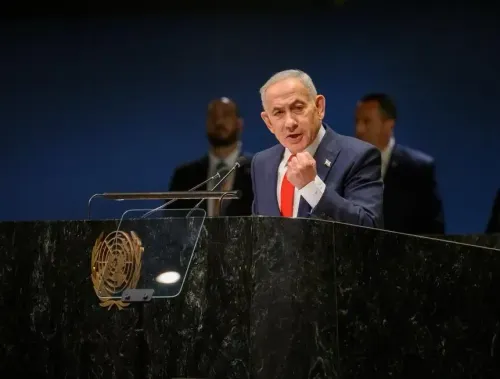
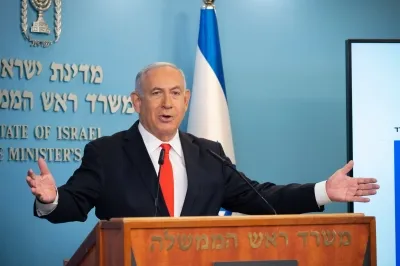
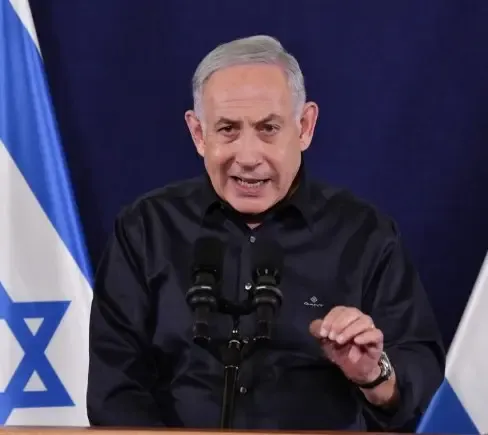
Israeli Prime Minister Benjamin Netanyahu has renewed his push for a national unity government, warning that Iran is actively rebuilding its nuclear programme and that only a broad coalition can neutralise what he called an existential threat to Israel. The appeal, delivered in a prerecorded address on Saturday, was directed at Gadi Eisenkot — the former military chief now tasked with forming the country's next government.
Netanyahu's Warning on Iran
In his address, Netanyahu quoted the stakes in stark terms. 'The Iranian regime, which seeks Israel's destruction, is once again working to revive its nuclear program,' he said. 'We must remove this existential threat once and for all.'
He further cautioned that Israel could soon face intense international pressure to accept a nuclear-armed Iran. 'In the very near future, we're going to be confronted by international pressure to accept a nuclear-armed Iran and the preservation of this terror regime that seeks to annihilate us,' Netanyahu said, speaking after the first session of Israel's newly elected parliament.
The Political Context
Netanyahu's right-wing coalition lost its parliamentary majority in the October election, leaving him as caretaker prime minister. President Isaac Herzog has given Eisenkot 28 days to form a government, with a possible 14-day extension. The Saturday address followed a security briefing Netanyahu held with Eisenkot on Thursday, and he urged his political rival to enter coalition negotiations without preconditions.
Netanyahu argued that a national unity government could guarantee Israel's security for years to come and help expand regional peace agreements — an apparent reference to the Abraham Accords framework.
Eisenkot Fires Back
The appeal drew an immediate and sharp rebuke from Eisenkot himself. The former Israel Defence Forces (IDF) chief accused Netanyahu of exploiting a significant state occasion for political ends, describing the speech as 'shameful' and questioning his suitability to continue in office. The exchange signals that any unity coalition talks will begin on deeply adversarial ground.
What's at Stake
The standoff comes at a critical moment for Israeli foreign policy. Iran's reported nuclear activities have drawn renewed scrutiny from Western governments, and Israel has historically reserved the right to unilateral military action to prevent a nuclear-armed Tehran. With a new government yet to be formed and Netanyahu's political future uncertain, the direction of Israel's Iran policy remains in flux.
All eyes now turn to whether Eisenkot can build a stable coalition within the allotted window — and whether security imperatives ultimately override the political tensions between the two rivals.
Point of View
And Eisenkot's 'shameful' dismissal risks letting rivalry overshadow a genuine security calculus. The deeper question mainstream coverage underweights is whether Israel — without a functioning government — can mount a coherent response to Tehran's reported programme acceleration. Caretaker governments do not authorise military strikes; the political deadlock is itself a strategic vulnerability.
NationPress
15 Nov 2026
Frequently Asked Questions
Why is Netanyahu calling for a national unity government in Israel?
Netanyahu is calling for a unity government primarily citing Iran's reported efforts to revive its nuclear programme, which he describes as an existential threat to Israel. His right-wing coalition lost its parliamentary majority in the October election, making him a caretaker prime minister with limited authority.
Who is Gadi Eisenkot and what is his role in forming Israel's next government?
Gadi Eisenkot is a former Israel Defence Forces (IDF) chief of staff who has been tasked by President Isaac Herzog with forming Israel's next government. He has 28 days to do so, with a possible 14-day extension.
What did Netanyahu say about Iran's nuclear programme?
Netanyahu warned that Iran is 'once again working to revive its nuclear program' and that Israel must 'remove this existential threat once and for all.' He also cautioned that Israel could soon face international pressure to accept a nuclear-armed Iran.
How did Eisenkot respond to Netanyahu's unity government appeal?
Eisenkot responded sharply, calling Netanyahu's speech 'shameful' and accusing him of using an important state occasion to further his own political interests. He also questioned Netanyahu's suitability to continue holding office.
What happens to Netanyahu while a new Israeli government is being formed?
Netanyahu remains caretaker prime minister until a new government is sworn in. As a caretaker, his executive authority is limited, which raises questions about Israel's capacity to take decisive action on security matters during the transition.