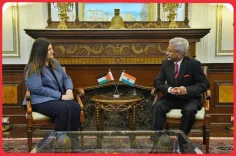
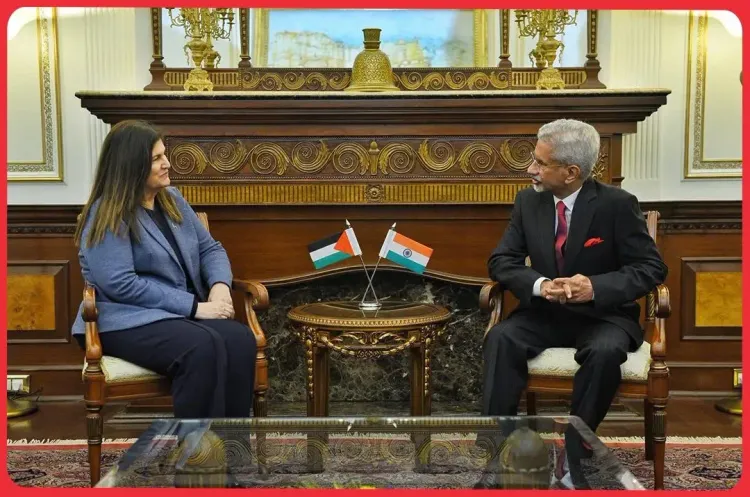
Jaishankar greets Palestine on Independence Day, eyes stronger ties
Synopsis
On Palestine's Declaration of Independence Day, EAM Dr. S. Jaishankar greeted FM Varsen Aghazarian Shahin and pledged to deepen India's developmental partnership with Palestine — renewing a bond rooted in India's 1988 recognition of Palestinian statehood.
Key Takeaways
Jaishankar extended Independence Day greetings to Palestine on 15 November 2026 , addressing FM Varsen Aghazarian Shahin directly.
The State of Palestine declared independence on 15 November 1988 in Algiers; India extended recognition shortly thereafter.
Jaishankar specifically invoked a 'developmental partnership,' pointing to India's ITEC-led capacity-building and project aid for Palestine.
India has consistently supported Palestinian positions in UN General Assembly resolutions since the 1970s.
The message reflects India's calibrated Middle East policy — maintaining solidarity with Palestine while expanding ties with Israel.
Thirty-eight years after India became one of the first major democracies to recognise the State of Palestine, Union External Affairs Minister Dr. S. Jaishankar renewed that bond on Sunday, 15 November 2026 — Palestine's Declaration of Independence Day — with a direct message to Ramallah pledging deeper developmental partnership.
Addressing Palestinian Foreign Minister Varsen Aghazarian Shahin and the Palestinian government on X, Jaishankar wrote: 'Warm greetings to FM Varsen Aghazarian Shahin, the Government and people of the State of Palestine on their Declaration of Independence Day. Look forward to strengthening our developmental partnership and longstanding friendship.'
A bond forged in Algiers in 1988
The date carries real weight. On 15 November 1988, the Palestine National Council proclaimed independence in Algiers, and India extended recognition almost immediately — a move that anchored New Delhi's position as a consistent advocate for Palestinian self-determination across decades of UN General Assembly votes. That vote of confidence, cast when few non-Arab states were willing, still forms the moral core of the bilateral relationship.
Developmental partnership: what it means in practice
India's engagement with Palestine goes beyond symbolic solidarity. New Delhi has channelled aid through the Indian Technical and Economic Cooperation (ITEC) programme, offering training slots to Palestinian officials and professionals. Broader Indian development assistance has touched sectors from education to infrastructure. Jaishankar's specific invocation of a 'developmental partnership' signals that New Delhi sees this lane — capacity-building and project aid — as the durable thread connecting the two sides even as the region's politics remain volatile.
India's calibrated Middle East balancing act
The message lands inside a wider strategic picture that New Delhi has carefully managed for years. India simultaneously deepens security, technology, and trade links with Israel while maintaining rhetorical and developmental solidarity with Palestine — a tightrope that few countries walk as openly. Annual greetings on Palestinian Independence Day are part of a deliberate diplomatic rhythm, signalling to Arab and Global South partners that India's expanding Israel ties have not erased its older commitments.
The next test of that balance will come at the UN General Assembly, where India's vote on Palestine-related resolutions is watched closely by both Ramallah and Jerusalem. Jaishankar's message today is the diplomatic handshake before that vote.
Point of View
This message also functions as quiet advance signalling to Ramallah and Arab capitals. India's decades-old balancing act in the Middle East remains one of its most quietly successful foreign-policy feats.
NationPress
15 Nov 2026
Frequently Asked Questions
When did India recognise the State of Palestine?
India recognised the State of Palestine in 1988 , shortly after the Palestine National Council proclaimed independence in Algiers on 15 November 1988, making India one of the earliest major democracies to do so.
Who is Varsen Aghazarian Shahin?
Varsen Aghazarian Shahin is the Foreign Minister of the State of Palestine, whom EAM Jaishankar addressed directly in his Independence Day message on 15 November 2026.
What is India's developmental partnership with Palestine?
India's developmental partnership with Palestine includes training and capacity-building through the Indian Technical and Economic Cooperation (ITEC) programme, as well as broader assistance in education and infrastructure.
How does India balance its ties with Palestine and Israel?
India follows a calibrated Middle East policy — maintaining longstanding rhetorical and developmental solidarity with Palestine while simultaneously expanding security, technology, and trade ties with Israel , a balance it has managed for decades.
What is Palestine's Declaration of Independence Day?
Palestine's Declaration of Independence Day falls on 15 November each year, commemorating the Palestine National Council's proclamation of statehood in Algiers on 15 November 1988 .