CM Bhajan Lal Sharma Launches Rs 491 Cr Projects in Rajsamand
Synopsis
Rajasthan CM Bhajan Lal Sharma inaugurated and laid foundations for over Rs 491 crore in development projects in Rajsamand on August 2, 2026, while distributing welfare cheques to social security and Rajivika beneficiaries and tricycles to persons with disabilities.
Key Takeaways
CM Bhajan Lal Sharma launched and foundation-laid projects worth over Rs 491 crore in Rajsamand district on August 2, 2026 .
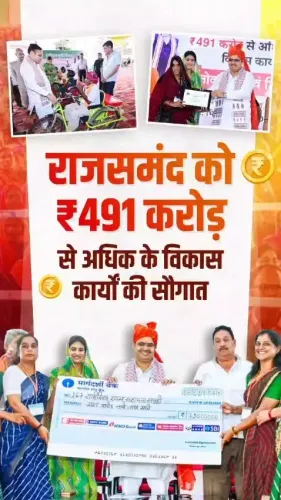
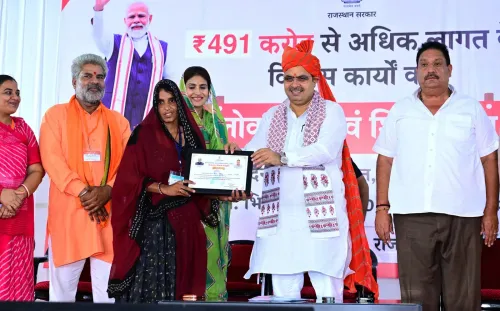
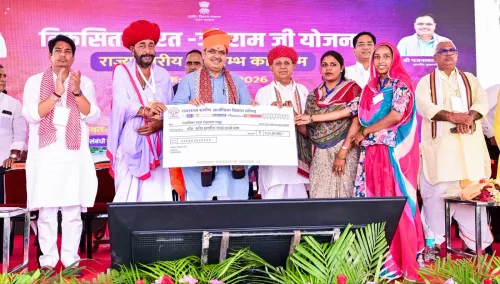
Cheques were distributed to beneficiaries of social security schemes and members of Rajivika women's self-help groups .
Persons with disabilities received tricycles as part of the government's assistive-device outreach.
CM Sharma cited the double-engine government model — state-centre BJP alignment — as the driver of the development push.
Rajivika is Rajasthan's state rural livelihood mission supporting women through credit, skilling, and scheme linkages.
The event follows a consistent BJP pattern of combining infrastructure announcements with on-the-spot welfare deliveries at the district level.
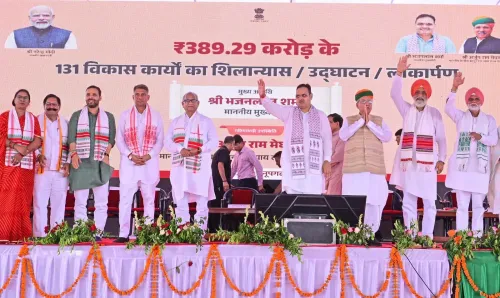
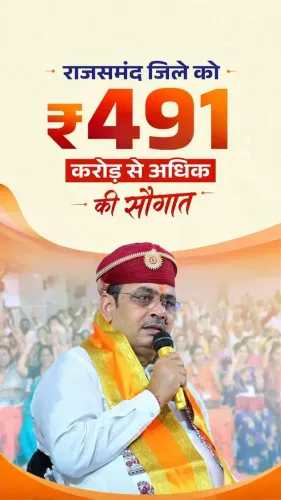
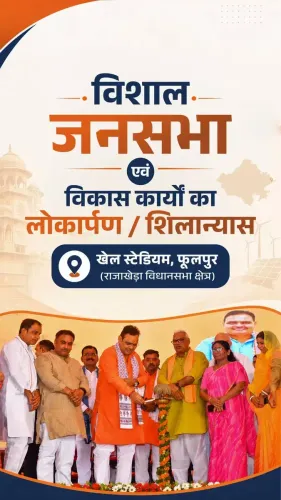
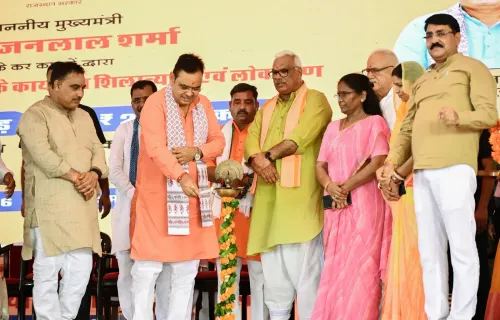
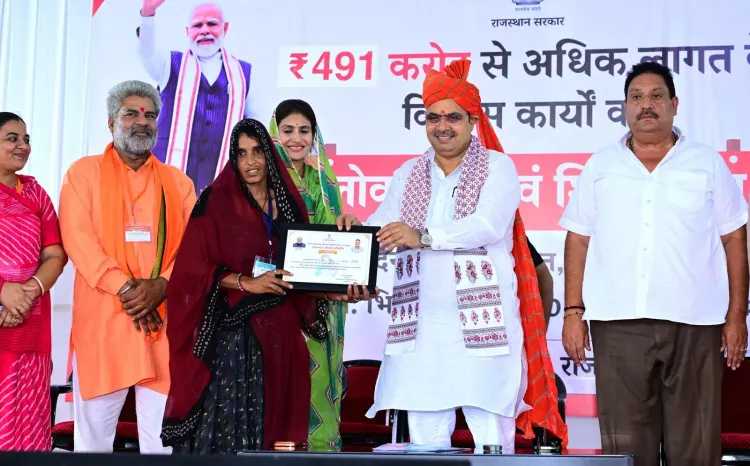
More than Rs 491 crore worth of development work landed in Rajsamand district on Sunday, August 2, 2026 — inaugurated and foundation-laid by Rajasthan Chief Minister Bhajan Lal Sharma in a district outreach that combined brick-and-mortar infrastructure with on-the-spot welfare delivery.
What was inaugurated — and who received what
The event covered a sweep of projects aimed at strengthening aadharabhoot adhosanrachna (foundational infrastructure) across the district. Beyond the ribbon-cutting, CM Sharma distributed cheques to beneficiaries of social security schemes and to women members of Rajivika self-help groups — Rajasthan's state rural livelihood mission that channels skill and economic support to women in rural and semi-urban pockets.
Persons with disabilities received tricycles at the event — a recurring element in BJP district outreach programmes that pairs visible infrastructure announcements with assistive-device handovers. Sharma framed it as reinforcing 'the government's commitment toward an empowered and dignified life for persons with disabilities.'
The 'double engine' pitch in Rajsamand
CM Sharma invoked the double-engine government formulation — the BJP's shorthand for policy and funding alignment between the state administration and the central government in New Delhi. Since assuming office in December 2023 after the state assembly elections, his administration has leaned heavily on this framing to credit district-level spending to coordinated federal-state execution.
Rajsamand, a district in southern Rajasthan with a significant rural population, has been a regular stop in the government's district outreach calendar. The pattern — infrastructure inaugurations bundled with welfare distributions — mirrors events held across other BJP-ruled states and is designed to make development outcomes tangible and visible at the grassroots level.
Rajivika's role in the welfare push
The inclusion of Rajivika group members in the cheque distribution is significant. Rajivika, Rajasthan's answer to the national rural livelihoods mission, organises women into self-help groups and connects them to credit, skilling, and government scheme benefits. Cheque handovers at such events typically represent disbursements under revolving funds or scheme-linked grants — making the welfare delivery immediate and personal rather than bureaucratic.
With similar district-level events being rolled out across Rajasthan, the government's next test will be whether the infrastructure spending translates into measurable improvements in connectivity and livelihoods — or whether the announcements outpace on-ground execution.
Point of View
Photogenic welfare delivery to create a compound news moment. For CM Sharma, still consolidating his administrative identity after taking charge in late 2023, high-visibility district visits serve a dual purpose — demonstrating governance momentum and reinforcing the 'double engine' narrative ahead of future electoral cycles. The inclusion of Rajivika beneficiaries is also a deliberate signal to rural women, a constituency both the state and central BJP have invested heavily in. Whether the Rs 491 crore translates into completed, functional infrastructure on schedule will be the harder, slower story to watch.
NationPress
16 Sept 2026
Frequently Asked Questions
What projects did CM Bhajan Lal Sharma inaugurate in Rajsamand?
CM Bhajan Lal Sharma inaugurated and laid the foundation stones for various development projects worth over Rs 491 crore in Rajsamand district on August 2, 2026, aimed at strengthening local infrastructure and expanding public facilities.
Who are the Rajivika self-help groups in Rajasthan?
Rajivika is Rajasthan's state rural livelihood mission that organises women into self-help groups, connecting them to credit, skill development, and government scheme benefits to support economic empowerment.
What is the double-engine government model CM Sharma referred to?
The double-engine government is the BJP's term for alignment between a BJP-ruled state government and the BJP-led central government, enabling coordinated funding and faster implementation of development schemes.
What welfare was distributed at the Rajsamand event?
At the Rajsamand event, cheques were handed to beneficiaries of social security schemes and Rajivika self-help group members, and tricycles were provided to persons with disabilities.
When did Bhajan Lal Sharma become Chief Minister of Rajasthan?
Bhajan Lal Sharma became Chief Minister of Rajasthan in December 2023 after the BJP's victory in the state assembly elections.