Kejriwal accuses Modi of yielding India's sovereignty to Trump
Synopsis
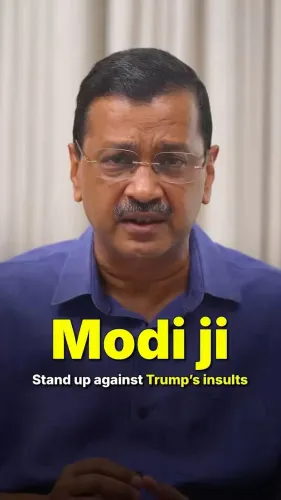
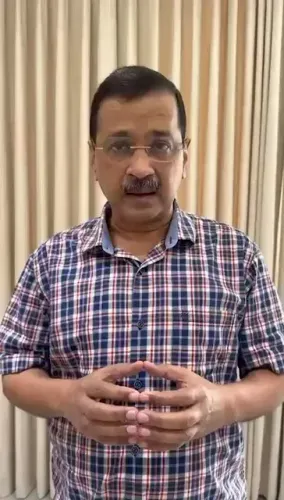
AAP convenor Arvind Kejriwal accused PM Narendra Modi of 'mortgaging' India to the US and accepting every decision of Donald Trump, alleging Trump interferes in every major and minor national decision while consistently acting against India's interests.
Key Takeaways
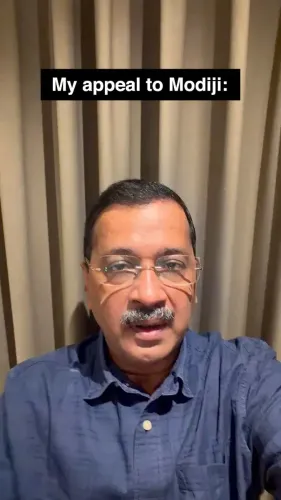
AAP convenor Arvind Kejriwal posted a sharp attack on PM Modi on 8 August 2026 , accusing him of subordinating India's sovereignty to the US.
Kejriwal alleged that Trump interferes in 'every big and small decision' of India and that Modi accepts all of Trump's positions 'whether right or wrong.' He used the words giraví (mortgaged) and gulami (servitude) to describe India's relationship with the US under Modi.
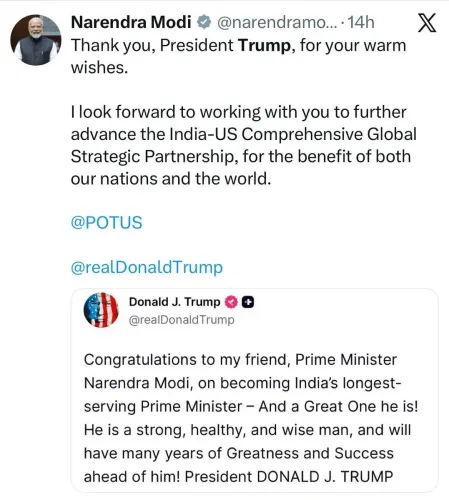
India and the US are linked through the QUAD framework and multiple defence cooperation agreements, a relationship the government has described as a strategic partnership.
The Aam Aadmi Party , founded in 2012 , has historically focused on state-level governance but is increasingly contesting BJP's dominance on national foreign-policy narratives.
The specific decisions referenced in Kejriwal's post were not independently verified at the time of publication.
India's foreign policy autonomy is under fierce opposition fire. AAP convenor Arvind Kejriwal launched a sharp broadside on Saturday, 8 August 2026, accusing Prime Minister Narendra Modi of subordinating the country's national interest to US President Donald Trump — framing the relationship not as partnership but as submission.
Kejriwal wrote in Hindi: 'देश को अमेरिका के हाथों गिरवी रखने के बाद, ट्रम्प की ग़ुलामी करने के बाद और भारत का अपमान करवाने के बाद मोदी जी देश के लिए ये लाए हैं' — ('After mortgaging the country to America, after serving as Trump's slave, and after allowing India to be humiliated, this is what Modi has brought for the nation.')
The attack went further. Kejriwal alleged that 'today, Trump's interference exists in every big and small decision of the country,' and that Modi accepts whatever Trump says — 'whether right or wrong' — while Trump 'takes decisions against India in every sector.'
The sovereignty argument at the heart of the charge
The language Kejriwal chose — giraví (mortgaged), gulami (servitude) — is deliberately incendiary. It reframes a bilateral relationship that the government has consistently presented as a strategic partnership of equals into one of dependency and deference. That framing is the political weapon, and it is aimed squarely at the BJP's own nationalist base.
India and the United States have deepened ties across defence, technology and trade over the past decade. The two countries are linked through the QUAD framework and multiple defence cooperation agreements. Yet that very closeness has given opposition parties recurring ammunition: whenever a trade dispute, a tariff, or a diplomatic friction point surfaces, the charge of excessive alignment follows.
A pattern in opposition foreign-policy criticism
This is not the first time opposition leaders have questioned the terms of India's engagement with Washington. Criticism of India-US trade negotiations, technology transfer conditions, and immigration-related friction has been a recurring feature of parliamentary debate. Kejriwal's post fits squarely within that tradition — but the vocabulary of 'slavery' and 'mortgaging' sharpens the register considerably.
The Aam Aadmi Party, founded in 2012, has historically focused its political energy on governance and anti-corruption issues at the state level. Kejriwal's sustained engagement on foreign policy signals an attempt to contest the BJP's dominance on national-security and diplomatic terrain ahead of any future electoral cycle.
The specific decisions Kejriwal references in his post were not identified in the public domain at the time of publication. The government has not issued a response to the post.
When a party that built its identity on water bills and school classrooms starts reaching for the language of national sovereignty, the political temperature is rising — and someone in South Block will have to answer the question Kejriwal just put on the table.
Point of View
Moving from procedural criticism to the emotionally charged language of national humiliation and servitude. By invoking sovereignty rather than policy specifics, he targets the BJP's core nationalist identity — a pressure point that is harder to deflect with data than a trade-deficit argument. The timing suggests AAP is positioning itself as a credible national-level voice on strategic affairs, not just a Delhi-centric party. Whether the charge lands depends on whether a concrete policy failure — a tariff concession, a diplomatic slight — can be attached to the narrative.
NationPress
8 Aug 2026
Frequently Asked Questions
What did Arvind Kejriwal say about Modi and Trump?
Kejriwal accused PM Modi of 'mortgaging' India to the US, serving as Trump's 'slave,' and allowing Trump to interfere in every major and minor national decision while consistently taking positions against India's interests.
Why is Kejriwal criticising India's relationship with the US?
Kejriwal argues that the Modi government has abandoned India's foreign policy autonomy by unconditionally accepting US positions, which he says results in decisions that harm India across multiple sectors.
What is India's current relationship with the United States?
India and the US are strategic partners linked through the QUAD framework and multiple defence cooperation agreements, though periodic trade disputes have been a recurring feature of the relationship.
Has the BJP government responded to Kejriwal's foreign policy criticism?
No government response to this specific post was available at the time of publication.
Is AAP a national party or only active in Delhi?
The Aam Aadmi Party, founded in 2012, has a national presence and contests elections in multiple states, though its strongest base remains in Delhi and Punjab.