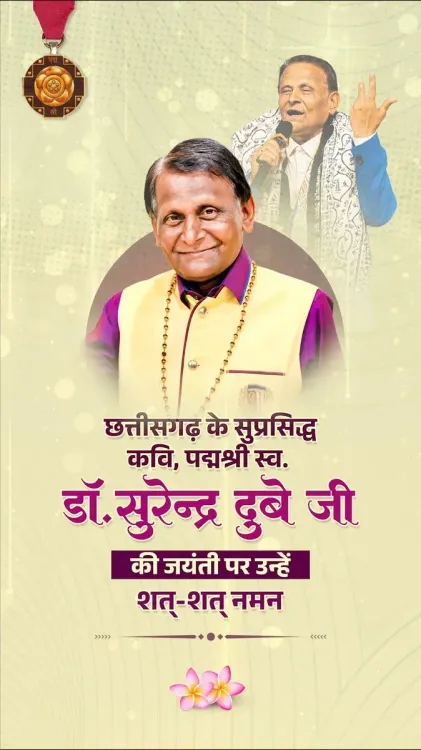
CM Vishnu Deo Sai pays tribute to Padma Shri poet Surendra Dubey
Synopsis
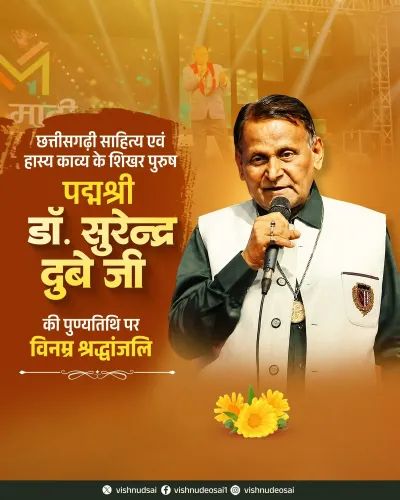
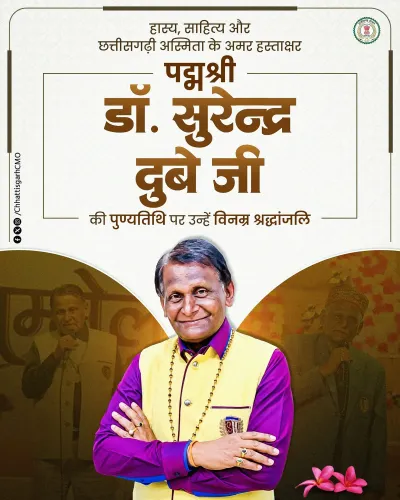
Chhattisgarh Chief Minister Vishnu Deo Sai paid tribute to the late Padma Shri poet Dr. Surendra Dubey on his birth anniversary, honouring his contribution to the state's folk language, culture, and literary heritage.
Key Takeaways
CM Vishnu Deo Sai offered a public tribute to Padma Shri Dr.
Surendra Dubey on his birth anniversary on 8 August 2026 .
Dubey was awarded the Padma Shri for his contributions to Indian literature and Chhattisgarhi folk culture.
His poetry was celebrated for reflecting the folk language, life values, and emotions of ordinary people of Chhattisgarh .
CM Sai stated that Dubey's works would continue to inspire future generations to connect with their land and language.
The tribute aligns with a broader pattern of state governments championing regional literary figures to promote indigenous cultural identity.
On the birth anniversary of one of Chhattisgarh's most beloved literary voices, Chhattisgarh Chief Minister Vishnu Deo Sai offered a heartfelt tribute to the late Padma Shri Dr. Surendra Dubey — a poet whose verses carried the soul of the state's folk traditions to audiences across India and beyond.
Paying his respects on Saturday, 8 August 2026, CM Sai wrote: 'Chhattisgarh ki maati ki mahak ko apni lekhni ke madhyam se desh-duniya tak pahunchane wale...' — honouring Dubey as a poet who 'carried the fragrance of Chhattisgarh's soil to the country and the world through his pen.' The tribute noted that Dubey's writing reflected the state's folk language, culture, life values, and the emotions of ordinary people.
A pen rooted in Chhattisgarhi soil
Dr. Surendra Dubey was awarded the Padma Shri — India's fourth-highest civilian honour — in recognition of his contributions to literature and culture. His poetry was distinguished by its deep grounding in the regional folk idiom of Chhattisgarh, giving voice to the everyday lives, beliefs, and aspirations of the state's people in their own language.
CM Sai noted that Dubey's works would continue to inspire future generations to remain connected to their land, their language, and their rich folk heritage — a sentiment that resonates strongly in a state that has consistently sought to preserve its distinct linguistic and cultural identity.
Regional literary tributes as a political gesture
Chief ministers across India routinely mark the birth anniversaries of regional litterateurs, using such occasions to reaffirm the value of indigenous languages and folk traditions. For Chhattisgarh, a state with a vibrant and distinct cultural landscape, such gestures carry particular weight — underlining the government's stated commitment to promoting the state's literary and artistic heritage.
Dr. Dubey's legacy belongs to the Chhattisgarhi literary community and to regional language advocates who continue to push for greater recognition of folk traditions in mainstream cultural discourse. His anniversary is a reminder that literature rooted in local soil can travel far — precisely the message CM Sai chose to amplify today.
The question now is whether the state follows this tribute with concrete action — literary awards, publications, or cultural events that keep Dubey's work alive for the next generation of readers.
Point of View
But it carries genuine cultural stakes in states like Chhattisgarh, where folk languages remain living traditions rather than museum pieces. CM Sai's tribute to Dr. Surendra Dubey signals the BJP government's continued effort to position itself as a custodian of the state's distinct identity — a messaging priority that resonates with local voters. The real test is whether such commemorations translate into funded programmes: literary awards, school curricula in regional languages, or archival projects. Without follow-through, the tribute remains symbolically warm but institutionally hollow.
NationPress
8 Aug 2026
Frequently Asked Questions
Who was Dr. Surendra Dubey?
Dr. Surendra Dubey was a celebrated Chhattisgarhi poet and recipient of the Padma Shri, India's fourth-highest civilian honour, recognised for his poetry rooted in the folk language, culture, and everyday life of Chhattisgarh.
Why did CM Vishnu Deo Sai pay tribute to Surendra Dubey?
CM Vishnu Deo Sai paid tribute on the occasion of Dr. Surendra Dubey's birth anniversary, honouring his literary legacy and his role in carrying Chhattisgarh's cultural identity to a national and global audience.
What is the Padma Shri award?
The Padma Shri is India's fourth-highest civilian honour, awarded by the Government of India for distinguished contributions in various fields including arts, literature, science, and public service.
What was special about Surendra Dubey's poetry?
Surendra Dubey's poetry was deeply rooted in Chhattisgarh's folk language and traditions, reflecting the life values, culture, and emotions of ordinary people of the region in an accessible and authentic voice.
How does Chhattisgarh government promote regional literature?
The Chhattisgarh government periodically honours regional literary figures through public tributes, cultural events, and literary programmes aimed at preserving the state's folk language and heritage.