Tharoor Makes Case for Kerala Governance Reform

Synopsis
Congress MP Dr. Shashi Tharoor has argued in a national opinion piece that modern governance has outpaced legacy administrative tools, making the case for Kerala to set a new standard of institutional credibility, fiscal discipline, and responsible statecraft.
Key Takeaways
Shashi Tharoor published an opinion piece on 8 August 2026 calling for governance reform in Kerala .
He argues that the complexity of modern governance has outpaced the legacy tools traditionally used to manage it.
The piece makes a case for Kerala to lead on institutional credibility , fiscal discipline , and responsible statecraft.
Kerala is frequently cited for strong human development indicators but faces recurring debate over state finances and administrative capacity.
Kerala's upcoming state budget and assembly sessions will be a key indicator of whether reform ideas gain legislative traction.
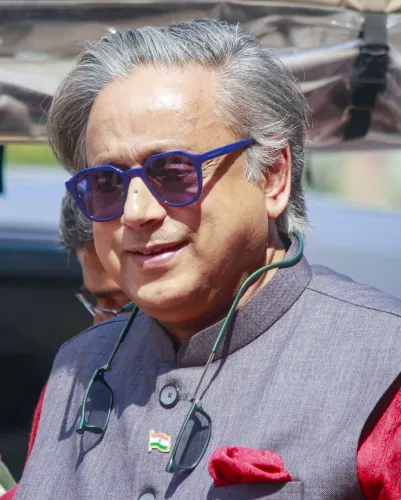
Modern governance has grown too complex for the tools built to manage it — that is the blunt opening argument Congress MP Dr. Shashi Tharoor lays out in a fresh opinion piece published on Saturday, 8 August 2026, calling on Kerala to lead by example on institutional credibility, fiscal discipline, and responsible statecraft.
Tharoor, who represents Thiruvananthapuram in the Lok Sabha and previously served as a UN Under-Secretary-General and Union Minister, writes that legacy administrative tools have simply been outpaced by the sheer scale and complexity of what governments are now expected to deliver. The piece, carried in a major national daily, stops mid-argument in the post — the full proposal for what Kerala should use is not captured in the tweet — but the direction is unmistakable: the state must modernise how it governs.
Why Kerala Is the Test Case
Kerala occupies a paradoxical place in Indian public policy. It consistently tops human development rankings — literacy, health outcomes, social indicators — yet faces recurring scrutiny over its state finances and the sustainability of its welfare delivery model. That tension makes it both a credible laboratory for reform and a cautionary tale about what happens when institutional capacity does not keep pace with public expectation.
Indian states broadly have been grappling with this gap: urbanisation is accelerating, welfare demands are rising, and the administrative architecture inherited from an earlier era was not designed for the volume or velocity of modern governance. Tharoor's argument, as framed in the post, is that Kerala — precisely because of its social-sector reputation — has the credibility to set a new standard rather than merely manage the status quo.
The Fiscal Discipline Argument
By pairing 'institutional credibility' with 'fiscal discipline' in the same breath, Tharoor signals that the reform he envisions is not simply about better technology or smarter bureaucracy — it is about the harder political work of making state finances sustainable while preserving the welfare commitments Kerala's citizens expect. That is a message aimed as much at the state's policymakers and assembly as at its voters.
Kerala's next state budget presentation and assembly debates will be the first real test of whether this kind of opinion-column argument finds any legislative traction — or remains a provocation on the page.
Point of View
He implicitly acknowledges the state's chronic revenue-expenditure tension — a politically sensitive point for the UDF he is aligned with. The argument that governance complexity has outpaced legacy tools is not new in Indian policy circles, but attaching it to Kerala's social-sector reputation gives it sharper normative force. Whether this translates into concrete legislative proposals or remains elite commentary will define its actual policy impact.
NationPress
22 Sept 2026
Frequently Asked Questions
What did Shashi Tharoor write about Kerala governance?
Tharoor argued that the complexity of modern governance has outpaced legacy administrative tools and made the case for Kerala to set a new example of institutional credibility, fiscal discipline, and responsible statecraft.
Where did Tharoor publish his Kerala governance article?
The opinion piece was published in a major national daily on or around 8 August 2026 , as referenced in his post on X.
Why is Kerala seen as a test case for governance reform in India?
Kerala consistently ranks high on human development indicators like literacy and health, but faces recurring scrutiny over state finances, making it both a credible and consequential setting for administrative reform debates.
What does fiscal discipline mean for Kerala in this context?
It refers to managing the state's revenue and expenditure more sustainably — balancing Kerala's extensive welfare commitments with the need to keep public finances on a sound footing.
What should we watch for next on Kerala governance reform?
Kerala's next state budget presentation and assembly debates will indicate whether institutional or fiscal reform proposals gain any formal legislative momentum.