US sanctions crypto exchanges aiding Iran's IRGC fund network
Synopsis
Washington has moved to cut off the IRGC's crypto lifeline — sanctioning two exchanges, six entities, and one individual across four countries for routing millions in digital assets to Iran's most powerful military-security apparatus. With a $15 million bounty now on the table and the UAE already having acted against some of the same entities, this is a coordinated squeeze that treats crypto rails as seriously as traditional banking channels.
Key Takeaways
The US sanctioned two crypto exchanges and six entities across Iran , Georgia , Poland , and the UAE on 8 August for aiding IRGC fund flows.
Siavash Kayvanpour , identified as the operator of the Shelbit Exchange , allegedly facilitated over $3 million in transfers to and from IRGC-linked addresses.
Aban Tether , an Iran-based exchange, was separately sanctioned for processing millions in transactions involving already-designated exchanges.
Treasury Secretary Scott Bessent said Treasury would 'hunt down and dismantle' illicit financial networks supporting the Iranian regime.
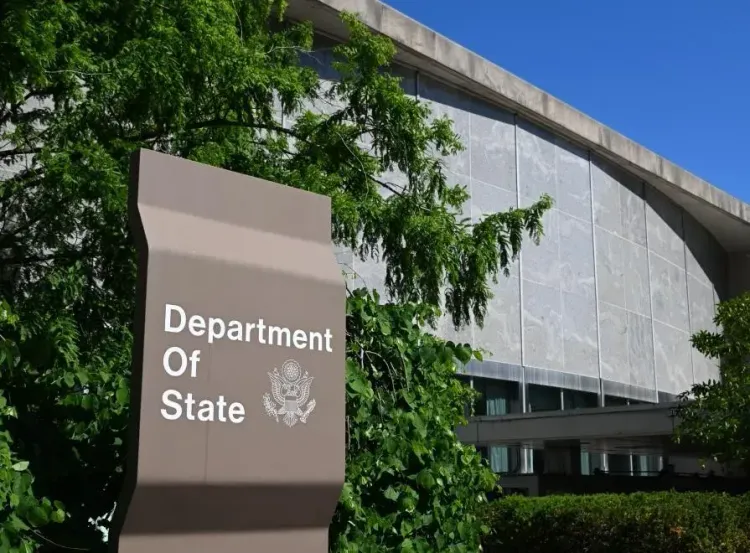
The State Department is offering up to $15 million for information on IRGC financial evasion networks.
The UAE's Virtual Assets Regulatory Authority had previously acted against Shelbit General Trading in January 2025 and July 2026 .
The United States on 8 August imposed sanctions on two digital asset exchanges and a web of affiliated companies accused of helping Iran launder billions of dollars, circumvent international sanctions, and channel funds to the Islamic Revolutionary Guard Corps (IRGC). The action designates six entities and one individual across Iran, Georgia, Poland, and the United Arab Emirates.
What Triggered the Action
The sanctions follow what the US State Department described as Iranian attacks on commercial vessels in the Strait of Hormuz earlier in the week. Washington said Tehran has increasingly relied on digital asset exchanges to maintain access to the global financial system, using them to fund activities it characterises as threats to regional stability, support for terrorism, and advancement of Iran's nuclear programme.
Key Individual and Entities Designated
The US Treasury Department identified Siavash Kayvanpour as the operator of a multinational network facilitating illicit digital currency activity. Born in Iran, Kayvanpour reportedly holds citizenship from Dominica and Afghanistan and has resided in the UAE.
According to the Treasury, Kayvanpour operates the Shelbit Exchange through SHPS Shelbit, a Georgia-based company. Digital currency addresses linked to the IRGC sent more than $1 million in assets to Shelbit addresses, while more than $2 million moved from Shelbit back to IRGC-controlled addresses. Kayvanpour's addresses also reportedly transferred more than $2 million in digital assets to Nobitex, an Iranian exchange already under US sanctions.
Also designated are UAE-based Shelbit General Trading LLC, Crypto Home DMCC, and NFT Home DMCC, along with Poland-based Shelbit Technologies Ltd. The Treasury noted that Shelbit services a large Persian-language online gambling network, through which tens of millions of dollars in digital assets were allegedly laundered.
Aban Tether Also Sanctioned
The US Treasury's Office of Foreign Assets Control (OFAC) separately sanctioned Aban Tether, an Iran-based exchange accused of processing transactions worth millions of dollars involving Nobitex and other previously designated exchanges — including Wallex, Bitpin, and Ramzinex.
Notably, the UAE's Virtual Assets Regulatory Authority had already taken enforcement action against Shelbit General Trading in January 2025 and July 2026, and against Crypto Home in January 2025 — underscoring that US action builds on prior multilateral pressure.
What the US Government Said
Treasury Secretary Scott Bessent said: The Iranian regime's reliance on digital assets and shadow banking networks is further evidence that Economic Fury is working.
He added: We will continue to increase the economic pressure. Whether in dollars, rials, or crypto, Treasury will hunt down and dismantle the illicit financial networks that keep the regime afloat.
Separately, the State Department's Rewards for Justice programme is offering up to $15 million for information leading to disruption of the IRGC's financial mechanisms, including details on sanctions-evasion networks, front companies, exchange houses, revenue sources, and transfers to Iran-backed armed groups.
Background on the IRGC
The IRGC was established following Iran's 1979 revolution as a branch of the country's military. The United States designated it a Foreign Terrorist Organisation in April 2019 and had earlier named it a Specially Designated Global Terrorist under US counterterrorism authorities. The latest sanctions represent a continued effort to cut off the corps from global financial flows through both traditional and emerging digital channels.
With crypto increasingly central to sanctions evasion globally, the designations signal that Washington intends to treat digital asset exchanges with the same scrutiny applied to conventional financial institutions.
Point of View
Poland, and the UAE suggest Iran's evasion architecture is deliberately diffuse and jurisdiction-hopping. The UAE's prior enforcement actions against some of the same entities, now cited by the Treasury, indicate a rare instance of Gulf-US regulatory alignment on crypto — one that could set a precedent for how digital asset oversight intersects with geopolitical pressure. The $15 million Rewards for Justice bounty is the sharpest signal yet that Washington views human intelligence on crypto networks as a strategic priority, not an afterthought.
NationPress
22 Sept 2026
Frequently Asked Questions
Which crypto exchanges did the US sanction on 8 August?
The US sanctioned the Shelbit Exchange (operated through SHPS Shelbit in Georgia) and Aban Tether (an Iran-based exchange), along with affiliated entities including Shelbit General Trading LLC, Crypto Home DMCC, NFT Home DMCC, and Shelbit Technologies Ltd across the UAE and Poland.
Why did the US impose these crypto sanctions on Iran?
The US said the exchanges helped Iran launder billions of dollars, evade international sanctions, and funnel funds to the Islamic Revolutionary Guard Corps (IRGC) . The action also followed what the State Department described as Iranian attacks on commercial vessels in the Strait of Hormuz.
Who is Siavash Kayvanpour and what is he accused of?
Siavash Kayvanpour is identified by the US Treasury as the operator of the Shelbit Exchange network. He is accused of facilitating illicit digital currency flows, including over $1 million sent from IRGC-linked addresses to Shelbit and more than $2 million transferred from Shelbit to IRGC addresses.
What is the $15 million reward the US is offering?
The State Department's Rewards for Justice programme is offering up to $15 million for information that helps disrupt the IRGC's financial mechanisms, including details on sanctions-evasion networks, front companies, and fund transfers to Iran-backed armed groups.
What is the IRGC and why is it sanctioned by the US?
The Islamic Revolutionary Guard Corps (IRGC) is a branch of Iran's military established after the country's 1979 revolution . The United States designated it a Foreign Terrorist Organisation in April 2019 and had previously named it a Specially Designated Global Terrorist under counterterrorism authorities.