US launches 'Operation Economic Outcast' against Iran, 4 Indian firms sanctioned

Synopsis
The US Treasury has declared financial war on Iran with 'Operation Economic Outcast' — an open-ended campaign to sever Tehran's every economic lifeline. The opening round alone hit nearly 60 entities across five sectors and, strikingly, named four Indian companies and three Indian nationals, signalling that Washington will sanction partner-nation firms without hesitation.
Key Takeaways
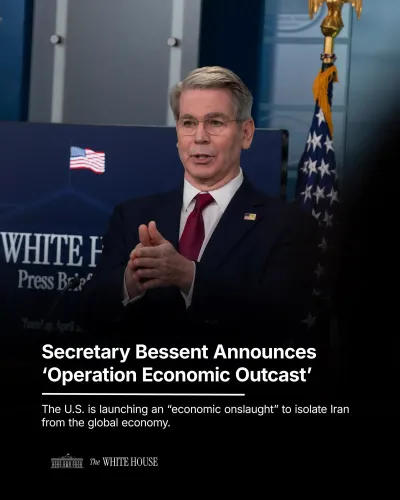
US Treasury Secretary Scott Bessent launched Operation Economic Outcast on 24 August , describing it as an unprecedented sanctions campaign against Iran .
Secondary sanctions exposure was expanded to 5 sectors : digital assets, technology, gold, aviation and shipping.
The Office of Foreign Assets Control (OFAC) designated nearly 60 entities , individuals and vessels in the opening round.
Four Indian companies — Portease Partners LLP , PP Softtech Pvt Ltd , Prakrutees Infra Impex India Pvt Ltd and Sadashiva Overseas Ltd — and three Indian nationals were sanctioned.
Foreign governments have been given defined timelines to comply; President Trump is reportedly calling world leaders directly with specific demands.
Bessent warned that action against at least one financial institution is expected before the end of the week.
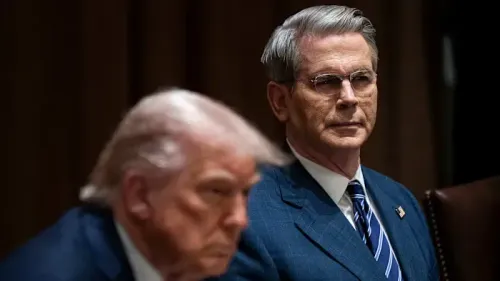
US Treasury Secretary Scott Bessent on Monday, 24 August unveiled Operation Economic Outcast, an unprecedented sanctions campaign aimed at severing Iran's financial networks, oil revenues and economic lifelines — warning every government, bank and company worldwide to choose between Tehran and access to the American financial system. Bessent described the move as an 'economic onslaught' launched at the direction of President Donald Trump.
What Operation Economic Outcast Entails
Bessent drew a deliberate parallel to the Second World War Allied offensive, calling the campaign the financial equivalent of D-Day. 'In the Second World War, D-Day marked the historic beginning of a campaign with our allies to target and drive the enemy from its positions, including those in third countries,' he said. 'Today, in that same spirit, we are launching an economic onslaught against Iran's financial connections around the globe.'
The US Treasury has, according to Bessent, already mapped Iran's smuggling networks, sanction-evasion channels and the financial arteries used to fund the Islamic Revolutionary Guard Corps (IRGC). The stated objective is to 'sever every economic lifeline that sustains this tyrannical regime' and leave Tehran isolated from the global economy.
Secondary Sanctions and Expanded Exposure
As part of the opening salvo, the Treasury expanded secondary sanctions exposure to cover five Iranian economic sectors: digital assets, technology, gold, aviation and shipping. The Office of Foreign Assets Control (OFAC) simultaneously designated nearly 60 entities, individuals and vessels, accused of enabling Iranian nuclear and missile technology procurement, cyber operations and oil-revenue networks.
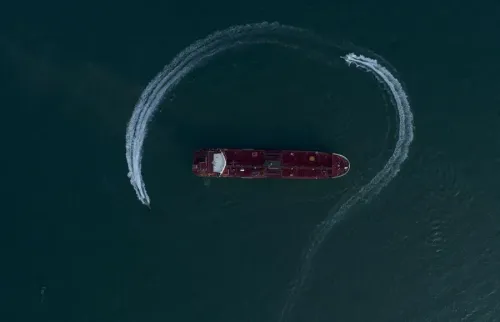
The Treasury also suspended several general licences that had previously authorised certain remittance payments and Iranian participation in US sporting, cultural and academic exchanges. Guidance was issued on sanctions risks linked to Iranian demands involving shipping through the Strait of Hormuz.
Four Indian Firms and Three Nationals Designated
Notably, the action named four Indian companies — Portease Partners LLP, PP Softtech Private Limited, Prakrutees Infra Impex India Private Limited and Sadashiva Overseas Limited — among the designated entities. Three Indian nationals — Prashant Garg, Harish Ramchandra Rangi and Indrismiya Asharafmiya Shekh — were also sanctioned. Their designation signals that Washington is willing to target companies in partner nations, including India, without exemption.
Ultimatum to Foreign Governments
Bessent confirmed that the Trump administration has begun directly pressuring foreign governments to wind down activities Washington has identified as enabling Iran. President Trump is reportedly making personal calls to world leaders with specific demands. 'Every country has a defined timeline to shut down activities we have identified,' Bessent said. 'If they do not take action, we will do so unilaterally through Treasury authorities.'
He declined to name the countries or disclose their deadlines but left little ambiguity about the consequences. 'We do not have infinite patience here,' he said. Financial institutions that help Iran launder money risk losing access to the US dollar system entirely. 'No one is above the reach of US sanctions,' Bessent warned. 'When the hammer of US Treasury actions falls upon them, they will have no one to blame but themselves.'
What Comes Next
Bessent indicated that additional measures are imminent, including action against at least one financial institution before the end of the week. He described the campaign as sustained and open-ended: 'This is a sustained campaign to collapse every last option for Iran.' Markets, shipping operators and banks with any Iran-linked exposure are now on notice, as Washington signals it will act unilaterally if foreign compliance falls short.
Point of View
But the underlying mechanism — unilateral secondary sanctions backed by dollar-system access — is structurally coercive in a way that multilateral pressure never was. The real pressure test comes not from Tehran's response, but from how quickly major trading partners fold; if even one large economy refuses to comply, the campaign's credibility fractures. The open-ended timeline and the promise of imminent bank-level action suggest the Treasury is betting on shock and speed over diplomatic consensus.
NationPress
9 Oct 2026
Frequently Asked Questions
What is Operation Economic Outcast against Iran?
Operation Economic Outcast is a sustained US Treasury sanctions campaign launched on 24 August at President Donald Trump's direction, aimed at severing Iran's financial networks, oil revenues and economic lifelines. It expands secondary sanctions to five sectors — digital assets, technology, gold, aviation and shipping — and designated nearly 60 entities in its opening round.
Why were Indian companies sanctioned under the Iran campaign?
Four Indian companies — Portease Partners LLP, PP Softtech Private Limited, Prakrutees Infra Impex India Private Limited and Sadashiva Overseas Limited — along with three Indian nationals were designated by OFAC as part of the first wave of Operation Economic Outcast. The Treasury accused the designated entities of enabling Iranian oil-revenue networks, nuclear and missile procurement, or sanction-evasion channels.
What ultimatum has the US given to foreign governments?
According to Treasury Secretary Bessent, every country has been given a defined timeline to shut down activities Washington has identified as enabling Iran. President Trump is reportedly making direct calls to world leaders with specific demands, and Bessent warned that the US will act unilaterally through Treasury authorities if countries fail to comply.
Which sectors face expanded secondary sanctions under Operation Economic Outcast?
The US Treasury expanded secondary sanctions exposure to five Iranian economic sectors: digital assets, technology, gold, aviation and shipping. Any foreign entity operating in these sectors with Iran-linked exposure now risks losing access to the US dollar financial system.
What further actions has the US Treasury signalled?
Treasury Secretary Bessent indicated that additional measures are imminent, including action against at least one financial institution before the end of the week. He described the campaign as sustained and open-ended, warning that any economic engagement with Iran will expose those involved to the full reach of American sanctions authority.