CM Yogi: UP Medical Colleges Doubled to 85 Since 2017
Synopsis
CM Yogi Adityanath says Uttar Pradesh has grown its medical college count from 36 to 85 and MBBS seats from 4,690 to over 13,600 since 2017, with more than 10 crore residents now covered under health insurance schemes.
Key Takeaways
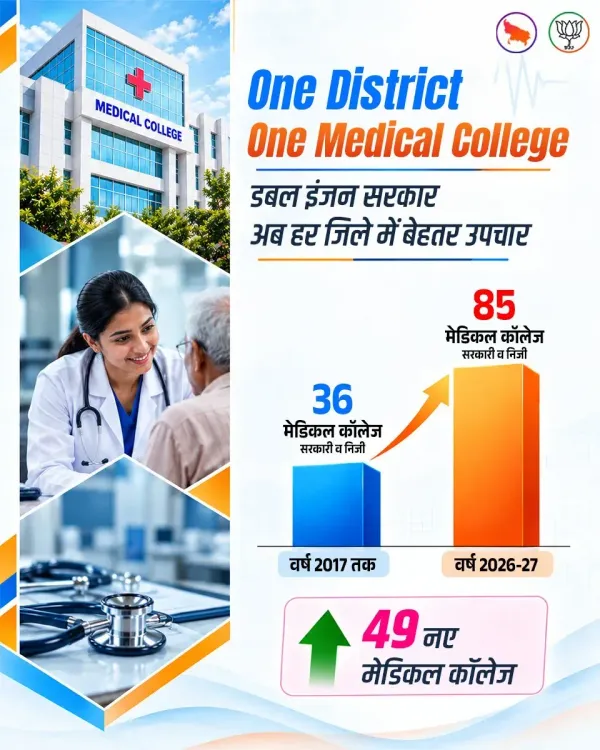
Uttar Pradesh's medical college count has grown from 36 in 2017 to 85 in 2026 under the BJP government.
MBBS seats in the state have nearly tripled, rising from 4,690 to more than 13,600 .
More than 10 crore (100 million) UP residents are now covered under Ayushman Bharat PM-JAY and the state's Mukhyamantri Jan Arogya Abhiyan .
CM Yogi framed the shift with the contrast of 'one district, one mafia' versus the new 'One District, One Medical College' vision.
The expansion is linked to Prime Minister Modi's Antyodaya philosophy and the 'double engine government' model of aligned Centre-state BJP governance.
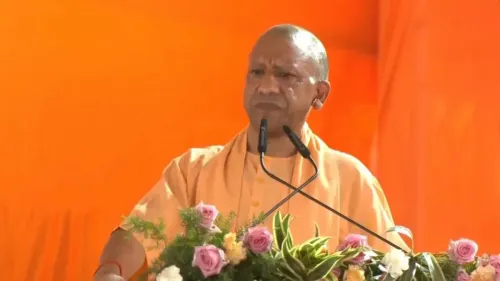
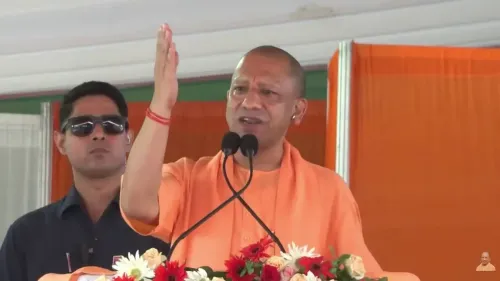
From vn district-ek mafia to one district, one medical college — Uttar Pradesh Chief Minister Yogi Adityanath on Friday, October 9, 2026 laid out a sweeping account of the state's healthcare transformation since 2017, anchoring it in a surge of medical colleges, MBBS seats, and insurance coverage that the government says has fundamentally redrawn access to health services across India's most populous state.
From 36 Colleges to 85 — and 13,600 MBBS Seats
The headline number is stark. When the BJP government took office in 2017, Uttar Pradesh had just 36 medical colleges. That figure now stands at 85 — a near-tripling in under a decade. MBBS seats have followed the same upward curve, climbing from 4,690 to more than 13,600, nearly tripling the annual pipeline of doctors trained inside the state.
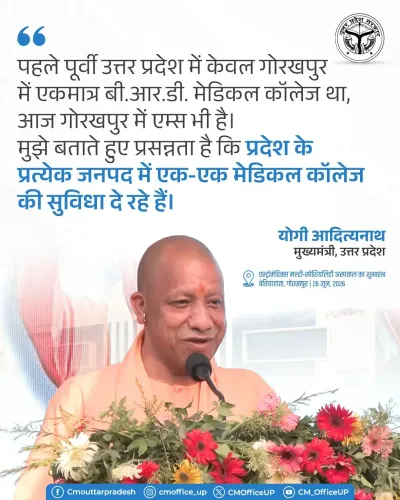
CM Yogi framed this as a direct consequence of the 'One District — One Medical College' resolve, a commitment that reframes the role of district-level governance from law enforcement to health delivery. The deliberate contrast he drew — the old reputation of 'one district, one mafia' versus the new aspiration — was pointed political shorthand, but the underlying infrastructure shift it describes carries genuine policy weight.
10 Crore Residents Under Health Insurance Cover
Beyond bricks-and-mortar expansion, CM Yogi pointed to coverage scale. He said more than 10 crore (100 million) residents of Uttar Pradesh are now enrolled under Ayushman Bharat Pradhan Mantri Jan Arogya Yojana (PM-JAY) and the state's own Mukhyamantri Jan Arogya Abhiyan — a combined umbrella that is intended to insulate beneficiaries from catastrophic out-of-pocket spending on serious illness.
PM-JAY, launched nationally in 2018, provides cashless hospitalisation cover of up to ₹5 lakh per family per year for secondary and tertiary care. The Mukhyamantri Jan Arogya Abhiyan extends the state's own top-up and outreach layer to families not fully captured by the central scheme. Together, the two programmes represent one of the largest state-level health-financing efforts in India.
The Political Architecture Behind the Claim
CM Yogi credited Prime Minister Narendra Modi's guidance and the philosophy of Antyodaya — 'welfare of the last person in the queue' — as the ideological spine of the expansion. The 'double engine government' framing — the same party in power at both the state and Centre — is a recurring BJP argument that aligned political leadership accelerates scheme delivery and capital allocation.
The post arrives at a moment when Uttar Pradesh, with a population exceeding 240 million, remains a bellwether for national health-policy ambition. Tripling MBBS capacity inside a single state changes not just local healthcare access but the national doctor-to-patient ratio. The government's argument is simple: more colleges in more districts means shorter distances to care for rural populations, and more insured residents means fewer families pushed into poverty by medical bills. Whether delivery on the ground matches the numbers on the ledger is the question that will define the legacy of this expansion.
Point of View
One Medical College drive fits within a broader BJP national narrative of converting administrative capacity into visible, district-level public goods. If the numbers hold to independent scrutiny, near-tripling MBBS capacity in a single state within eight years would represent one of India's most significant sub-national health-infrastructure pushes. The 10-crore insurance coverage figure, however, invites scrutiny on actual claim settlement rates and service quality — metrics that tend to complicate headline enrolment numbers.
NationPress
9 Oct 2026
Frequently Asked Questions
How many medical colleges does Uttar Pradesh have in 2026?
According to CM Yogi Adityanath, Uttar Pradesh now has 85 medical colleges, up from just 36 in 2017 when the current BJP government took office.
How many MBBS seats are there in UP in 2026?
MBBS seats in Uttar Pradesh have grown to more than 13,600, nearly tripling from the 4,690 seats that existed in 2017.
What is the One District One Medical College scheme in UP?
One District, One Medical College is Uttar Pradesh's stated policy goal of ensuring every district has at least one government or government-approved medical college, aimed at decentralising healthcare education and access.
How many UP residents are covered under Ayushman Bharat?
CM Yogi says more than 10 crore (100 million) Uttar Pradesh residents are now covered under Ayushman Bharat PM-JAY and the state's Mukhyamantri Jan Arogya Abhiyan combined.
What is the Mukhyamantri Jan Arogya Abhiyan in Uttar Pradesh?
Mukhyamantri Jan Arogya Abhiyan is a state-level health insurance and outreach programme in Uttar Pradesh that supplements the central Ayushman Bharat PM-JAY scheme, extending coverage to additional low-income families.