Iran in economic 'death spiral', US controls Hormuz: Scott Bessent
Synopsis
US Treasury Secretary Scott Bessent declared Iran is in an economic 'death spiral' — its currency having collapsed from 800,000 to 2.1 million rials to the dollar in 16 months — and flatly asserted Washington, not Tehran, controls the Strait of Hormuz. With 17 million barrels moving through the waterway daily and a Dubai bank already sanctioned, the US is betting financial strangulation will force Iran back to the table.
Key Takeaways
US Treasury Secretary Scott Bessent declared Iran is in an economic 'death spiral' following the G20 finance ministers' meeting in Asheville on 2 September .
Bessent asserted the United States — not Iran — controls the Strait of Hormuz , citing 17 million barrels of crude transiting the waterway the previous day.
Iran's currency has collapsed from approximately 800,000 rials to the dollar to 2.1 million over the past 16 months , according to Bessent.
Washington is actively targeting Iran's ability to convert Chinese renminbi payments into dollars, including action against a Dubai bank .
Bessent outlined three possible outcomes: IRGC internal fractures, public uprising, or Iran returning to negotiations with Washington .
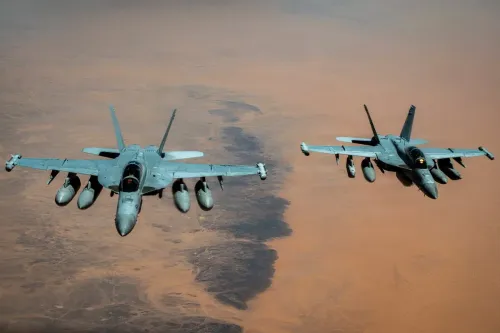
Limited US strikes have already targeted Iranian radar equipment along the Strait, Bessent confirmed.
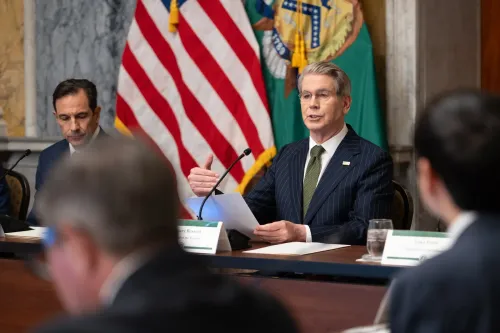
US Treasury Secretary Scott Bessent on 2 September declared that Iran is trapped in an economic 'death spiral', asserting that Washington — not Tehran — controls the Strait of Hormuz, and that sustained financial pressure combined with targeted military strikes will ultimately compel Iran to return to the negotiating table. Bessent made the remarks to reporters following the G20 finance ministers' meeting in Asheville.
US Asserts Control of the Strait of Hormuz
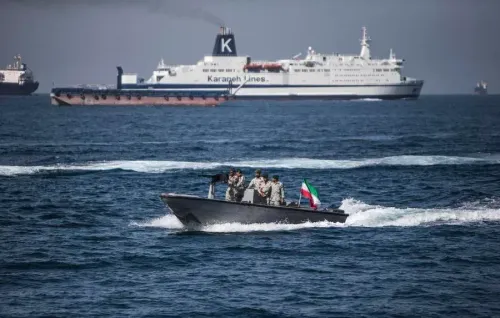
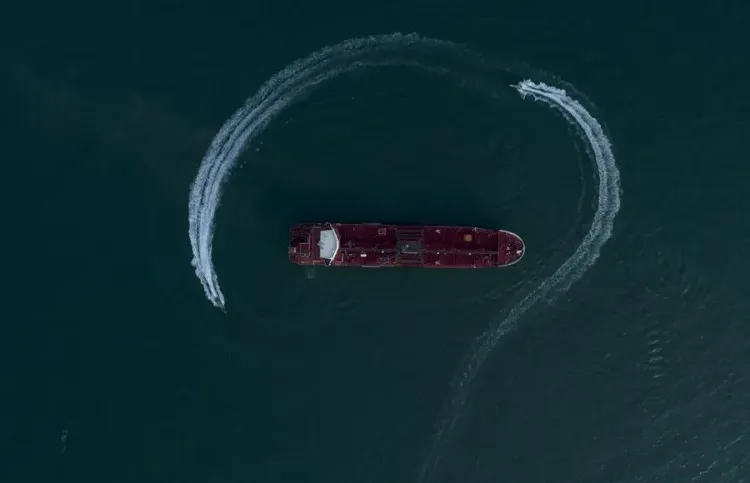
Bessent flatly rejected suggestions that Iran had succeeded in closing the strategically critical waterway. 'Iran does not have control of the Strait, and they are in a death spiral. We have control of the Strait,' he said. He noted that approximately 17 million barrels of crude oil had transited the waterway the previous day as evidence that Iranian interdiction efforts had failed.
The Treasury Secretary confirmed that the United States had conducted limited strikes targeting radar equipment Iran was attempting to reconstruct along the Strait — a detail that underscores the active, if constrained, military dimension of the ongoing standoff.
Currency Collapse and Fuel Shortages Signal Economic Strain
Bessent pointed to Iran's currency as the starkest indicator of its deteriorating finances. The Iranian rial, he said, had weakened from roughly 800,000 to the dollar some 16 months ago to approximately 2.1 million to the dollar — a collapse he described as evidence that Tehran has been effectively cut off from international foreign exchange markets.
He also cited domestic fuel shortages and lengthy queues inside Iran as visible signs of economic stress, noting the paradox of a country sitting atop some of the world's largest energy reserves struggling to supply its own population. 'That just means that they have no access to dollars and that they are in the death throes,' Bessent said.
Washington Targets Iran's Dollar Access and Renminbi Channels
A central pillar of the US financial strategy, according to Bessent, is severing Iran's ability to convert payments received in Chinese renminbi (RMB) into dollars. He described a circuit in which Chinese entities pay Iran in RMB, which then flows back into the Gulf region for conversion — a channel Washington is now actively disrupting.
'The Chinese pay the Iranians in RMB. The RMB comes back to the Gulf region,' he said, adding that the US is targeting banks, cash houses, and supply networks involved in those conversions. Bessent referenced action taken the previous Friday against a bank in Dubai, though he declined to name the institution. 'So when that money cannot be converted to dollars, then the regime will starve,' he said.
Three Possible Outcomes, Washington's Prediction
Bessent outlined three scenarios he said the mounting pressure could produce: fractures within the Islamic Revolutionary Guard Corps (IRGC), a popular uprising against the leadership, or Iran returning to direct negotiations with Washington. 'At a point, either the IRGC are going to turn on each other, the people are going to turn on them, or they're going to come to the table and want to do a deal that they can stick with,' he said.
He also said President Donald Trump believed a prior memorandum of understanding had collapsed because Iran was not genuinely prepared to reach an agreement. Bessent acknowledged the possibility of further Iranian military action as pressure mounts — 'Will they lash out more kinetically? Maybe, but they will be ready for a deal' — but maintained that Iran's financial deterioration would ultimately shift its calculus.
Background: Sanctions and the Stakes at Hormuz
The United States has imposed successive rounds of sanctions on Iran's oil industry, banking system, and government institutions, targeting Tehran's nuclear activities, ballistic missile programme, and support for armed groups across the Middle East. The Strait of Hormuz — connecting the Persian Gulf with the Gulf of Oman and the Arabian Sea — carries a substantial share of global oil and liquefied natural gas shipments, making any sustained disruption a material risk to world energy markets. The standoff over the waterway has drawn renewed attention to how economic coercion and military posture intersect in one of the world's most consequential chokepoints.
Point of View
And their effectiveness will determine whether Bessent's three-outcome framework plays out on Washington's preferred timeline.
NationPress
17 Oct 2026
Frequently Asked Questions
What did US Treasury Secretary Scott Bessent say about Iran?
Bessent said Iran is caught in an economic 'death spiral' and that the United States, not Iran, controls the Strait of Hormuz. He made the remarks on 2 September after the G20 finance ministers' meeting in Asheville, arguing that financial pressure will eventually force Tehran back to negotiations.
Does Iran control the Strait of Hormuz?
According to Bessent, Iran does not control the Strait of Hormuz. He cited approximately 17 million barrels of crude oil moving through the waterway in a single day as evidence, and confirmed the US had conducted limited strikes on Iranian radar equipment along the Strait.
How severe is Iran's economic crisis according to the US?
Bessent described Iran's economic situation as a 'death spiral', pointing to the rial's collapse from roughly 800,000 to the dollar 16 months ago to 2.1 million currently, as well as domestic fuel shortages and lengthy queues — striking for a country with some of the world's largest energy reserves.
How is the US cutting off Iran's access to money?
Washington is targeting banks, cash houses, and supply networks that convert Chinese renminbi payments received by Iran into dollars. Bessent referenced action taken against a bank in Dubai and said that cutting off dollar conversion would effectively starve the Iranian regime of hard currency.
What outcomes does the US expect from pressure on Iran?
Bessent outlined three possible scenarios: fractures within the Islamic Revolutionary Guard Corps, a popular uprising against the leadership, or Iran agreeing to direct negotiations with Washington. He said President Donald Trump believed a prior memorandum of understanding failed because Iran was not ready for a genuine deal.