Oil prices may fall fast after Hormuz crisis, says US Treasury Secretary Bessent

Synopsis
With nearly 2,000 tankers reportedly queued in the Gulf, US Treasury Secretary Scott Bessent is betting that the Hormuz disruption ends in a supply surge, not a shortage — and that a 10% May price drop is just the beginning. The claim rests heavily on record US energy output and a diplomatic resolution with Iran that is still far from certain.
Key Takeaways
US Treasury Secretary Scott Bessent said on 29 May that oil prices could fall 'very quickly' once Strait of Hormuz shipping clears.
Bessent cited a 10 per cent decline in oil prices during May as evidence of market resilience.
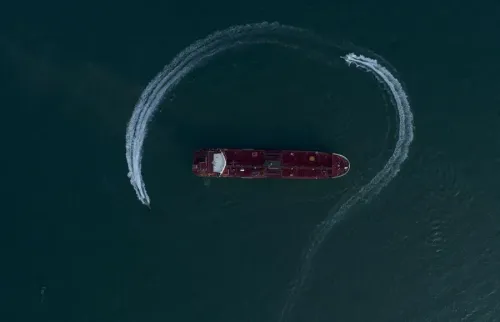
Nearly 2,000 ships are reportedly waiting to exit the Gulf, according to Bessent.
Free navigation through the Strait of Hormuz is described as a key US condition in ongoing talks with Iran .
Bessent credited US energy dominance and record exports for insulating the American economy from the shock.
The Treasury Secretary expects gasoline prices to follow oil lower once the disruption passes.
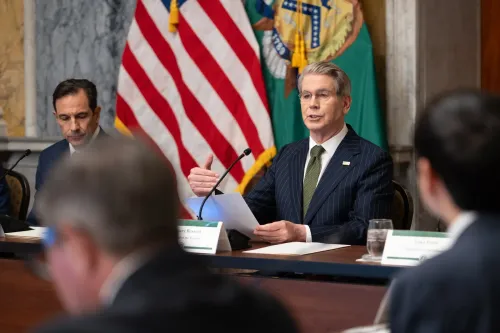
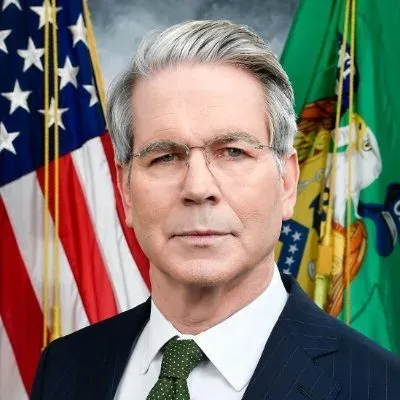
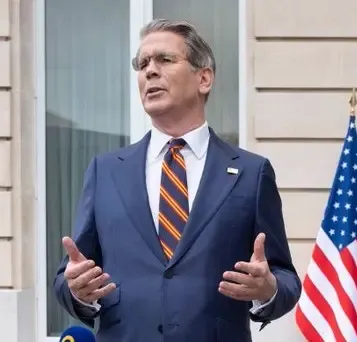
US Treasury Secretary Scott Bessent expressed confidence on 29 May that global oil prices could drop sharply once shipping disruptions in the Gulf ease, asserting that energy markets are well supplied despite mounting tensions around the Strait of Hormuz. Speaking at a White House briefing, Bessent argued that fears of a prolonged energy shock may be overstated.
What Bessent Said
'There are almost 2,000 ships waiting to come out of the Gulf and I think the oil market is going to be very well supplied on the other side of this, and that we could see prices come down very quickly,' Bessent told reporters. He also noted that oil prices had already softened during the month: 'What we've seen is actually oil prices are down about 10 per cent in May.'
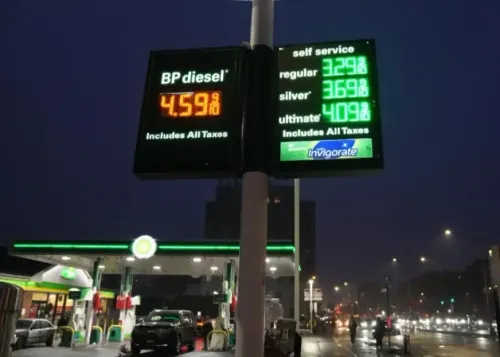
On the outlook for fuel costs at the pump, Bessent added: 'I would expect on the other side of this that gasoline prices will follow.'
The Hormuz Factor
The Strait of Hormuz is one of the world's most critical maritime chokepoints, with a significant share of global oil supplies transiting it daily. Bessent stressed that free navigation through the waterway is a key condition the Trump administration is seeking in its ongoing discussions with Iran. 'The Strait of Hormuz has to have free transit. Navigation of the seas has to be free and open as it was before,' he said.
Asked whether a prolonged closure could create longer-term supply problems, Bessent suggested the disruption may ultimately trigger a surge of shipments once transit resumes. 'As the strait opens up, we're going to see this burst of ships come out,' he said, raising questions about refining and logistics capacity to absorb the volume quickly.
US Energy Dominance Argument
Bessent linked the administration's confidence to America's expanded energy output, describing it as a structural buffer. 'We are more resilient to energy price fluctuations due to President Trump's energy dominance and deregulatory agenda,' he said. 'The United States is now the world's largest energy exporter. The United States has never exported so much energy or produced so much energy.'
The Treasury Secretary also indicated that additional supplies from major energy-producing nations — referenced in recent discussions — could further stabilise markets once normal shipping resumes.
Inflation and Economic Outlook
Bessent connected energy stability to the administration's broader economic narrative, noting that inflationary pressures are expected to moderate if oil markets continue to settle. He argued that economic growth has remained resilient despite concerns about inflation and global uncertainty — a framing that aligns with the Trump administration's pre-election messaging on cost-of-living relief.
Notably, this is not the first time a senior US official has sought to talk down energy prices during a Gulf crisis; similar reassurances were offered during earlier episodes of Hormuz tension, with mixed results depending on how quickly diplomatic channels moved. Markets will be watching whether the diplomatic track with Iran translates into verifiable easing of transit restrictions in the days ahead.
Point of View
And the White House has every political incentive to signal calm. But the 10% May price drop he cites reflects uncertainty, not resolution — markets fell because a conflict premium was partially unwound, not because supply was secured. The real stress test comes if the strait remains restricted beyond a few weeks: US export capacity, however record-breaking, cannot fully substitute for Gulf flows at scale. And the diplomatic track with Iran has a long history of stalling at precisely the moment a deal looks close.
NationPress
14 Oct 2026
Frequently Asked Questions
What did US Treasury Secretary Scott Bessent say about oil prices and the Hormuz crisis?
Bessent said on 29 May that global oil prices could decline 'very quickly' once shipping disruptions in the Gulf ease, pointing to nearly 2,000 ships queued to exit and a 10 per cent drop in oil prices already recorded in May. He argued energy markets remain well supplied despite the Strait of Hormuz tensions.
Why is the Strait of Hormuz important for global oil supply?
The Strait of Hormuz is one of the world's most critical maritime chokepoints, through which a significant share of global daily oil supplies passes. Any disruption to transit there can spike energy prices worldwide and affect supply chains across Asia, Europe, and beyond.
What is the Trump administration's position on Hormuz navigation?
Bessent stated that free and open transit through the Strait of Hormuz is a key condition the Trump administration is seeking in its ongoing discussions with Iran, describing it as a non-negotiable requirement for market and diplomatic stability.
How has US energy production affected its resilience to the Hormuz crisis?
Bessent argued that record US energy production and exports — making the US the world's largest energy exporter — have insulated the American economy from external price shocks. He credited the Trump administration's energy dominance and deregulatory agenda for this buffer.
Will gasoline prices fall if the Hormuz situation resolves?
Bessent said he expects gasoline prices to follow oil prices lower once the disruption passes and normal shipping resumes. However, he flagged that a sudden burst of ships exiting the strait could raise questions about how quickly the volume can be refined and delivered.