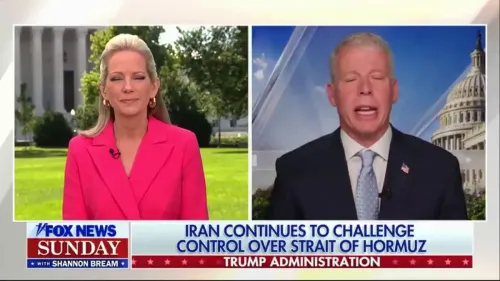
Hormuz reopening: Indian refineries set to gain, says White House
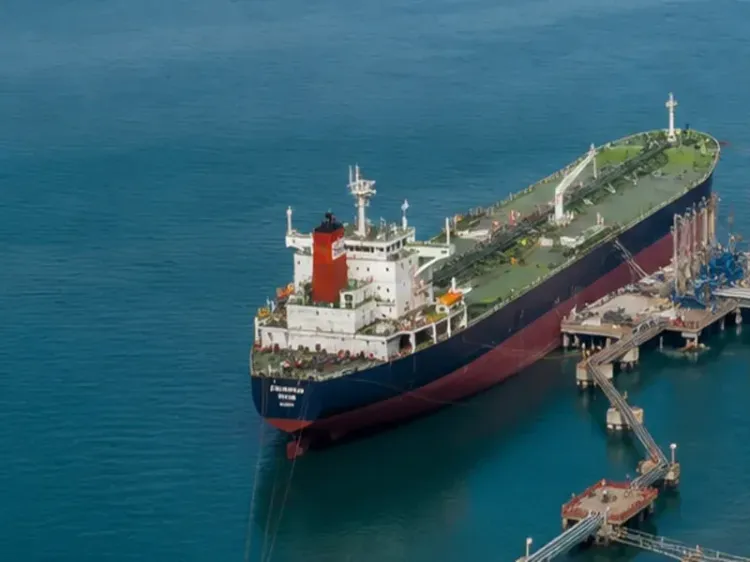
Synopsis
The White House has directly named Indian refineries as victims of the Hormuz closure — a rare public acknowledgement of how the Iran standoff is rippling into South Asia. With one-fifth of global oil flowing through the strait, the stakes for India's energy security, and retail fuel prices, could not be higher.
Key Takeaways
White House NEC Director Kevin Hassett said Indian and Pakistani refineries are 'mostly shut down' due to the Strait of Hormuz closure.
He projected that a reopening would restore oil flows within roughly 300 nautical miles per day per large tanker, easing global refined product prices.
Maritime traffic through the strait has already increased compared to two weeks ago , according to Hassett.
The Trump administration is in active ceasefire negotiations with Iran to secure a permanent reopening of the waterway.
The Strait of Hormuz handles approximately one-fifth of the world's oil trade.
Hassett acknowledged elevated petrol prices in the US but argued oil prices have stayed below worst-case analyst forecasts.
White House National Economic Council Director Kevin Hassett said on Sunday, 1 June 2025 that refineries in India and Pakistan have been among the hardest hit by the closure of the Strait of Hormuz, and expressed confidence that fuel supplies and prices would ease globally once the critical waterway reopens. Hassett made the remarks during an appearance on ABC News' This Week programme.
What Hassett Said
'When you get the Strait open, then it's about 300 nautical miles per day for one of those big tankers. And so, the people in Pakistan and India that have refineries that are mostly shut down — they're going to get their oil,' Hassett said. He added that once refineries resume full operations, 'refined product prices will go down globally, and then it will spread from place to place.'
State of the Strait
The Strait of Hormuz links the Persian Gulf with the Gulf of Oman and the Arabian Sea. Roughly one-fifth of the world's oil trade typically transits this narrow chokepoint, making any sustained disruption a major risk for global energy markets. Hassett noted that maritime traffic through the strait had already picked up, stating 'there is actually a lot more traffic going through the Strait than there was two weeks ago.'
Ceasefire Talks With Iran
The remarks came as the Trump administration continued negotiations aimed at extending a ceasefire with Iran and securing a permanent reopening of the waterway. Hassett signalled that economic pressure on Tehran was intensifying. 'There's a lot of pressure on Iran to finally agree to the president's terms,' he said. The administration has maintained that progress is being made despite ongoing disruptions.
Impact on Fuel Prices
The Hormuz closure has rattled global energy markets and pushed up fuel costs worldwide. Hassett acknowledged that Americans were facing elevated prices at the pump — 'For sure, petrol prices are high. They're not quite as high as they were at their peak under Joe Biden, but they're high' — while arguing that markets had avoided the worst-case scenarios some analysts had projected. 'Oil and gas prices have surprised by not being nearly as high as a lot of people forecast,' he said, pointing to alternative export routes and adjustments in global supply chains.
What It Means for India
For India, which imports roughly 85% of its crude oil requirements, a prolonged Hormuz disruption translates directly into refinery slowdowns, higher input costs, and downstream pressure on petrol and diesel prices. A successful reopening of the strait would ease supply constraints for major Indian refiners and could provide relief on retail fuel prices, which have remained a politically sensitive issue. This comes amid broader concerns about India's energy security and its dependence on Gulf crude.
Point of View
Not merely theoretical price risk. India imports over 85% of its crude, and the Gulf is its primary source — making this not a distant geopolitical story but a direct energy security event. The Trump administration's framing that markets have 'surprised to the upside' on prices may be technically accurate, but it papers over the supply disruption already baked into South Asian refining capacity. The real question is whether the Iran ceasefire talks hold, or whether India needs to accelerate its push for supply diversification — a conversation New Delhi has deferred through multiple Gulf crises.
NationPress
14 Oct 2026
Frequently Asked Questions
How has the Strait of Hormuz closure affected Indian refineries?
According to White House NEC Director Kevin Hassett, Indian refineries have been 'mostly shut down' due to disruptions caused by the Strait of Hormuz closure. India imports roughly 85% of its crude oil, much of it transiting the strait, making any prolonged closure a direct threat to refinery operations and domestic fuel supply.
What did Kevin Hassett say about the Hormuz reopening?
Hassett said on ABC News on 1 June 2025 that increased maritime traffic was already moving through the strait, and that once it fully reopens, large tankers would restore oil flows at roughly 300 nautical miles per day. He predicted this would allow Indian and Pakistani refineries to resume full operations and bring down refined product prices globally.
What is the significance of the Strait of Hormuz for global oil supply?
The Strait of Hormuz is one of the world's most critical energy transit routes, connecting the Persian Gulf with the Gulf of Oman and the Arabian Sea. Approximately one-fifth of global oil trade passes through the waterway, meaning any sustained closure has immediate consequences for energy markets worldwide.
Where do the US-Iran ceasefire negotiations stand?
The Trump administration is in active talks aimed at extending a ceasefire with Iran and securing the permanent reopening of the Strait of Hormuz. Hassett indicated that economic pressure on Tehran is intensifying, saying 'there is a lot of pressure on Iran to finally agree to the president's terms,' though no final agreement has been announced.
Have global oil prices hit worst-case levels during the Hormuz closure?
According to Hassett, oil and gas prices have so far stayed below the worst-case scenarios forecast by analysts, partly due to alternative export routes and adjustments in global supply chains. However, he acknowledged that petrol prices in the US remain elevated.