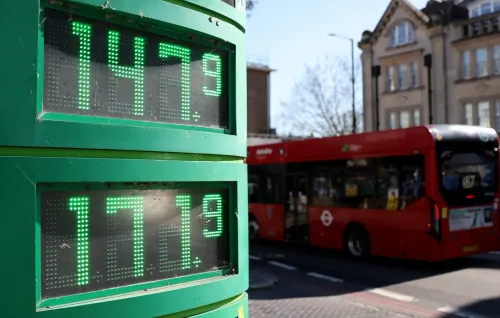
Crude oil prices drop 2% Friday, on track for 7% weekly loss

Synopsis
Crude oil is headed for a near 7% weekly loss even as a cargo vessel was struck near Oman — because tanker traffic through the Strait of Hormuz has quietly recovered to its highest level since the US-Israel-Iran conflict began in February. The market is pricing normalisation over escalation, but Iran's pointed warning about ship safety outside designated routes means this calm could be short-lived.
Key Takeaways
Brent crude fell $1.51 (2%) to $73.75 a barrel on 26 June ; WTI dropped $1.50 (2%) to $70.42 a barrel .
Both benchmarks are on track for weekly losses of nearly 7 per cent .
A cargo vessel was struck by an unidentified projectile near Oman ; two US officials reportedly attributed the attack to Iran .
Tanker traffic through the Strait of Hormuz rose to its highest level since the US-Israel conflict with Iran began in February , following a ceasefire.
The Indian crude oil basket averaged $86.31 per barrel in June, down from $106.23 in May and a conflict peak near $120 .
Global crude oil prices slid sharply on Friday, 26 June, heading for steep weekly losses as easing supply concerns along the Strait of Hormuz outweighed renewed geopolitical anxiety following an attack on a cargo vessel near Oman. The selloff came even as tanker traffic through the critical waterway climbed to its highest level since hostilities began.
Where Prices Landed
International benchmark Brent crude futures fell $1.51, or 2 per cent, to $73.75 a barrel in early trade. US West Texas Intermediate (WTI) crude mirrored the move, declining $1.50, or roughly 2 per cent, to $70.42 a barrel.
Both contracts had surged more than 2 per cent in the previous session after a cargo vessel was struck by an unidentified projectile near Oman — a development that prompted the United Nations' shipping agency to suspend its voluntary evacuation programme.
The Hormuz Factor
According to reports, two US officials said Iran had fired on the vessel as it attempted to transit the Strait of Hormuz. Iranian authorities, however, stated that the security of ships sailing outside designated Hormuz routes could not be guaranteed.
Despite the fresh flashpoint, both Brent and WTI remained on course for weekly losses of nearly 7 per cent. The driver: a meaningful improvement in tanker traffic through the strait, which rose this week to its highest level since the US-Israel conflict with Iran began in February, aided by a ceasefire that helped reopen the route. Overall vessel traffic, however, remained well below the pre-conflict average of around 125 ships per day.
Impact on India's Oil Basket
India's crude import costs have eased considerably from conflict-era highs, though they remain elevated. The Indian basket of crude oil — a weighted average of Brent Dated, Oman, and Dubai grades imported by domestic refiners — averaged $86.31 per barrel in June so far, down sharply from $106.23 per barrel in May and $114.48 per barrel in April.
Global benchmark Brent, which had touched around $120 per barrel at the peak of the conflict, is now hovering near $74 per barrel — a decline of roughly 38 per cent from its peak, offering some relief to oil-importing economies like India.
What to Watch Next
The trajectory of crude prices will hinge on whether the ceasefire along the Hormuz corridor holds and whether tanker volumes recover to pre-conflict levels. Any fresh escalation involving Iran — given its stated warnings about ship safety outside designated routes — could quickly reverse the week's losses. For India, the direction of the crude basket in July will be a key input for fuel pricing decisions and the current account outlook.
Point of View
Not on the headline risk. That is a reasonable call so long as the ceasefire holds — but Iran's explicit caveat about ships outside designated routes is not a throwaway line. If a second incident follows, the 7% weekly loss could reverse just as fast as it built. For India, the crude basket's descent from $114 in April to $86 in June is meaningful fiscal relief, but policymakers should resist locking in assumptions about sustained sub-$90 oil while the Hormuz corridor remains contested.
NationPress
24 Sept 2026
Frequently Asked Questions
Why are crude oil prices falling this week despite an attack near Oman?
Crude prices are falling because easing supply concerns — driven by a recovery in tanker traffic through the Strait of Hormuz — are outweighing the fresh geopolitical risk from the cargo vessel attack near Oman. Markets are pricing in improving passage conditions over short-term incident risk, keeping both Brent and WTI on track for weekly losses of nearly 7 per cent.
How much have Brent and WTI crude prices fallen on 26 June?
Brent crude fell $1.51, or 2 per cent, to $73.75 a barrel, while WTI declined $1.50, or about 2 per cent, to $70.42 a barrel in early trade on 26 June.
What happened to the cargo vessel near Oman?
A cargo vessel was struck by an unidentified projectile near Oman while attempting to transit the Strait of Hormuz. Two US officials reportedly said Iran was responsible for the attack. Iranian authorities stated they could not guarantee the safety of ships sailing outside designated Hormuz routes.
How has the Strait of Hormuz situation changed recently?
Tanker traffic through the Strait of Hormuz rose this week to its highest level since the US-Israel conflict with Iran began in February, following a ceasefire that helped reopen the route. However, overall vessel traffic remains well below the pre-conflict average of around 125 ships per day.
What is the current price of India's crude oil basket and how has it changed?
India's crude oil basket averaged $86.31 per barrel in June so far, down significantly from $106.23 per barrel in May and $114.48 per barrel in April. At the peak of the West Asia conflict, global benchmark Brent had touched around $120 per barrel.