Trump's three red lines for Iran deal: uranium, nukes, Hormuz
Synopsis
The Trump administration has drawn three hard lines for any Iran nuclear agreement — enriched uranium handover, no nuclear weapons programme, and open Strait of Hormuz — while refusing to confirm a reported 60-day ceasefire deal. Treasury Secretary Bessent's blunt warning that 'kinetic is back' if diplomacy fails signals Washington's patience is measured, not open-ended.
Key Takeaways
Treasury Secretary Scott Bessent outlined three non-negotiable conditions for a US-Iran deal on 29 May .
Iran must surrender highly enriched uranium , abandon nuclear weapons pursuit , and restore free navigation through the Strait of Hormuz .
Bessent declined to confirm reports of a tentative 60-day ceasefire extension or interim agreement.
Sanctions relief will remain off the table until all three conditions are met, Bessent said.
Bessent warned: 'If President Trump doesn't think he can get a peace deal, then kinetic is back.' Washington claims Iranian leadership's three pillars — elected government, IRGC, and clerics — are 'having trouble communicating' under pressure.
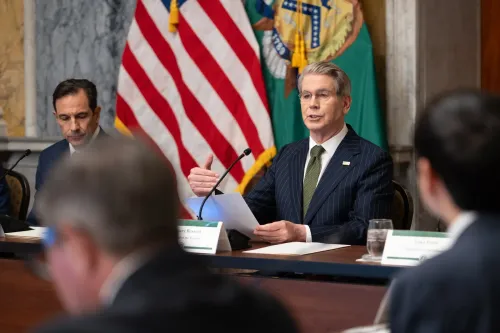
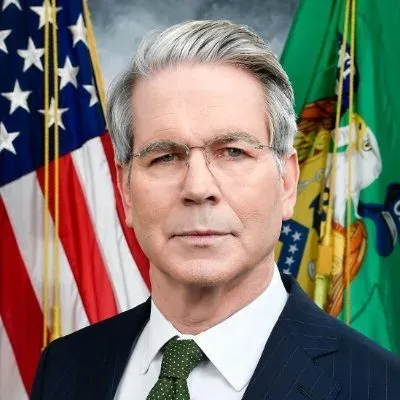
Treasury Secretary Scott Bessent on 29 May laid out the Trump administration's three non-negotiable conditions for any nuclear agreement with Iran: Tehran must surrender its highly enriched uranium, permanently abandon its pursuit of a nuclear weapon, and restore free navigation through the Strait of Hormuz. Bessent made the remarks during a White House briefing, even as he declined to confirm reports that a tentative deal had already been reached.
The Three Conditions
Speaking to reporters, Bessent was unambiguous about Washington's minimum requirements. 'Iran has to turn over their highly enriched uranium. They cannot pursue a nuclear weapon. And the Strait of Hormuz has to free transit. Navigation of the seas has to be free and open as it was before,' he said.
He added that sanctions relief would remain firmly off the table until all three conditions were met. 'Nothing is going to be on the table until we see the Strait of Hormuz open and the Iranians agree that they have to turn over the highly enriched uranium and that they can't have a nuclear program,' Bessent stated.
Talks Ongoing, But No Deal Confirmed
Bessent repeatedly declined to confirm reports of a tentative agreement — including a reported 60-day ceasefire extension and continuation of nuclear talks. 'The teams have been going back and forth,' he said, adding that President Donald Trump had made his position clear during a Cabinet meeting a day earlier.
When pressed on whether a temporary arrangement had been reached, Bessent deferred entirely to the president. 'Everything depends on what the president wants to do,' he said. 'It's always a mistake to get out ahead of the president.'
Washington Claims a Historic Diplomatic Shift
Bessent framed the ongoing negotiations as an unprecedented diplomatic achievement, arguing that the administration's combination of military and economic pressure had compelled Iran to engage on its nuclear programme. 'President Trump has done something that no other administration is able to do. We have gotten the Iranians to talk about their nuclear program and to perhaps commit to not having one,' he said. 'That has never happened before.'
This comes amid a broader pattern of maximum-pressure tactics that the administration has employed since re-entering office, echoing — and escalating beyond — the approach of Trump's first term, when the US withdrew from the 2015 Joint Comprehensive Plan of Action (JCPOA).
Military Option Remains on the Table
While Bessent stressed that President Trump 'always prefers a peace deal,' he issued a pointed warning about the consequences of diplomatic failure. 'If President Trump doesn't think he can get a peace deal, then kinetic is back,' he said — a stark signal that military action remains a live option.
Bessent also claimed that sustained pressure had fractured the Iranian leadership's internal communications. 'The Iranian government, such as it is, is three pillars. It is the elected government, it is the IRGC, and it is the clerics, and they are having trouble communicating,' he said, suggesting that Washington views internal Iranian disarray as a negotiating advantage.
What Comes Next
The status of any interim arrangement — including the reported ceasefire extension — remains officially unconfirmed. Analysts will closely watch whether Iran responds publicly to the three conditions, and whether the Strait of Hormuz remains open to commercial shipping in the days ahead. A formal deal, if reached, would mark the most significant US-Iran diplomatic breakthrough in over a decade.
Point of View
Which suggests Washington either expects Iran to blink or is building a public record for the 'kinetic' option. The claim that Iran's leadership pillars are 'having trouble communicating' is unverified and, if accurate, raises a different risk — a fragmented Iranian decision-making structure is harder to negotiate with, not easier. The refusal to confirm even a 60-day ceasefire extension also points to a deliberate ambiguity strategy: keep Tehran uncertain, keep domestic hawks satisfied, and let Trump claim the deal as a personal triumph when and if it lands.
NationPress
13 Oct 2026
Frequently Asked Questions
What are Trump's three conditions for an Iran nuclear deal?
The Trump administration has set three non-negotiable conditions: Iran must surrender its highly enriched uranium, permanently abandon pursuit of a nuclear weapon, and restore free navigation through the Strait of Hormuz. Treasury Secretary Scott Bessent confirmed these on 29 May, stating that sanctions relief would not be offered until all three are met.
Has a US-Iran deal already been reached?
As of 29 May, no deal has been officially confirmed. Treasury Secretary Bessent repeatedly declined to confirm reports of a tentative agreement, including a reported 60-day ceasefire extension, saying 'everything depends on what the president wants to do.'
What happens if Iran-US diplomacy fails?
Bessent warned that military action would return as an option if diplomacy breaks down, saying 'if President Trump doesn't think he can get a peace deal, then kinetic is back.' This signals that Washington views force as a live alternative, not merely a rhetorical threat.
Why does the Strait of Hormuz matter in these talks?
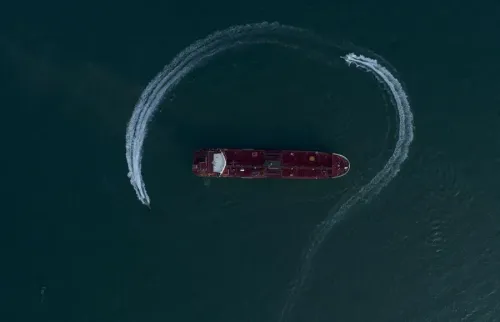
The Strait of Hormuz is one of the world's most critical oil shipping lanes, through which roughly 20% of global petroleum trade passes. Any Iranian interference with navigation there would have immediate consequences for global energy markets, making it a core US demand in any agreement.
How does this compare to the 2015 Iran nuclear deal?
The 2015 Joint Comprehensive Plan of Action (JCPOA) limited but did not eliminate Iran's nuclear programme, and did not address the Strait of Hormuz. The Trump administration's current demands — including full uranium surrender — are significantly more expansive, reflecting a maximalist negotiating posture that goes well beyond the JCPOA framework the US withdrew from during Trump's first term.