How Does the US Justify Its Sanctions on Iran and Myanmar?
Synopsis
In a recent congressional hearing, US Treasury Secretary Scott Bessent defended the US’s sanctions strategy against Iran and Myanmar, emphasizing its importance for national security. He highlighted the economic strains in Iran due to these sanctions and addressed concerns about Myanmar's military actions. The implications of these policies reach far beyond borders, affecting global markets and trade.
Key Takeaways
US sanctions remain a key tool for foreign policy against hostile regimes.
The maximum pressure campaign has shown visible effects on Iran's economy.
Monitoring of financial flows is crucial to prevent sanction evasion.
Concerns over Myanmar's military actions continue to rise.
Sanctions influence global markets and international relations.
Washington, Feb 5 (NationPress) The United States has staunchly defended its sanctions-driven foreign policy concerning Iran and Myanmar, with Treasury Secretary Scott Bessent informing lawmakers that economic pressure is a fundamental component of Washington's national security and global financial stability approach.
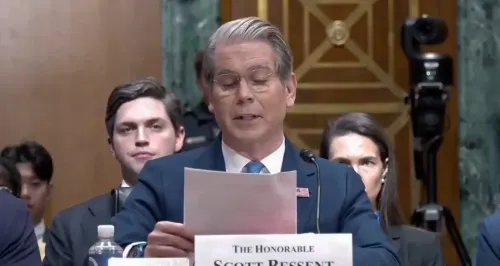
During his testimony before the House Financial Services Committee regarding the Financial Stability Oversight Council’s 2025 annual report this past Wednesday (local time), Bessent stated that the Trump administration persistently engages in what he termed a “maximum pressure campaign” against Iran, asserting that this strategy is yielding observable economic distress within the nation.
“Concerning Iran, upon taking office, President Trump directed the US Treasury to enforce a maximum pressure campaign,” Bessent noted. “The results of this initiative became evident in December, as Iran's economy experienced a significant downturn.”
Bessent informed lawmakers about a drastic banking crisis in Iran late last year, which compelled authorities to intervene. “We witnessed a substantial bank failure, leading to a central bank bailout that incited inflation, and the courageous Iranian population has taken to the streets,” he remarked.
Republican lawmakers contended that sanctions are limiting Tehran’s capabilities to finance weapon acquisitions and international endeavors.
Bessent reassured lawmakers that the Treasury Department continues to scrutinize financial transactions and trading activities linked with sanctioned nations, especially where third parties might be aiding in evasion.
“We actively monitor trade between both nations,” he explained, highlighting Iran's current lack of US dollars for purchasing goods or arms.
Lawmakers also questioned the administration about Myanmar, where bipartisan apprehension has escalated over the military junta’s actions contributing to regional instability.
Congress members referenced reports of Iranian jet fuel shipments to Myanmar and pushed for stricter actions against the military regime. In response, Bessent confirmed that sanctions enforcement mechanisms are still at hand and that the Treasury is collaborating with various agencies to impose pressure.
Bessent emphasized that the sanctions policy targets regimes and illicit networks, not civilian populations, relying on financial intelligence, monitoring, and enforcement to disrupt evasion attempts.
The hearing also underscored how financial stability oversight increasingly intersects with international politics, as lawmakers examine the global impact of sanctions on energy markets, shipping, banking, and capital flows.
Both Iran and Myanmar remain focal points for global markets due to their significant roles in regional energy supply, trading routes, and cross-border finance.
The US sanctions policy influences international banking, insurance, and trade settlement systems, particularly for nations balancing economic relationships with strategic alliances.
Point of View
It is imperative to recognize that while the US sanctions policy aims to apply pressure on hostile regimes, the broader implications on civilian populations and international relations must be critically examined. The strategic approach taken by Washington reflects a complex interplay of economic interests and geopolitical dynamics.
NationPress
1 Oct 2026
Frequently Asked Questions
What are the US sanctions on Iran?
The US sanctions on Iran are economic measures aimed at pressuring the Iranian government by restricting its financial transactions, trade activities, and access to international markets.
Why does the US sanction Myanmar?
The US imposes sanctions on Myanmar to respond to the military junta's actions that threaten regional stability and violate human rights.
How do sanctions affect civilian populations?
While sanctions are intended to target regimes, they can inadvertently affect civilian populations by limiting access to essential goods and services.
Who is responsible for enforcing US sanctions?
The US Department of the Treasury is primarily responsible for enforcing sanctions, monitoring financial activities, and ensuring compliance.
What are the global implications of US sanctions?
US sanctions can impact international banking, trade relations, and energy markets, influencing global financial systems and economic stability.