US Strategizes to Combat Oil Price Surge and Secure Shipping Routes Amid Iran Threat
Synopsis
In a bold move, the United States has unveiled a comprehensive strategy to combat rising oil prices and ensure the security of global shipping lanes while targeting Iran's missile capabilities. Secretary of State Marco Rubio emphasizes the urgency and foresight of this plan amid geopolitical tensions.
Key Takeaways
The US is implementing a strategy to address rising oil prices.
Iran's naval capabilities pose a significant risk to global trade.
The focus is on neutralizing Iran's missile and naval threats.
No ground forces are planned for deployment at this stage.
The operation aims to protect international shipping routes.
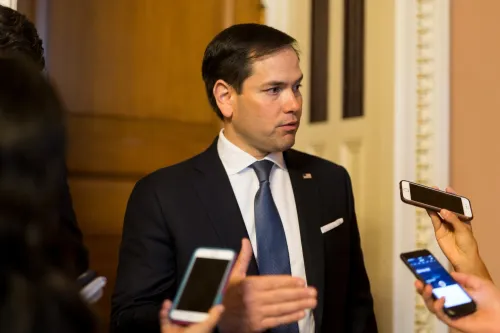
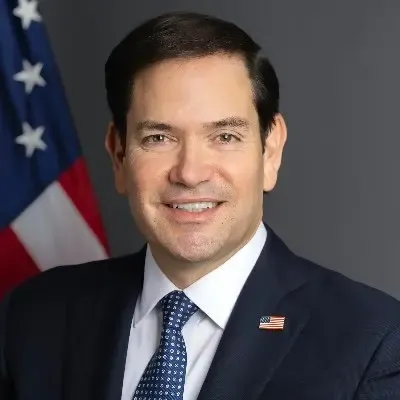
Washington, March 3 (NationPress) The United States has devised a strategy to tackle escalating oil prices and safeguard international shipping routes as it intensifies its offensive against Iran’s missile capabilities and naval strength, stated Secretary of State Marco Rubio at the US Capitol.
Rubio noted that the markets were responding to developments in the area but emphasized that Washington had foreseen the consequences.
“Indeed, we recognized that this would be a significant factor,” he told the media when queried about the surging oil prices. “We have a strategy in place. We anticipated this could emerge as a concern.”
He mentioned that Energy Secretary Chris Wright and Treasury Secretary Scott Bessent would commence “implementing those measures starting tomorrow to alleviate the impact that might arise.”
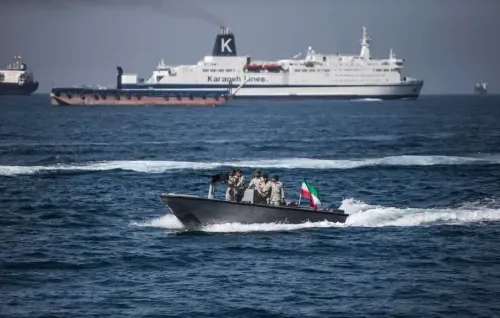
Rubio cautioned that Iran’s naval power poses a broader danger to global commerce. “This terrorist regime, led by radical clerics, has the potential to disrupt 20 percent of global energy supplies. That’s the leverage they possess due to their navy. We will dismantle their naval forces,” he asserted.
He characterized the US mission as narrowly targeted yet urgent. “The United States is engaged in an operation aimed at neutralizing the threat from Iran's short-range ballistic missiles and the dangers posed by their navy, particularly to maritime assets,” Rubio stated.
According to Rubio, intelligence reports suggested an “imminent danger” if Iran was attacked. “There was absolutely an imminent threat,” he contended, arguing that had Washington delayed action, “we would incur greater casualties and more fatalities.”
He outlined that the goal was to obliterate Iran’s missile launch capabilities, production facilities, and drone reserves, alongside naval assets that threaten shipping. “This mission aims to eliminate their ballistic missile and naval capabilities,” Rubio indicated.
Rubio emphasized that the operation was not intended as a campaign for regime change, although he expressed hope for political transformation in Tehran. “We would welcome an Iran that isn’t ruled by radical Shia clerics,” he remarked, adding that the current mission centers on weaponry, not governance.
He stated that the United States had no plans to deploy ground forces at this time. “We believe the objectives we’ve established for this mission, which include dismantling the ballistic missile capabilities, can be achieved without ground troops,” Rubio mentioned, specifying that the administration was “not positioned for ground forces” at this moment.
Regarding reports of civilian casualties, including allegations of a strike on a school, Rubio admitted he lacked details but affirmed that the United States “would not intentionally target a school.”
He refrained from predicting the length of the conflict. “We will pursue this until we fulfill our objectives, and we will accomplish those objectives,” Rubio declared.
The Strait of Hormuz, a vital maritime chokepoint, carries a significant portion of the world’s oil and liquefied natural gas. Any disruption in this area has immediate global price repercussions, particularly for major energy importers like India.
Point of View
It is crucial to present an unbiased perspective on the US's new strategy against Iran. The operation's focus on military capabilities rather than regime change suggests a calculated approach to national security, yet the ramifications for global markets and regional stability must be carefully monitored.
NationPress
22 Sept 2026
Frequently Asked Questions
What is the US's plan regarding rising oil prices?
The US has developed a strategy to mitigate rising oil prices while ensuring the protection of global shipping lanes amidst escalating tensions with Iran.
How does Iran's navy impact global trade?
Iran's naval power poses a significant threat to global trade, potentially disrupting a large portion of the world's energy supply.
Is the US planning to deploy ground forces in Iran?
Currently, the US does not plan to deploy ground forces as part of its strategy to eliminate Iran's missile capabilities.
What are the objectives of the US operation against Iran?
The objectives include destroying Iran's ballistic missile capabilities, manufacturing sites, drone reserves, and naval assets that threaten shipping.
Will civilian areas be targeted in US strikes?
The US maintains that it will not deliberately target civilian areas, including schools.