Marco Rubio: U.S. Aims to Conclude Military Actions Against Iran in Weeks

Synopsis
As tensions rise, Secretary of State Marco Rubio declares that the U.S. is expected to complete its military operations against Iran within weeks, targeting its military capabilities while pursuing diplomatic channels. The dual approach raises questions about the future of U.S.-Iran relations.
Key Takeaways
U.S. military objectives against Iran may conclude in weeks.
Key targets include Iran's air force, navy, and missile capabilities.
Diplomacy remains a priority for the U.S. administration.
Internal divisions within Iran's leadership may be emerging.
Maritime security in the Strait of Hormuz is a primary concern.
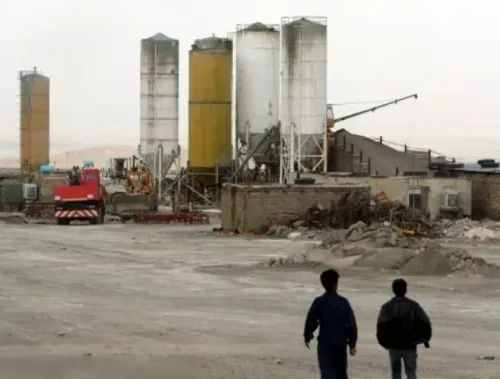
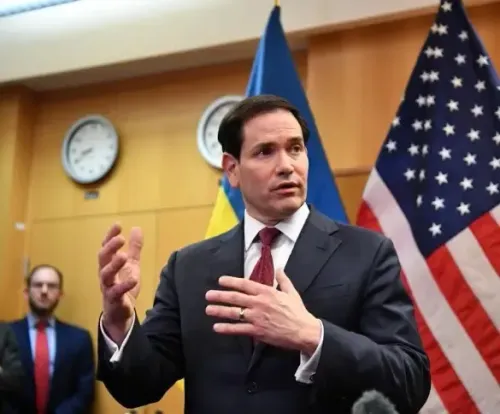
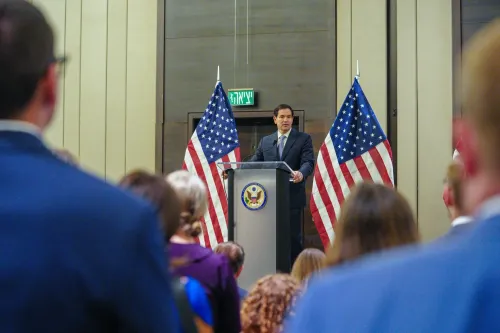
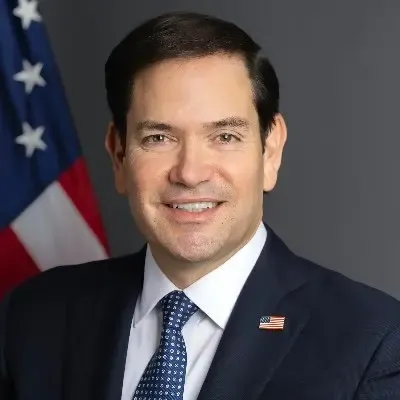
Washington, March 30 (NationPress) The United States is on track to fulfill its military goals against Iran "within weeks, not months," stated Secretary of State Marco Rubio. He emphasized that crucial objectives, such as dismantling Tehran's air force, navy, and missile systems, are already underway, even while the U.S. explores a diplomatic route.
In an interview on "Good Morning America," Rubio highlighted that the operation is primarily aimed at weakening Iran's military strength and ensuring it does not obtain nuclear capabilities.
"We are actively dismantling Iran’s navy and significantly reducing their missile-launching capabilities," Rubio stated, adding that the U.S. intends to "eliminate their defense industrial base" to halt future missile and drone production.
Rubio reiterated the clear objectives outlined from the start: "First, the obliteration of their air force; second, the destruction of their navy; third, a substantial decrease in their missile-launching capabilities; and lastly, the destruction of their manufacturing facilities," he explained.
"All these actions are necessary to ensure they cannot leverage these assets to develop nuclear weapons," he underscored, noting that progress is "on or ahead of schedule."
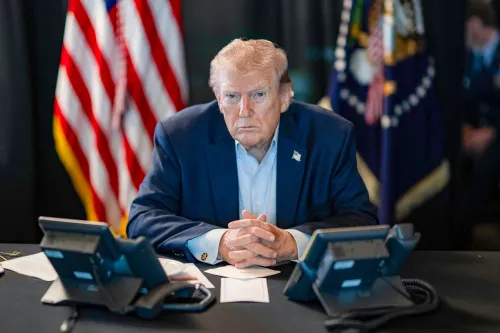
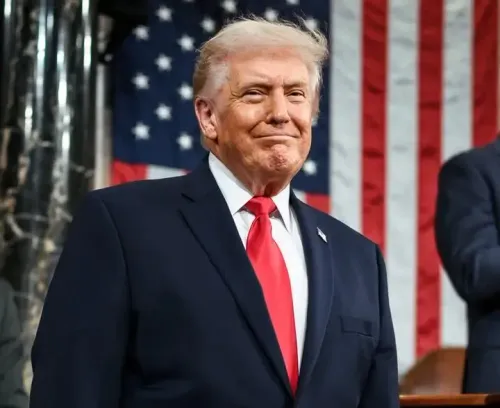
These comments follow President Donald Trump's statements suggesting that the U.S. might escalate attacks to include Iran's energy infrastructure if diplomatic efforts do not succeed.
Nevertheless, Rubio stressed that diplomacy remains the preferred approach. "The president... favors diplomacy," he stated, mentioning that "messages are being exchanged, including through intermediaries."
He also indicated that there may be emerging divisions within Iran's leadership. "There are some fractures happening within their ranks," Rubio noted, adding that certain officials are "expressing some of the right sentiments privately."
However, he warned that any diplomatic success is not guaranteed. "We are going to thoroughly test that possibility... but we must also be prepared for the likelihood of failure," he cautioned.
Regarding maritime security, Rubio dismissed Iranian threats regarding the Strait of Hormuz, a vital shipping corridor. "That will never be permitted," he asserted, cautioning that other nations have "more at stake than we do."
Additionally, he accused Tehran of contributing to regional instability, stating, "Every terrorist group in this region is connected to the Iranian regime," mentioning groups like the Houthis, Hezbollah, and Hamas.
Despite his strong criticisms, Rubio made a clear distinction between the Iranian people and their government. "The citizens of Iran are remarkable individuals. The issue lies with their leaders," he remarked.
The recent escalation highlights a dual strategy by the U.S., combining ongoing military pressure with cautious diplomatic initiatives. The upcoming weeks are anticipated to be pivotal in determining whether backchannel negotiations can prevent a broader conflict.
Point of View
The situation between the U.S. and Iran remains highly critical. The U.S. is pursuing a dual strategy of military intervention and diplomacy, which could have significant implications for regional stability and international relations.
NationPress
5 Oct 2026
Frequently Asked Questions
What are the U.S. military objectives in Iran?
The U.S. aims to dismantle Iran's air force, navy, and missile capabilities to prevent it from acquiring nuclear weapons.
Is the U.S. considering diplomatic options with Iran?
Yes, Secretary of State Marco Rubio emphasized that diplomacy is the preferred approach, with ongoing communication between the nations.
What is the significance of the Strait of Hormuz?
The Strait of Hormuz is a critical global shipping lane, and threats to control it by Iran are viewed as unacceptable by the U.S.
How are Iran's leadership dynamics affecting the situation?
Rubio noted potential internal divisions within Iran's leadership, which could influence their approach to both military and diplomatic engagements.
What is the current status of U.S.-Iran relations?
Relations remain tense, with military actions and diplomatic efforts occurring simultaneously, creating a complex dynamic.