Is the US Ready to Talk to Iran Under Strict Conditions?
Synopsis
In a recent press briefing, Secretary of State Marco Rubio revealed that the United States is prepared to engage in talks with Iran, provided that key issues such as missile programs, nuclear activities, and human rights abuses are at the forefront of discussions. This development comes amid mixed signals from Iran's leadership, highlighting a complex diplomatic landscape.
Key Takeaways
The U.S. is open to talks with Iran under strict conditions.
Key issues for negotiation include Iran's missile program and nuclear activities.
Public grievances in Iran are largely economic according to Rubio.
Rubio emphasizes a distinction between the Iranian people and their regime.
Potential talks are still in the planning stages with mixed signals from Iran.
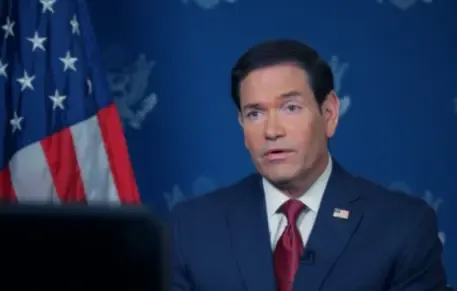
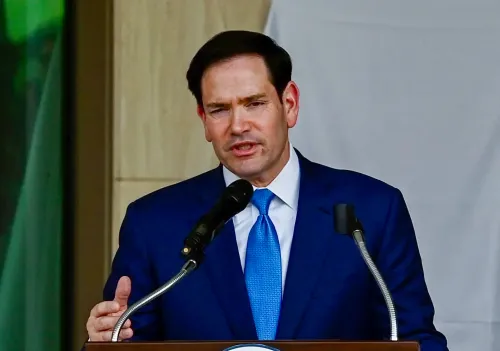
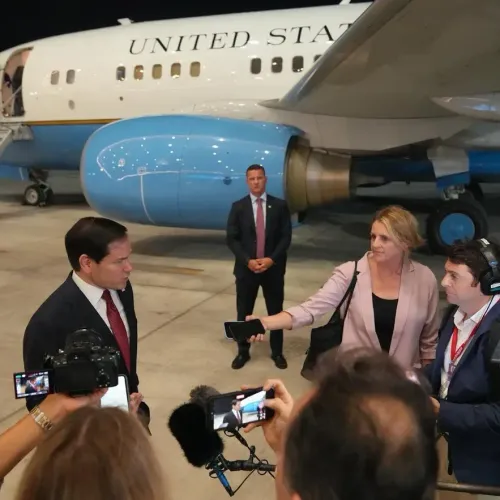
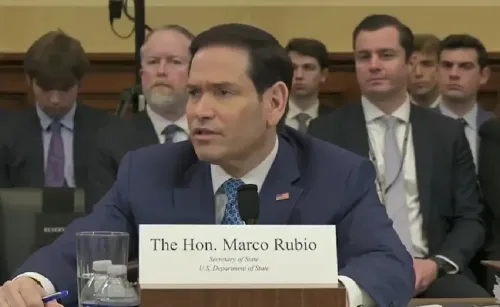
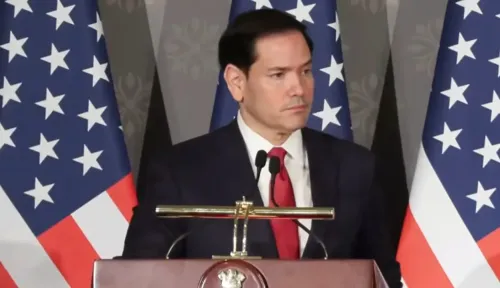
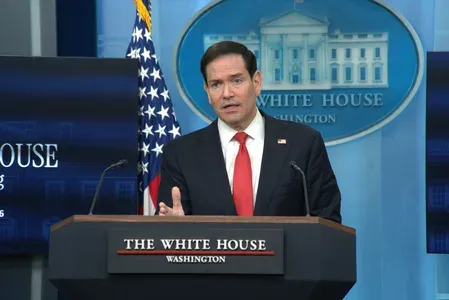
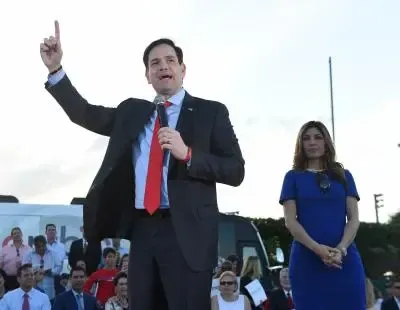
Washington, Feb 4 (NationPress) The United States expresses readiness for discussions with Iran, but Secretary of State Marco Rubio emphasized that any talks must encompass Tehran's missile program, nuclear pursuits, terrorism sponsorship, and how the Iranian regime treats its citizens. He reiterated this during a press conference on Wednesday, outlining strict conditions while affirming Washington's openness to engagement.
Rubio mentioned that President Donald Trump is willing to meet with both adversaries and allies, dismissing the idea that such meetings signify concessions. “We do not perceive meetings as concessions or as legitimization,” Rubio conveyed to the media.
He stated that should an opportunity arise, the United States is prepared to engage with Iran. “We are ready to listen and talk to anyone—any adversary, any ally—across the globe,” Rubio asserted, noting that the president has maintained this approach through multiple administrations.
Efforts are being made to finalize the format and location for potential discussions, as there have been mixed messages from Iran. A forum in Turkey has been suggested by various partners, but Iranian officials have provided conflicting remarks. “This is still under consideration,” Rubio mentioned.
Rubio confirmed that the United States is ready for direct engagement. “Ultimately, the United States has always been prepared to interact with Iran,” he stated.
However, he clarified that any dialogue must cover a wide range of issues. “For talks to yield meaningful results, they must address critical points,” he explained, listing concerns such as “their ballistic missile range,” “support for terrorist entities in the region,” “the nuclear agenda,” and “the treatment of their populace.”
Rubio highlighted that Iran's leadership is incapable of resolving the issues leading to public discontent. “The core challenge facing Iran and its regime is that they cannot address the grievances raised by the populace,” he asserted, emphasizing that economic factors largely underpin these problems.
He criticized the Iranian government for misallocating resources abroad, stating, “The reason the Iranian regime fails to provide its citizens with the quality of life they deserve is due to their expenditure on… sponsoring terrorism and proxy groups globally,” Rubio pointed out.
Rubio delineated the distinction between the Iranian populace and its rulers, stating, “The Iranian people and their regime are vastly different.” He remarked that the clerical leadership does not represent the views of the nation. “I know of no other country with such a stark contrast between its leaders and its citizens,” he noted.
Rubio mentioned that President Trump has publicly addressed the treatment of protesters in Iran, suggesting that these comments may have had a positive impact. He noted that the president’s words “stopped mass executions that were imminent.”
When discussing the potential for a deal, Rubio adopted a cautious stance. “I’m uncertain if a deal can be reached with these leaders,” he acknowledged but added that the administration is willing to explore the possibility. “We see no harm in attempting to identify opportunities for progress,” he stated.
Rubio affirmed that a U.S. delegation is prepared to travel if Iran consents to meetings. “If the Iranians wish to meet, we are ready,” he said. “If they change their minds, that is acceptable too. Our preference is to meet and discuss.
Point of View
I maintain an unbiased perspective. The U.S.'s willingness to engage in dialogue with Iran under strict conditions reflects a cautious yet hopeful approach. The complexities of international relations require a balance between firm stances on key issues and the potential for diplomatic engagement.
NationPress
29 Sept 2026
Frequently Asked Questions
What conditions did the U.S. set for talks with Iran?
The U.S. conditions include addressing Iran's missile program, nuclear activities, support for terrorism, and the treatment of its citizens.
Is the U.S. administration open to meeting with Iran?
Yes, Secretary of State Marco Rubio confirmed that the U.S. is willing to engage with Iran if the opportunity arises.
What issues did Rubio emphasize for meaningful talks?
Rubio highlighted the need to cover Iran's ballistic missiles, sponsorship of terrorism, nuclear program, and treatment of its own people.
How does the Iranian regime affect its citizens?
Rubio pointed out that the Iranian regime is unable to address public grievances, primarily driven by economic issues.
What was President Trump's stance on Iran protests?
President Trump has publicly addressed the treatment of protesters in Iran, which Rubio suggested helped prevent planned mass executions.