Rubio: Iran ready to discuss nuclear curbs after Operation Epic Fury
Synopsis
Marco Rubio's Senate testimony marks the clearest signal yet that US strikes have reshaped the Iran nuclear table. With Tehran's navy declared destroyed, missile lines damaged and a shipping blockade biting at hundreds of millions of dollars a day, the Trump administration says Iran is now willing to discuss curbs it had refused to touch — though Rubio cautioned a deal is far from guaranteed.
Key Takeaways
Marco Rubio told the Senate Foreign Relations Committee that Iran has agreed to negotiate parts of its nuclear programme it previously refused to discuss.
Rubio said Operation Epic Fury damaged Iran's missile production and military infrastructure.
He declared that Iran's navy effectively no longer exists, saying it ‘lies at the bottom of the ocean'.
The US has imposed an effective blockade on Iranian shipping, costing Tehran hundreds of millions of dollars daily, per Rubio.
Rubio said Iran failed to honour a ceasefire commitment to reopen the Strait of Hormuz .
Senator Jeanne Shaheen criticised the administration for inadequate consultation with Congress.
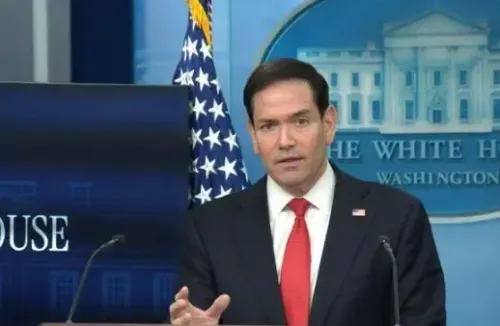
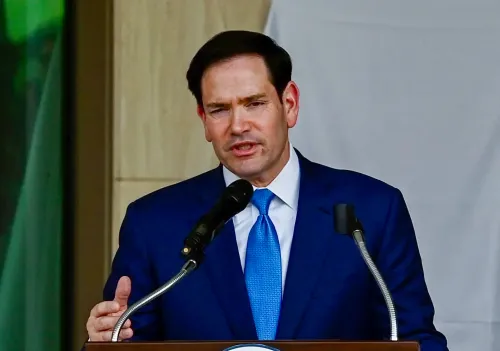
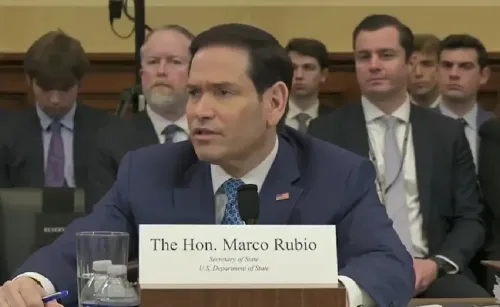
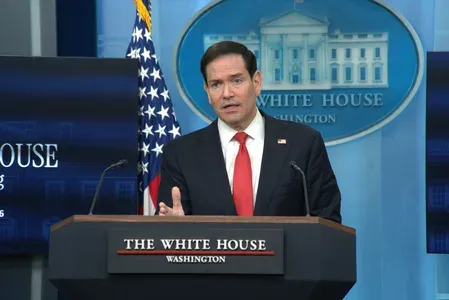
U.S. Secretary of State Marco Rubio on Tuesday told lawmakers that Iran has agreed to negotiate aspects of its nuclear programme it had long refused to discuss, opening the door to fresh talks in the wake of recent American military strikes on Tehran. Speaking before the Senate Foreign Relations Committee in Washington, Rubio said Iran's conventional military shield had been significantly degraded, shifting the leverage at the negotiating table.
What Rubio told the Senate
“There is the prospect before us, which could happen today, it could happen tomorrow, it could happen next week, that, for the first time certainly in my memory, they have agreed to negotiate aspects of their nuclear programme that just a month ago, just a year ago, they were refusing to even mention, much less enter into discussions about,” Rubio said.
The Secretary appeared at the hearing to defend President Donald Trump's proposed State Department budget, but much of the session pivoted to Iran, the Strait of Hormuz, and the administration's wider foreign policy posture.
Operation Epic Fury and the military picture
Rubio defended the recent U.S. campaign, codenamed Operation Epic Fury, saying it had crippled Iran's missile production lines and military infrastructure. “Operation Epic Fury ... was highly successful in achieving its military objectives,” he said, arguing that Tehran had sought to build a vast arsenal of missiles, drones, and naval assets to deter any external action against its nuclear sites.
“Iran's desire to build a nuclear weapon was going to be effectuated behind a conventional shield,” Rubio said. “The president chose to act to deny them that point of immunity.”
In one of the administration's sharpest damage assessments yet, Rubio declared: “Today, there is no Iranian navy. There is no such thing. There is no Iranian navy. It lies at the bottom of the ocean.”
Ceasefire, Hormuz and the blockade
Rubio said a ceasefire had been reached after the campaign but accused Tehran of reneging on a commitment to reopen the Strait of Hormuz. “They would reopen the straits. They did not,” he said. The United States, he added, responded by imposing what he described as an effective blockade on Iranian shipping. “The cost to Iran every single day in lost revenue is in the hundreds of millions of dollars,” Rubio said.
Democrats push back
Opposition Democratic Senators challenged the administration's handling of the crisis. Senator Jeanne Shaheen said the State Department had failed to adequately consult Congress on key Iran decisions and questioned the broader fallout of the conflict. Committee Chairman Jim Risch, by contrast, praised the administration's approach and thanked Rubio for his role in the operation.
What happens next
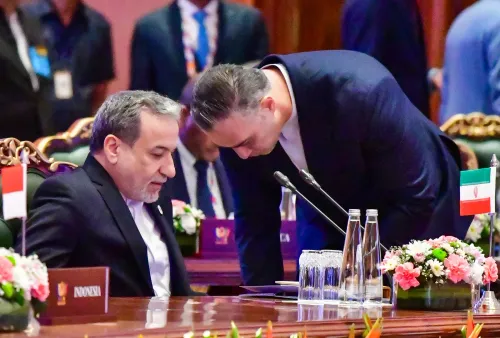
Rubio acknowledged that engagement with Tehran remained difficult and often routed through intermediaries. “That is not a guarantee that ultimately it will lead to a deal that's acceptable to the Senate or acceptable to the American people,” he said. “But we will be able to engage them in a process to truly test the proposition of how far they're willing to go.” Whether that test produces a verifiable nuclear framework — or merely another pause — will shape the next phase of U.S.-Iran tensions.
Point of View
Hedged claims on diplomacy. The ‘no Iranian navy' line is rhetorically powerful but will invite independent verification, and past US damage assessments on Iran's nuclear infrastructure have repeatedly been revised. The deeper question Congress should press is whether ‘aspects' of the nuclear programme means enrichment caps and inspections — the only metrics that matter — or peripheral concessions dressed up as a breakthrough. Without a written framework, this risks becoming a familiar Washington cycle: strike, declare victory, announce talks, and quietly settle for less than the original red line.
NationPress
18 Oct 2026
Frequently Asked Questions
What did Marco Rubio say about Iran's nuclear programme?
Rubio told the Senate Foreign Relations Committee on Tuesday that Iran has agreed to negotiate parts of its nuclear programme it had previously refused to even discuss. He said the shift followed recent US military action that weakened Tehran's conventional defences.
What is Operation Epic Fury?
Operation Epic Fury is the codename Rubio used for the recent US military campaign against Iran. He said it successfully damaged Iran's missile production capabilities and military infrastructure, including its naval assets.
Why has the US imposed a blockade on Iranian shipping?
Rubio said the US moved to an effective blockade after Iran failed to honour a ceasefire commitment to reopen the Strait of Hormuz. He claimed the measure is costing Tehran hundreds of millions of dollars a day in lost revenue.
Have Democrats supported the administration's Iran strategy?
No. Senator Jeanne Shaheen and other Democrats criticised the State Department for failing to adequately consult Congress on Iran-related decisions and questioned the broader consequences of the conflict.
Is a US-Iran nuclear deal imminent?
Rubio said talks could begin within days but cautioned there is no guarantee of an acceptable agreement. He noted that engagement with Tehran often relies on intermediaries and remains diplomatically difficult.