Giriraj Singh hails NIT Jalandhar students for kheep-fibre textile innovation
Synopsis
NIT Jalandhar students developed eco-friendly fabric from Rajasthan's kheep desert shrub and won first place among 3,200 teams at the 9th National Bio Entrepreneurship Competition. Union Textiles Minister Giriraj Singh praised the feat as a landmark in sustainable textile innovation and rural employment potential.
Key Takeaways
NIT Jalandhar students developed a technology to produce eco-friendly textile fabric from the kheep shrub , a wild desert plant native to Rajasthan.
The team secured first place at the 9th National Bio Entrepreneurship Competition out of 3,200 competing teams from across India.
Union Textiles Minister Giriraj Singh publicly highlighted the innovation on 18 October 2026 , linking it to sustainable textile production and rural job creation.
Kheep grows in arid, low-rainfall regions where conventional fibre crops are unviable, giving it a strong natural-fibre supply-chain advantage.
The Ministry of Textiles has historically supported alternative natural fibre research; whether kheep is included in an existing scheme is the key next development to watch.
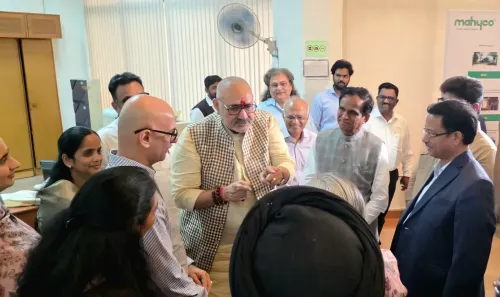
From the thorny scrublands of Rajasthan's desert to a national winner's podium — NIT Jalandhar students have turned an overlooked desert shrub into a breakthrough textile material, and Union Textiles Minister Giriraj Singh wants the country to take notice. On Sunday, 18 October 2026, the minister took to X to celebrate the team's feat, calling it a fresh benchmark in innovation.
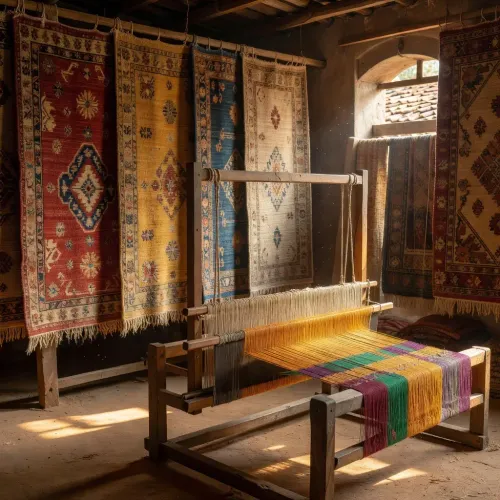
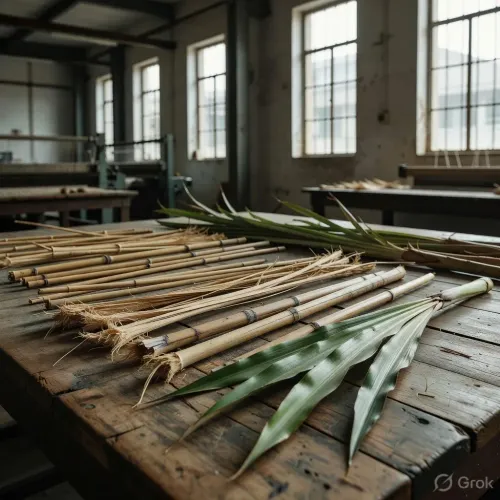
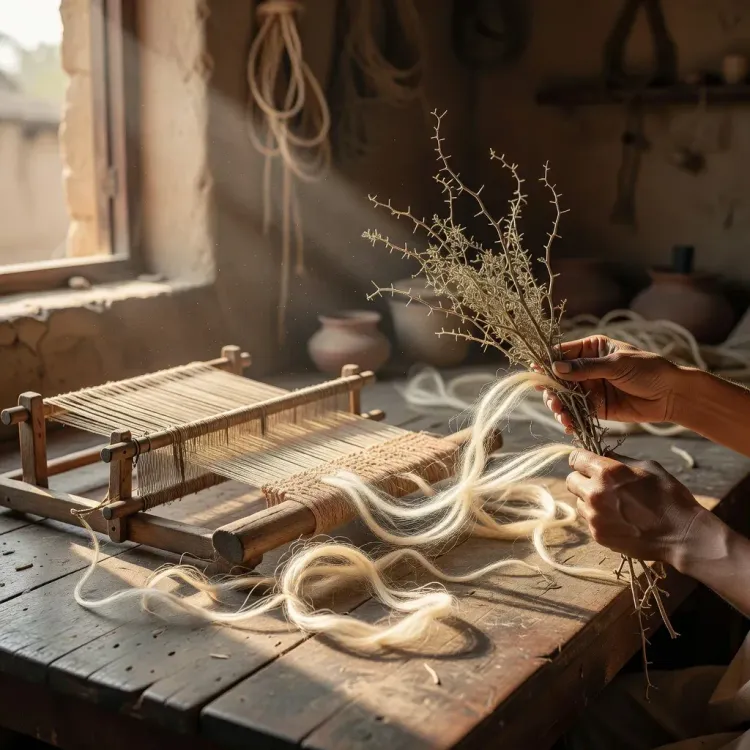
The students developed a technology to produce eco-friendly fabric from the kheep shrub (Leptadenia pyrotechnica), a plant that grows wild across Rajasthan's arid zones and has long been part of the desert ecology without any industrial application. Posting in Hindi, Singh described the achievement as 'a new example of innovation' and linked it directly to two national priorities: sustainable textile production and rural employment generation.
First place among 3,200 teams at the National Bio Entrepreneurship Competition
The NIT Jalandhar team claimed first position at the 9th National Bio Entrepreneurship Competition, beating out teams from across India in a field of 3,200 competing groups. The competition is an annual national-level contest that spotlights student-led biotechnology and bio-based innovation — making this win a significant marker of the project's technical credibility.
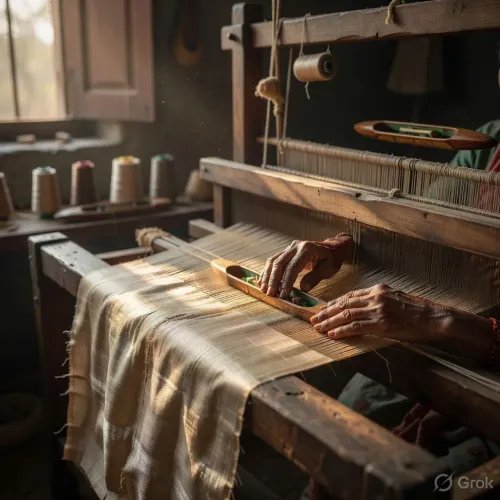
Kheep is a hardy, fast-growing desert plant that requires no irrigation and thrives in harsh, low-rainfall conditions — precisely the environment where cotton and other conventional fibre crops struggle. Converting it into wearable textile fibre addresses a supply-chain challenge that has long troubled sustainable fabric development: finding a raw material that is both renewable and native to India's driest regions.
Where kheep textile sits in India's sustainable-fibre push
The Ministry of Textiles has backed research into alternative natural fibres and cleaner processing methods through technology upgradation schemes since the early 2010s. The kheep innovation fits neatly inside that policy arc — it is indigenous, requires no import substitution, and grows in regions where rural livelihoods are fragile and textile-sector jobs are scarce.
Central government messaging has consistently linked student-led bio-innovation to two headline goals: reducing dependence on synthetic or imported fibres, and creating employment in arid and semi-arid districts. A desert shrub-to-fabric pipeline, if scaled, could put both goals within reach simultaneously — a rare policy double.
What needs to happen next
The critical next step is technology transfer. A competition win proves the concept; a pilot production unit in a Rajasthan district proves the business case. Whether the Ministry of Textiles fast-tracks the kheep fibre technology into an existing development scheme — or whether it funds a dedicated pilot — will determine how quickly this innovation moves from a lab bench to a village loom.
For now, NIT Jalandhar's desert-fibre breakthrough has done something rare: it has given India's sustainable textile conversation a genuinely new raw material to talk about — and a government minister is already amplifying the signal.
Point of View
But kheep represents a qualitative step because it thrives in districts that have never had a textile raw-material economy. If the government moves from applause to policy action — including technology transfer or scheme inclusion — this could mark a meaningful pivot in how India approaches its arid-region textile supply chain. The competition win gives the innovation credibility that is hard to dispute; the test now is institutional follow-through.
NationPress
18 Oct 2026
Frequently Asked Questions
What is the kheep shrub and where does it grow?
Kheep ( Leptadenia pyrotechnica ) is a hardy desert shrub that grows naturally in the arid and semi-arid zones of Rajasthan. It requires no irrigation and thrives in low-rainfall conditions where conventional textile crops cannot be cultivated.
What did NIT Jalandhar students achieve with kheep?
Students from NIT Jalandhar developed a technology to convert kheep shrub fibre into eco-friendly fabric, winning first place among 3,200 teams at the 9th National Bio Entrepreneurship Competition.
What is the National Bio Entrepreneurship Competition?
It is an annual national-level contest in India that encourages student teams to develop and pitch biotechnology and bio-based innovations. The 9th edition saw 3,200 teams compete from across the country.
Why did Giriraj Singh highlight the kheep textile innovation?
As Union Textiles Minister, Giriraj Singh linked the innovation to two key national goals — sustainable textile production and rural employment generation in arid regions — making it directly relevant to his ministry's mandate.
Can kheep fabric be commercially produced in India?
The NIT Jalandhar team has demonstrated the technology at a competition level. Commercial viability would require technology transfer, pilot production units, and possible inclusion under government textile development schemes — steps that have not yet been officially announced.