CM Bhajanlal Launches Housing Scheme for Journalists in Rajasthan
Synopsis
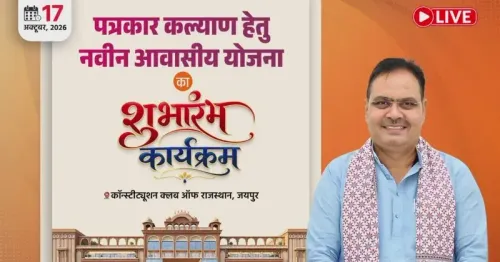
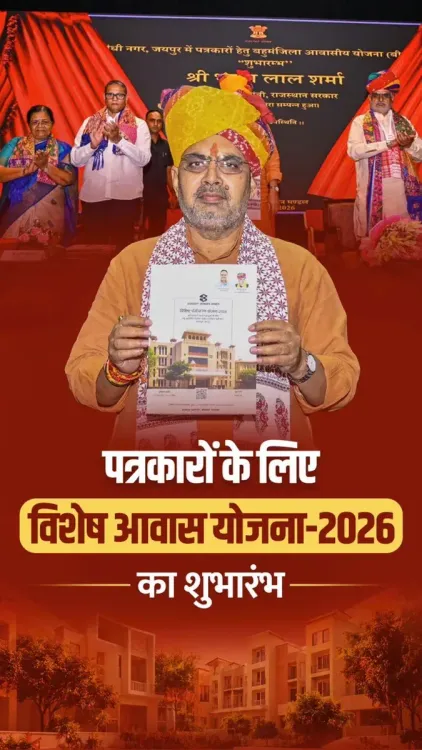
Chief Minister Bhajanlal Sharma launched a dedicated housing scheme for journalists under the Rajasthan Housing Board's Special Registration Scheme-2026 at Jaipur's Rajasthan Constitutional Club on 18 October 2026, framing it as institutional recognition of the press community's contribution.
Key Takeaways
CM Bhajanlal Sharma launched a special housing scheme for journalists on 18 October 2026 in Jaipur.
The scheme operates under the Rajasthan Housing Board's Special Registration Scheme-2026 .
The launch took place at the Rajasthan Constitutional Club , a prominent government event venue in Jaipur.
CM Sharma described the initiative as honouring journalists' contributions and ensuring stability in their lives.
The Housing Board has a prior history of category-specific registration drives for occupational groups including government employees.
Specific eligibility criteria, unit numbers, and allotment timelines remain to be officially announced.
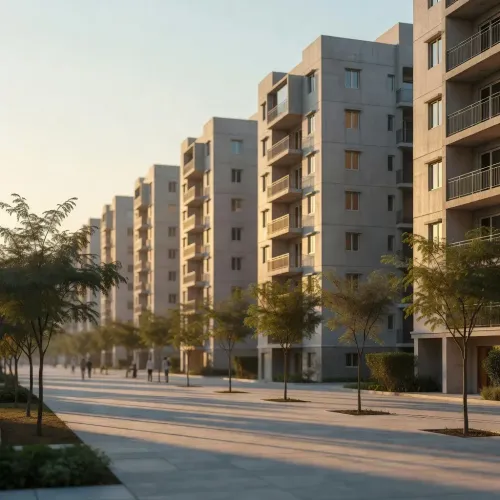
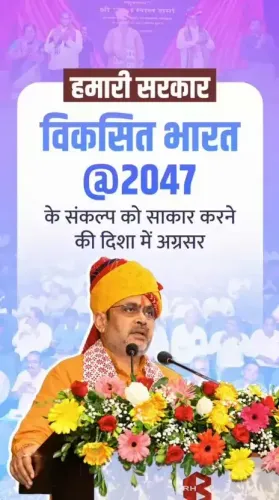
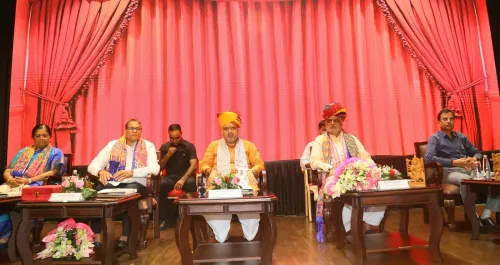
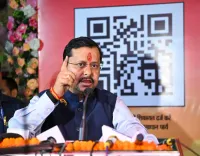
A roof over their heads — as a matter of policy, not charity. Chief Minister Bhajanlal Sharma on Sunday, 18 October 2026, launched a dedicated housing scheme for journalists under the Rajasthan Housing Board's Special Registration Scheme-2026 at the Rajasthan Constitutional Club in Jaipur, extending state-backed residential benefits to the press community.
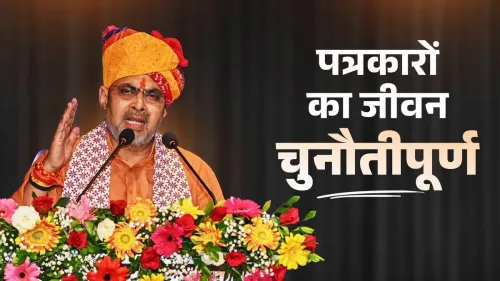
Announcing the initiative, CM Sharma framed it as a gesture of institutional respect. 'Patrakar sathiyon ke yogdan ko samman dete hue' ['Honouring the contribution of journalist colleagues'], he said, the scheme aims to provide housing facilities and ensure stability in their lives — a direct acknowledgment that the press corps, often mobile and economically precarious, deserves a stake in permanent settlement.
What the Rajasthan Housing Board's 2026 Scheme Offers Journalists
The scheme operates as a targeted registration and allotment drive under the Rajasthan Housing Board, the state body responsible for planning and constructing residential housing across the state. The Board has a history of running category-specific drives — covering government employees and occupational groups in earlier cycles — and the 2026 edition carves out a dedicated journalists' quota within that framework.
Specific provisions, unit numbers, pricing tiers, and application timelines under the journalists' quota have not yet been confirmed in public records. What to watch: the opening of the application window, finalisation of eligibility criteria, and the dates of first allotments.
A Pattern Rooted in State-Level Welfare Architecture
This launch fits squarely within a well-established tradition across Indian state governments: profession-specific housing benefits for journalists and allied occupational groups. The logic is consistent — working journalists, especially those outside large media houses, rarely accumulate the capital for private property purchases in urban centres.
Rajasthan's BJP administration, which took office in December 2023 under Sharma, has maintained this welfare architecture rather than dismantling it. By formally embedding journalists within the Housing Board's registration machinery, the government converts an ad-hoc gesture into a replicable, institutionalised benefit — and, not incidentally, builds goodwill with a constituency that shapes public perception of governance.
The application window and first allotments will be the real test of how quickly intent becomes keys in hand.
Point of View
Rather than an ad-hoc grant, signals an intent to institutionalise the measure and make it harder for future administrations to roll back. Historically, such profession-specific schemes have been implemented across party lines in Indian states, suggesting this is as much a consolidation of an existing welfare norm as it is new policy territory. The real measure of ambition will come when application windows open and the scale of allotments becomes public.
NationPress
18 Oct 2026
Frequently Asked Questions
What is the Rajasthan Housing Board Special Registration Scheme-2026 for journalists?
It is a targeted housing registration and allotment scheme launched by Chief Minister Bhajanlal Sharma under the Rajasthan Housing Board, creating a dedicated quota for journalists to access residential housing through a formal state mechanism.
Who is eligible for the Rajasthan journalist housing scheme 2026?
The scheme is intended for journalists, though specific eligibility criteria, documentation requirements, and application procedures had not been officially published at the time of the launch on 18 October 2026.
Where was the journalist housing scheme launched in Rajasthan?
The scheme was launched at the Rajasthan Constitutional Club in Jaipur , a venue frequently used by the state government for official programme launches.
What did CM Bhajanlal Sharma say about the housing scheme for journalists?
CM Sharma said the scheme is an important initiative aimed at honouring the contribution of journalist colleagues, providing them housing facilities, and ensuring stability in their lives.
Does the Rajasthan Housing Board have a history of occupation-based housing schemes?
Yes. The Rajasthan Housing Board has periodically conducted category-specific registration drives in earlier years, including quotas for government employees and other occupational groups, of which the 2026 journalists' scheme is the latest iteration.