Giriraj Singh Highlights Kishangarh Firm's Eco-Textile Push
Synopsis
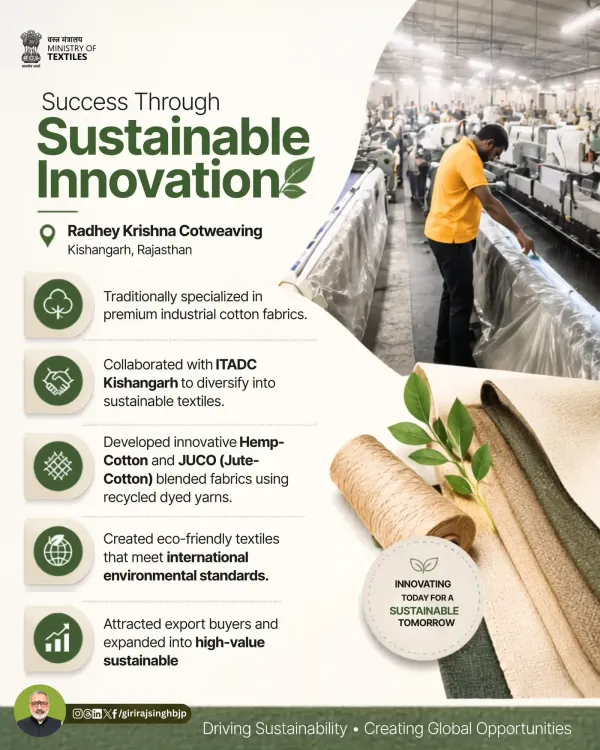
Union Textiles Minister Giriraj Singh praised Radhe Krishna Cotweaving of Kishangarh, Rajasthan, on 21 July 2026 for developing hemp-cotton and JUCO blended fabrics with ITADC support, saying the eco-friendly products meet international standards and open new global market avenues for Indian textiles.
Key Takeaways
Giriraj Singh , Union Textiles Minister, highlighted Radhe Krishna Cotweaving of Kishangarh, Rajasthan on 21 July 2026 .
The firm, in collaboration with ITADC Kishangarh , has developed hemp-cotton and JUCO (jute-cotton) eco-friendly fabric blends.
The Minister stated these fabrics meet international standards and are opening new possibilities in global textile markets.
The initiative aligns with the Make in India programme (launched 2014 ) and the PLI scheme for textiles (announced 2021 ).
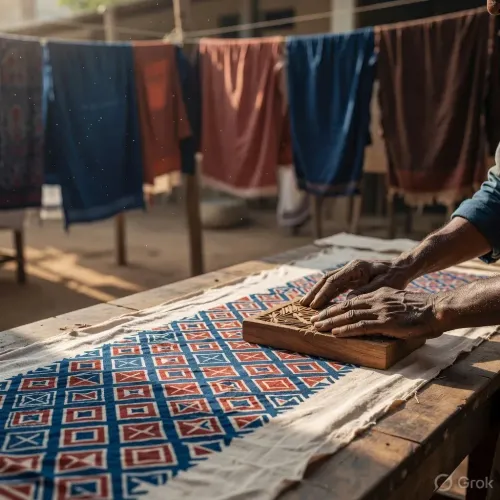
Kishangarh in Rajasthan's Ajmer district is a traditional weaving cluster now being positioned for sustainable export-grade production.
The model could serve as a template for other traditional weaving towns to access premium global eco-textile markets.
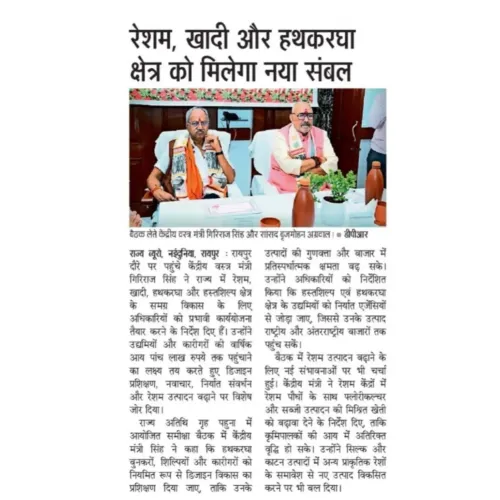
Union Textiles Minister Giriraj Singh on Tuesday, 21 July 2026, spotlighted Radhe Krishna Cotweaving of Kishangarh, Rajasthan, as a model of how traditional weaving clusters can scale globally by embracing sustainable fibres and institutional support.
In a post on X, the Minister wrote: 'राधे कृष्णा कॉटवीविंग ने यह साबित किया है कि नई सोच और सही सहयोग से परंपरागत उद्योग भी नई ऊंचाइयों तक पहुंच सकते हैं' — ('Radhe Krishna Cotweaving has proved that with fresh thinking and the right support, traditional industries can also reach new heights.') He credited collaboration with ITADC Kishangarh for the development of hemp-cotton and JUCO (jute-cotton) blended fabrics that, he said, meet international standards and open new possibilities in global markets for Indian textiles.
Context
Kishangarh, a town in Rajasthan's Ajmer district, hosts a dense cluster of traditional weaving and textile manufacturing units. The town has historically been associated with fabric processing and dyeing, making it a natural candidate for government-backed modernisation efforts. The Minister's post, hashtagged #SustainableTextiles, #Innovation, #MakeInIndia, and #Sustainability, signals official attention to the cluster's export potential.
Policy Backdrop
The post aligns with two major central government programmes. The Make in India initiative, launched in September 2014, has consistently identified textiles as a priority sector for boosting domestic production and export competitiveness. The Production Linked Incentive (PLI) scheme for textiles, announced in 2021, further incentivised investment in man-made fibres and technical textiles to modernise India's manufacturing base.
Blending traditional natural fibres — jute, cotton — with emerging sustainable inputs such as hemp reflects a broader policy direction: meeting rising global buyer demand for eco-certified, traceable fabrics while keeping artisan and MSME units at the centre of the supply chain. India has progressively aligned its textile export promotion frameworks with international environmental standards to capture premium market segments in Europe and North America.
Stakeholders and Impact
The immediate beneficiaries of this model are traditional weavers and MSME textile exporters in the Kishangarh cluster, who gain access to institutional technical assistance and a product range that commands higher value in overseas markets. Hemp-cotton and JUCO blends are increasingly sought after by global fashion and home-textile brands looking to reduce their environmental footprint, giving smaller Indian units a viable entry point into premium export categories.
For the broader sector, a replicable cluster model — where a state-level agency such as ITADC co-develops sustainable product lines with local units — could serve as a template for other traditional weaving towns across Rajasthan, Uttar Pradesh, and West Bengal, where jute and cotton weaving have deep roots.
What's Next
The Ministry of Textiles is expected to pursue further rollout of sustainable fibre clusters as part of anticipated revisions to the National Textile Policy, with upcoming parliamentary sessions likely to provide a platform for formalising such frameworks. Whether the Kishangarh model attracts dedicated funding under existing schemes or a new cluster-development window will be closely watched by industry bodies and state governments alike.
If the hemp-cotton and JUCO product lines from Kishangarh demonstrate sustained export traction, they could strengthen India's positioning in the fast-growing global sustainable textiles market and lend momentum to the government's broader push for eco-compliant 'Made in India' fabrics.
Point of View
Using a single cluster-level success story to build a public narrative around sustainable textiles as the next frontier of India's manufacturing ambitions. By invoking both ITADC's institutional role and global market readiness, the Minister is making the case that eco-fabric development is not a niche experiment but a scalable, export-ready strategy. This fits a pattern of the Textiles Ministry using social media to spotlight MSME-level wins ahead of anticipated National Textile Policy revisions, effectively building political and industry consensus for deeper cluster-development funding. The emphasis on hemp and jute-blended fabrics also positions India to capitalise on tightening European sustainability regulations that are reshaping global sourcing decisions.
NationPress
20 Oct 2026
Frequently Asked Questions
What is JUCO fabric and why is it significant for India?
JUCO is a blended fabric made from jute and cotton fibres. It is significant because it combines India's traditional strength in both jute and cotton cultivation, produces an eco-friendly textile that meets international sustainability standards, and opens premium export market opportunities for Indian MSME weavers.
What did Giriraj Singh say about Kishangarh textiles?
Union Textiles Minister Giriraj Singh stated on 21 July 2026 that Radhe Krishna Cotweaving of Kishangarh, developed with ITADC support, has proved that traditional industries can reach new heights through fresh thinking, by producing hemp-cotton and JUCO fabrics that meet international standards.
What is ITADC and what role does it play in textile development?
ITADC (referenced in the Minister's post as active in Kishangarh, Rajasthan) is an institutional body that has collaborated with local weaving units to develop sustainable, blended eco-fabrics. Its role involves providing technical and developmental support to traditional textile clusters to help them meet global market requirements.
How does the Kishangarh textile model connect to Make in India?
The Kishangarh model directly aligns with the Make in India initiative launched in September 2014, which identifies textiles as a priority sector. By developing internationally compliant eco-fabrics locally and targeting global export markets, the cluster demonstrates the programme's goal of boosting domestic manufacturing competitiveness.
What is India's policy push for sustainable textiles?
India has pursued modernisation of its handloom and powerloom clusters by blending traditional fibres such as jute and cotton with sustainable inputs like hemp to meet rising global eco-textile demand. The Production Linked Incentive scheme for textiles, announced in 2021, and the broader Make in India programme both support this direction, with National Textile Policy revisions expected in coming parliamentary sessions.