White House Launches 'Operation Economic Outcast' Against Iran
Synopsis
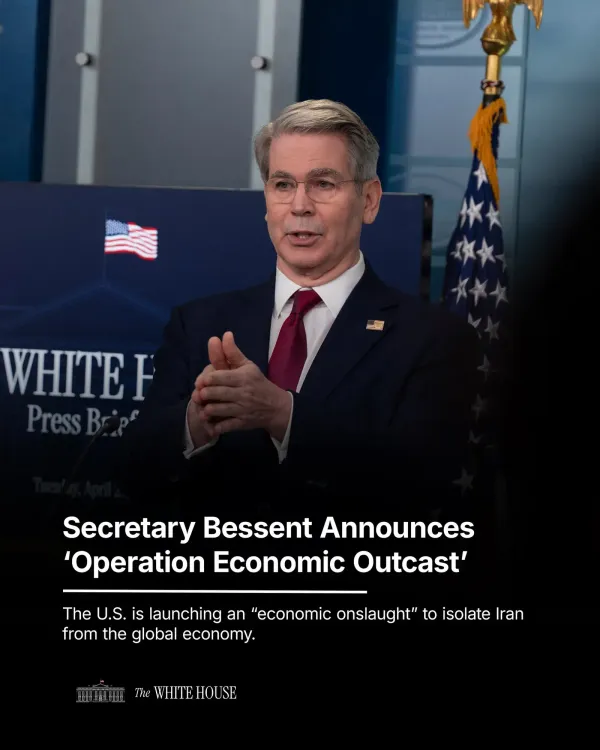
The White House has launched 'Operation Economic Outcast,' declaring it the most sweeping financial campaign ever mounted against Iran. The move frames US-Iran tensions as entering an 'endgame,' building on decades of sanctions escalation that began after the 1979 hostage crisis and intensified after the 2018 JCPOA withdrawal.
Key Takeaways
The White House announced Operation Economic Outcast on 24 August 2026 , calling it an 'unprecedented campaign to sever every remaining economic lifeline' of Iran .
The US framed the move as entering the 'endgame' — signalling a more terminal phase of economic pressure rather than another incremental round of sanctions.
US sanctions on Iran date to the 1979 hostage crisis and were sharply escalated in 2018 when Washington exited the JCPOA nuclear deal.
Key implementation details — Treasury designations, executive orders, and allied coordination — are yet to be publicly detailed.
Global oil importers and Iran 's Asian trading partners face potential secondary-sanctions exposure depending on how the operation is structured.
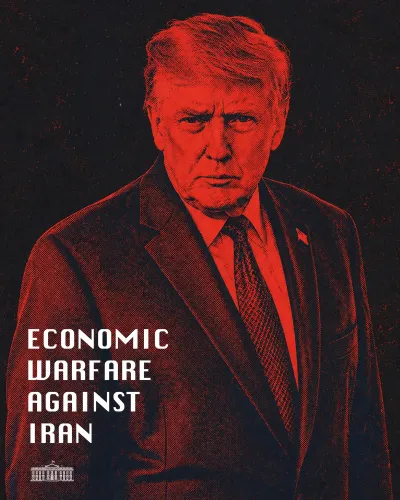
The White House has declared what it calls the most sweeping financial offensive ever mounted against a single nation — Operation Economic Outcast — a campaign designed to sever every remaining economic lifeline sustaining Iran. The announcement, posted on Monday, 24 August 2026, frames the move as America entering an 'endgame' with Tehran.
The White House statement reads: 'Operation Economic Outcast unleashed. An unprecedented campaign to sever every remaining economic lifeline sustaining Iran. America is entering the endgame with the single greatest financial offensive ever mounted against an adversary.'
Decades of Pressure, Now Pushed to the Limit
US economic pressure on Iran is not new — it traces back to the 1979 hostage crisis, when Washington imposed its first sweeping sanctions. Since then, successive administrations have layered on restrictions through executive orders and congressional legislation, targeting everything from Iranian oil exports to its access to the global SWIFT banking network. The sharpest modern escalation came in 2018, when the United States withdrew from the Joint Comprehensive Plan of Action (JCPOA) — the 2015 multilateral nuclear deal — and immediately reimposed maximum-pressure sanctions. Iranian oil exports collapsed. Central bank access was cut. Yet Tehran persisted.Why 'Endgame' Language Signals a Shift in Calculus
What distinguishes the current announcement is its explicit framing: not another round of designations, but a declared terminus. The phrase 'every remaining economic lifeline' suggests the administration believes prior sanctions left residual channels — trade workarounds, third-country intermediaries, barter arrangements — that this operation is now designed to close. Global oil markets and Iran's key trading partners, particularly those in Asia, will be watching closely. Past US maximum-pressure campaigns have tested allied compliance, with some nations continuing to import Iranian crude under waivers or through opaque intermediaries. Whether Operation Economic Outcast is accompanied by secondary sanctions targeting those buyers will be the critical implementation question.What Follows the Announcement
The declaration is the headline; the architecture comes next. Markets and governments will be looking for concrete follow-through: US Treasury designations, executive orders, and — crucially — whether Washington has secured allied coordination before pulling the trigger. Unilateral maximum pressure has historically had limits; multilateral enforcement is what actually moves the needle on Iranian export volumes. The stakes extend beyond Tehran. A genuine 'endgame' scenario — whether it leads to a new nuclear negotiation or a deeper confrontation — will reverberate across global energy markets and reshape the diplomatic calculus for every government that still trades with Iran.Point of View
Suggesting the administration believes it has the leverage — and the will — to move beyond graduated pressure toward a definitive resolution of the Iran file. That logic has been tested before: the 2018 maximum-pressure campaign produced economic pain in Tehran but no capitulation. The critical variable this time is allied enforcement; if key Asian importers comply with secondary sanctions, the pressure is qualitatively different. The announcement also arrives at a moment when any disruption to Iranian oil supply carries outsized global energy-market consequences, raising the geopolitical stakes for every government caught in the middle.
NationPress
9 Oct 2026
Frequently Asked Questions
What is Operation Economic Outcast against Iran?
Operation Economic Outcast is a US campaign announced by the White House on 24 August 2026, described as an unprecedented effort to cut off every remaining economic channel sustaining Iran — framed as the largest financial offensive ever directed at a single adversary.
What is the history of US sanctions on Iran?
US sanctions on Iran began after the 1979 hostage crisis and were significantly expanded in the 1990s and 2010s. The sharpest modern escalation came in 2018 when the United States withdrew from the JCPOA nuclear deal and reimposed maximum-pressure measures targeting Iranian oil exports and central bank access.
What was the JCPOA and why did the US leave it?
The JCPOA, or Joint Comprehensive Plan of Action, was a 2015 multilateral nuclear agreement between Iran and major world powers. The United States withdrew from it in 2018, arguing the deal did not adequately constrain Iran's nuclear ambitions or its regional activities, and immediately reimposed sweeping sanctions.
How will Operation Economic Outcast affect global oil markets?
Iran is a significant oil producer, and any campaign that further restricts its exports could tighten global supply. Asian importers who have continued buying Iranian crude may face secondary sanctions pressure, which would amplify the market impact beyond Iran itself.
What should India watch for in the US-Iran sanctions escalation?
India, which has historically imported Iranian oil and maintains diplomatic ties with Tehran, will need to monitor whether the new US campaign includes secondary sanctions targeting third-country buyers. Past US pressure has forced Indian refiners to curtail Iranian crude purchases, and a renewed 'endgame' push could repeat that dynamic.