US sanctions Iran's Hormuz 'extortion' network, targets shadow fleet
Synopsis
Washington has accused Iran of running a protection racket in one of the world's most critical shipping lanes — charging vessels for cover against risks Tehran itself creates. With over 100 shadow-fleet ships sanctioned this year and Bitcoin now part of Iran's evasion toolkit, the US is escalating a financial war that has direct consequences for global oil flows through the Strait of Hormuz.
Key Takeaways
The US Treasury and State Department sanctioned two Iranian maritime firms — Persian Gulf Marine Insurance Company and HormuzSafe Marine Services Authority — on 29 July for allegedly running an IRGC -backed extortion scheme in the Strait of Hormuz .
Eight companies operating tankers that allegedly shipped Iranian oil to China and the UAE between 2022 and 2026 were also designated.
The named vessels include Well Sail , Lily , Al Salmi , Breeze V , Natsumi , Crystal , Nireta , and Yehope .
HormuzSafe reportedly accepts Bitcoin and digital assets to bypass Western sanctions.
Washington has now sanctioned more than 100 vessels linked to Iran's shadow fleet in 2026 alone.
Treasury Secretary Scott Bessent cited Iran's 'triple-digit inflation' and economic desperation as the driver behind the IRGC's maritime revenue schemes.
The United States has sanctioned two Iranian maritime service firms accused of running an Islamic Revolutionary Guard Corps (IRGC)-backed insurance scheme that Washington says extorts commercial vessels transiting the Strait of Hormuz. The designations, announced on 29 July, also cover eight companies operating tankers that allegedly shipped millions of barrels of Iranian crude oil and petroleum products — primarily to China and the United Arab Emirates.
The Two Entities at the Centre
The State Department identified the sanctioned maritime firms as the Persian Gulf Marine Insurance Company and HormuzSafe Marine Services Authority. According to Washington, both entities charged commercial vessels for protection against risks — including the threat of seizure — that Iran itself allegedly manufactured.
'These entities manufacture risk — including the threat of vessel seizures — and then charge commercial vessels for coverage against dangers created by the regime itself, generating revenue that sustains IRGC operations and Iran's broader campaign of regional destabilisation,' State Department spokesperson Tommy Pigott said.
Treasury added that the Persian Gulf Marine Insurance Company brokers policies approved by the IRGC-backed Persian Gulf Strait Authority, which was itself sanctioned in May for supporting the IRGC. HormuzSafe, meanwhile, advertises insurance, traffic control, security, and emergency services for vessels using the waterway and reportedly accepts Bitcoin and other digital assets to sidestep Western sanctions.
Treasury's Rationale
Treasury Secretary Scott Bessent framed the action as a direct response to Iran's attempts to fund the IRGC through international shipping. 'With its economy in freefall and inflation in the triple digits, the regime is desperate for cash,' Bessent said. 'The United States will not allow Iran to hold global commerce hostage or use international shipping to finance the IRGC's terrorism, aggression, and repression.'
The broader action also covers companies based in China, Hong Kong, and the Marshall Islands. The eight tankers linked to them sail under the flags of Barbados, Mozambique, Vanuatu, and the Marshall Islands, while one vessel carries an unknown flag.
The Shadow Fleet: Named Vessels
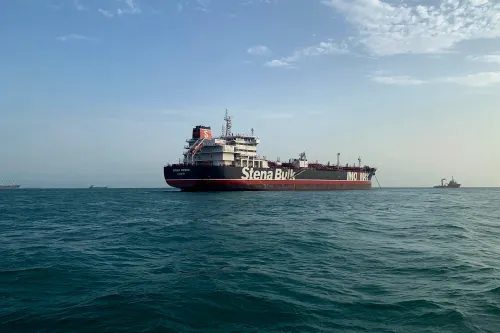
The Treasury Department named the eight vessels as Well Sail, Lily, Al Salmi, Breeze V, Natsumi, Crystal, Nireta, and Yehope. According to Treasury, these ships transported Iranian oil or petroleum products to China and the UAE between 2022 and 2026.
The State Department described the vessels as part of Iran's 'shadow fleet' — a network Tehran uses to circumvent existing sanctions. The latest designations are said to support US Navy enforcement of a blockade on Iranian ports and coastline. Washington has now sanctioned more than 100 vessels connected to Iran's shadow fleet this year alone.
Wider Strategic Context
This comes amid sustained US pressure on Iran's oil revenues, which Washington views as the primary funding source for IRGC operations across the region. The Strait of Hormuz — through which roughly 20% of global oil supply passes — has long been a flashpoint, with Iran periodically seizing or threatening commercial vessels. Critics argue that the use of flag-of-convenience registrations and cryptocurrency payments has made sanctions enforcement increasingly complex. The latest round signals Washington's intent to close those loopholes, though enforcement against China-bound shipments remains a structural challenge.
Point of View
The economic pain of these designations falls unevenly. The Bitcoin payment angle at HormuzSafe is not a footnote; it is a preview of how sanctioned states are systematically migrating financial flows to jurisdictions and instruments the US cannot easily freeze. Whether Treasury's toolkit can keep pace with that evolution is the real question this round of sanctions raises.
NationPress
28 Oct 2026
Frequently Asked Questions
What is the Hormuz extortion scheme the US has sanctioned?
According to the US State Department, the Persian Gulf Marine Insurance Company and HormuzSafe Marine Services Authority charged commercial vessels fees for protection against risks — including ship seizures — that Iran itself allegedly created in the Strait of Hormuz. Washington says the revenue from this scheme funds IRGC operations.
Which vessels were named in the US shadow-fleet sanctions?
The Treasury Department named eight tankers: Well Sail, Lily, Al Salmi, Breeze V, Natsumi, Crystal, Nireta, and Yehope. They sail under the flags of Barbados, Mozambique, Vanuatu, and the Marshall Islands, and are accused of transporting Iranian oil to China and the UAE between 2022 and 2026.
Why did the US sanction HormuzSafe Marine Services Authority?
The Treasury Department accused HormuzSafe of offering insurance, traffic control, and security services for vessels in the Strait of Hormuz while accepting Bitcoin and other digital assets — an arrangement Washington says is designed to circumvent Western sanctions and channel funds to the IRGC.
How many Iran-linked vessels has the US sanctioned in 2026?
According to the State Department, Washington has sanctioned more than 100 vessels connected to Iran's shadow fleet in 2026 alone. The latest round of eight tankers adds to that total and is described as supporting US Navy enforcement of a blockade on Iranian ports and coastline.
What did Treasury Secretary Scott Bessent say about the sanctions?
Bessent said Iran's economy is 'in freefall' with 'inflation in the triple digits,' making the regime 'desperate for cash.' He stated that the US would not allow Iran to 'hold global commerce hostage or use international shipping to finance the IRGC's terrorism, aggression, and repression.'