US Targets Iran's Covert Fleet and Arms Networks with New Sanctions
Synopsis
In a significant move, the United States has placed sanctions on over 30 individuals and entities linked to Iran’s oil and weapons programs. This action aims to curb Iran's illicit oil trade and military capabilities, reflecting a continued commitment to maximum economic pressure.
Key Takeaways
The U.S. has imposed sanctions on over 30 individuals and entities linked to Iran.
The targeted sectors include oil trade and weapons programs.
The sanctions aim to disrupt Iran's illicit activities and military capabilities.
Designated individuals' properties in the U.S. are blocked.
This move reflects ongoing U.S. efforts to apply maximum economic pressure on Iran.
Washington, Feb 25 (NationPress) The United States has enacted sanctions against over 30 individuals, businesses, and vessels associated with Iran's oil commerce and military programs.
The Treasury Department announced on Wednesday that this measure aims at Iran's so-called shadow fleet and the networks involved in supplying ballistic missiles and sophisticated conventional weaponry.
Secretary of the Treasury Scott Bessent stated, “Iran manipulates financial systems to market illegal oil, launder revenues, obtain components for its nuclear and conventional weapons initiatives, and back its terrorist affiliates.”
He emphasized, “Under the robust leadership of President Trump, Treasury will persist in exerting maximum pressure on Iran to undermine the regime's military capabilities and support for terrorism, which it has prioritized over the welfare of the Iranian populace.”
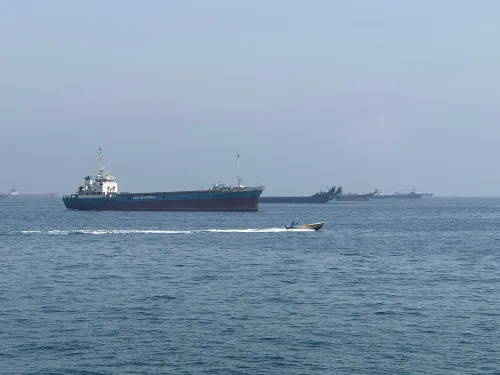
The Treasury designated 12 vessels and their respective owners or operators. These ships reportedly transported Iranian petroleum and petrochemical products valued at hundreds of millions of dollars.
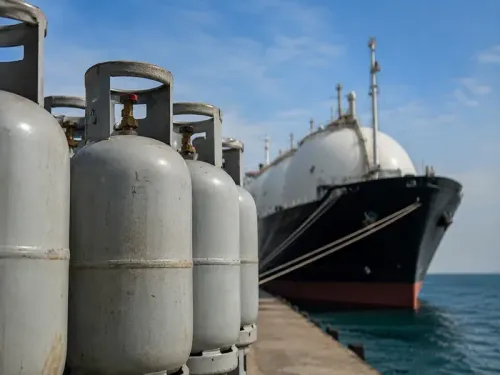
Some vessels delivered liquefied petroleum gas to Bangladesh and Pakistan, while others exported high-sulphur fuel oil, condensate, naphtha, and grey ammonia to East Asia and other areas.
For instance, the Panama-flagged HOOT delivered Iranian LPG to Bangladesh in 2025, and the Vanuatu-flagged LUMA transported LPG to end users in both Bangladesh and Pakistan.
Other identified vessels include OCEAN KOI, NORTH STAR, FELICITA, NIBA, REMIZ, DANUTA I, ALAA, and GAS FATE. According to the Treasury, these ships have moved millions of barrels of Iranian oil and related goods over recent years.
Additionally, several companies located in Panama, the Marshall Islands, the British Virgin Islands, Liberia, and Iran were designated for their operations in Iran’s petroleum and petrochemical industries.
The Treasury indicated that this action is part of its strategy of “maximum economic pressure” on Iran. In 2025, OFAC sanctioned over 875 persons, ships, and aircraft under this initiative.
Furthermore, the department targeted nine individuals and entities in Iran, Türkiye, and the United Arab Emirates, accused of assisting Iran in acquiring chemicals and machinery for missile and UAV programs.
Companies in Türkiye were reportedly acting as financial intermediaries for an Iranian firm that manufactures engines for Shahed-131 and Shahed-136 drones.
Two companies were designated for their support of Marco Klinge, who had previously been sanctioned for aiding in the procurement of sodium perchlorate for Iran’s Parchin Chemical Industries.
Additionally, four individuals in Iran associated with Qods Aviation Industries were sanctioned, with the company being involved in designing and producing Mohajer-series UAVs.
All properties of the designated individuals within the United States are frozen. U.S. entities are generally prohibited from engaging with them unless expressly authorized.
The Treasury cautioned that foreign financial institutions could incur secondary sanctions if they conduct significant transactions with the designated individuals.
Historically, the United States has employed sanctions to exert pressure on Iran regarding its oil exports, missile activities, and nuclear commitments.
This latest move follows the reinstatement of UN sanctions in September 2025 due to Iran's non-compliance with its nuclear obligations.
Point of View
The recent sanctions imposed by the U.S. on Iran's shadow fleet and arms networks represent a strategic move to limit Iran's military capabilities and illicit oil trade. This action underscores a commitment to global security and the importance of accountability in international relations.
NationPress
29 Sept 2026
Frequently Asked Questions
What are the recent U.S. sanctions on Iran about?
The U.S. has sanctioned over 30 individuals and entities involved in Iran's oil trade and weapons programs, aiming to disrupt illicit activities and military capabilities.
What is the purpose of these sanctions?
These sanctions are part of a broader strategy to exert maximum economic pressure on Iran to limit its military ambitions and support for terrorism.
Which vessels were affected by the sanctions?
Twelve vessels have been sanctioned, which are alleged to have transported significant quantities of Iranian petroleum and petrochemical products.
What are the consequences for designated individuals?
All properties of the designated individuals in the U.S. are blocked, and U.S. persons are generally prohibited from dealing with them.
What message does this send to Iran?
This action signals a continued commitment by the U.S. to hold Iran accountable for its actions and to prevent the escalation of military threats.