US sanctions firms, vessels in sweeping Iran oil trade crackdown
Synopsis
Washington has moved against Iran's shadow oil machine at its weakest point — the middlemen. By sanctioning vessel managers, petrochemical traders, and a sprawling multi-jurisdiction shipping network, the US is targeting the logistical layer that keeps Iranian crude flowing despite years of restrictions. The IRGC funding link makes this a national security action as much as an economic one.
Key Takeaways
The US State Department and US Treasury Department jointly announced sweeping sanctions on 29 May targeting Iran's oil and petrochemical trade networks.
Eight vessel management companies and eight vessels were designated as blocked property by the State Department.
Three companies trading Iranian petrochemical products and one of their principal executive officers were also sanctioned.
Sanctioned entities operated from Qatar , Singapore , Hong Kong , the UAE , and the Marshall Islands .
The US Treasury targeted an oil sales network that allegedly moved tens of millions of barrels of Iranian crude, with proceeds reportedly funding the IRGC and Iran's military.
The United States on 29 May imposed sweeping sanctions on multiple companies, individuals, and vessels accused of facilitating transactions involving Iranian-origin oil and petrochemical products, in one of Washington's most expansive moves yet to choke off Tehran's shadow energy economy. The US Department of State and the US Treasury Department jointly announced the measures, targeting networks spanning several countries.
What the Sanctions Cover
The State Department designated eight vessel management companies and identified eight vessels as blocked property, alleging their involvement in the purchase, acquisition, sale, transport, or marketing of Iranian petroleum and petrochemical products. Three additional companies trading Iranian petrochemical products — along with one of their principal executive officers — were also sanctioned. The department stated that such entities provide 'valuable revenue for the Iranian regime.'
The Shadow Shipping Network
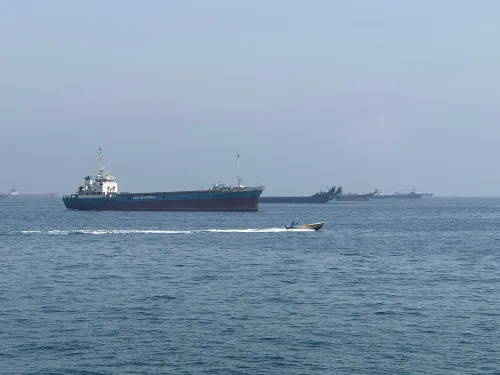
According to the State Department, Iranian oil exports are routed through layered networks of shipping facilitators operating across multiple jurisdictions. Officials accused several vessels of engaging in 'dark activity and other deceptive shipping practices' while transporting Iranian cargoes — a reference to techniques such as disabling transponders and falsifying port-of-origin records to obscure the oil's provenance.
Sanctioned entities were based in Qatar, Singapore, Hong Kong, the United Arab Emirates, and the Marshall Islands — a geographic spread that underscores how Iran's oil sales network has diversified across friendly or loosely regulated jurisdictions to evade prior restrictions.
Treasury Targets IRGC-Linked Oil Sales Network
Simultaneously, the US Treasury Department sanctioned what it described as an oil sales network responsible for facilitating the movement of tens of millions of barrels of Iranian crude. The State Department said the proceeds from this network directly funded the Islamic Revolutionary Guard Corps (IRGC), Iran's Armed Forces General Staff, and other elements of Iran's military establishment — the same apparatus Washington holds responsible for proxy conflicts across the Middle East.
Broader Context and Strategic Intent
The action is part of a broader US policy push to apply maximum economic pressure on Tehran and deny it the revenue needed to fund what American officials describe as destabilising regional activities. This comes amid ongoing diplomatic tensions over Iran's nuclear programme and its support for armed groups in the region. Notably, this is not the first time Washington has targeted Iran's petrochemical sector — earlier rounds of sanctions under both the Trump and Biden administrations similarly sought to cut off oil revenues, with mixed results as Tehran adapted through alternative shipping channels.
The latest round signals a renewed effort to close those loopholes, particularly by going after the intermediary layer of vessel managers and trading companies that provide the logistical infrastructure for sanctions evasion. Whether the measures succeed in meaningfully reducing Iranian oil revenues will depend on how quickly targeted entities are replaced within the network — a pattern that has historically limited the long-term impact of such designations.
Point of View
The UAE, and the Marshall Islands, the US is attempting a more surgical approach. The IRGC funding angle also gives these designations legal and political durability. But Iran has consistently rebuilt these networks faster than they are dismantled, and the multi-jurisdictional spread of the latest targets suggests the evasion architecture is already well-diversified. The real test is whether secondary-sanctions pressure on third-country banks and ports holds — something that has frayed under competing geopolitical interests in past cycles.
NationPress
15 Oct 2026
Frequently Asked Questions
What did the US sanction on 29 May related to Iran's oil trade?
The US sanctioned multiple companies, individuals, and vessels on 29 May for allegedly facilitating the purchase, transport, and sale of Iranian petroleum and petrochemical products. The action was jointly announced by the State Department and the Treasury Department and targeted entities across Qatar, Singapore, Hong Kong, the UAE, and the Marshall Islands.
Why did the US impose these sanctions on Iran?
Washington stated the sanctions are intended to cut off revenue that Tehran uses to fund destabilising regional activities and support its military, including the Islamic Revolutionary Guard Corps (IRGC). The US Treasury specifically identified an oil sales network that allegedly moved tens of millions of barrels of Iranian crude with proceeds flowing to the IRGC and Iran's Armed Forces General Staff.
Which countries were the sanctioned entities based in?
The sanctioned companies and vessel management firms were based in Qatar, Singapore, Hong Kong, the United Arab Emirates, and the Marshall Islands — a spread that reflects how Iran's oil trade network operates across multiple jurisdictions to evade restrictions.
What are 'deceptive shipping practices' referenced in the sanctions?
The State Department accused certain vessels of engaging in 'dark activity and other deceptive shipping practices,' which typically refers to techniques such as disabling automatic identification system (AIS) transponders, falsifying cargo documents, and misrepresenting ports of origin to disguise the Iranian provenance of oil shipments.
How does this compare to previous US sanctions on Iran's oil sector?
Earlier sanctions rounds under previous US administrations also targeted Iran's petroleum and petrochemical revenues, but Iran adapted by building alternative shipping channels through intermediary networks. The latest action specifically targets the intermediary layer — vessel managers and trading companies — in an attempt to close the evasion loopholes that limited the effectiveness of prior designations.