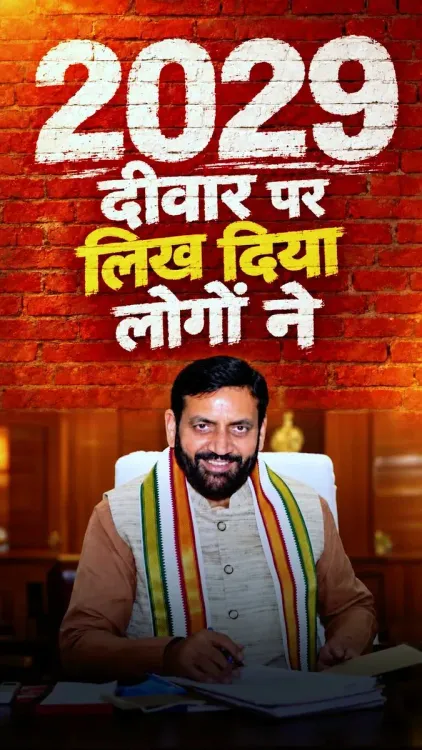
CM Nayab Saini says voters have written 2029 on the wall
Synopsis
Haryana Chief Minister Nayab Singh Saini posted a bold political signal on X, declaring that India's voters have already 'written 2029 on the wall' — an early confidence claim by a senior BJP leader ahead of the next scheduled Lok Sabha elections.
Key Takeaways
Haryana CM Nayab Singh Saini posted on X on 27 October 2026 claiming voters have sealed the 2029 verdict.
The Hindi phrase 'deewar par likh diya' ('written on the wall') signals absolute confidence in the BJP's 2029 electoral prospects.
The 2029 Lok Sabha elections are the next scheduled national general elections after the 2024 polls.
Saini is a key BJP regional leader, making this an early marker in the party's long-cycle national campaign framing.
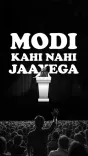
The post included a video, amplifying the message beyond text alone.
A pointed political declaration from Haryana Chief Minister Nayab Singh Saini landed on Tuesday, 27 October 2026 — sharp, brief, and aimed squarely at the horizon of national politics. In a post on X, Saini declared that the people of India have already made up their minds about 2029.
In Hindi, Saini wrote: 'Desh ke logon ne 2029 deewar par likh diya!' — 'The people of the country have written 2029 on the wall!' The phrase invokes the idiom of an outcome so inevitable it has been publicly inscribed — a confident assertion that the BJP's electoral fate in the next general elections is not merely favourable but already decided by the public verdict.
The 2029 Lok Sabha clock starts ticking
The 2029 Lok Sabha elections are the scheduled next national general elections following the 2024 polls. With roughly two and a half years still to go, Saini's post is a deliberate act of early framing — staking out confidence before the campaign season opens. Indian political leaders across parties have increasingly used social media in the mid-cycle window to plant narratives, and a sitting Chief Minister's voice carries particular weight in that exercise.
Saini, who leads the BJP government in Haryana, is among the party's prominent regional faces at a moment when the BJP is consolidating its state-level positions ahead of the national contest. The accompanying video — the post carried no images but included one video — amplifies the message, though its specific content is not independently detailed here.
Reading the confidence behind the claim
The 'writing on the wall' formulation is a deliberate rhetorical escalation. It does not merely predict a win — it presents the outcome as something the public has already authored, positioning the BJP not as a campaigning party but as a confirmed mandate. That framing matters: it is designed to shape perception, signal momentum to party workers, and put the opposition on a back foot in the long run-up to the polls.
Whether the claim survives two more years of state election results and shifting national mood is the real test. But in the calculus of political messaging, Saini has drawn the line early — and loudly.
Point of View
The gauntlet has been thrown early.
NationPress
27 Oct 2026
Frequently Asked Questions
What did Nayab Singh Saini say about 2029?
Haryana Chief Minister Nayab Singh Saini declared on X that the people of India have already 'written 2029 on the wall,' signalling BJP confidence about the outcome of the next Lok Sabha elections scheduled for 2029.
When are the next Lok Sabha elections in India?
The next Lok Sabha general elections are scheduled for 2029 , following the 2024 general elections.
Who is Nayab Singh Saini?
Nayab Singh Saini is the Chief Minister of Haryana and a senior BJP leader, representing the party's government in the state.
What does 'writing on the wall' mean in Saini's post?
The idiom 'written on the wall' refers to an outcome so certain it is publicly proclaimed. Saini used it to assert that Indian voters have already decided in the BJP's favour for the 2029 elections.
Why is BJP talking about 2029 already?
Senior BJP leaders, including state Chief Ministers, use the mid-election-cycle window to frame party narratives, signal momentum to workers, and set the political agenda well ahead of the actual campaign season.