CM Bhupendra Patel at 15th RCNCA Meet: Narmada MoU Approved
Synopsis
The 15th RCNCA meeting in New Delhi, chaired by Union Jal Shakti Minister C. R. Patil, formally approved an MoU among Gujarat, Rajasthan, Madhya Pradesh, and Maharashtra to resolve long-pending Sardar Sarovar Project disputes — with Gujarat CM Bhupendra Patel attending in person on 27 October 2026.
Key Takeaways
The 15th RCNCA meeting was held in New Delhi on 27 October 2026 , chaired by Union Jal Shakti Minister C.
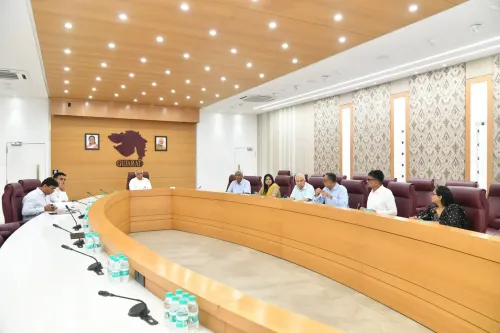
Gujarat CM Bhupendra Patel attended in person; CMs of Rajasthan, Madhya Pradesh, and Maharashtra joined via video conference.
A four-state MoU on long-pending Sardar Sarovar Project issues received formal approval at the meeting.
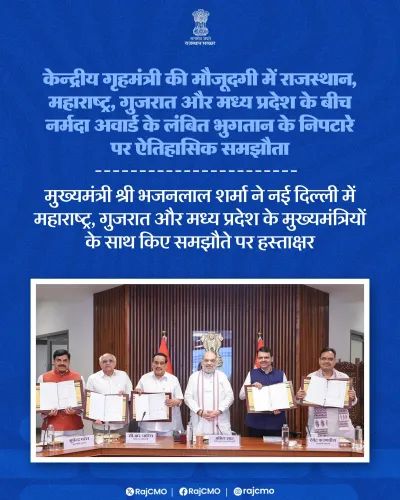
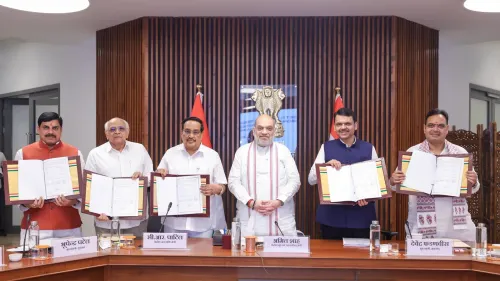
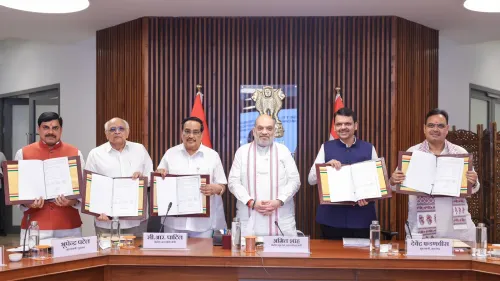
The MoU was earlier facilitated in the presence of Union Home Minister Amit Shah .
The Narmada Water Disputes Tribunal had allocated water shares among the four states in 1979 ; the NCA was constituted in 1980 to oversee implementation.
Remaining unresolved issues will continue to be addressed through dialogue at future NCA and RCNCA sessions.
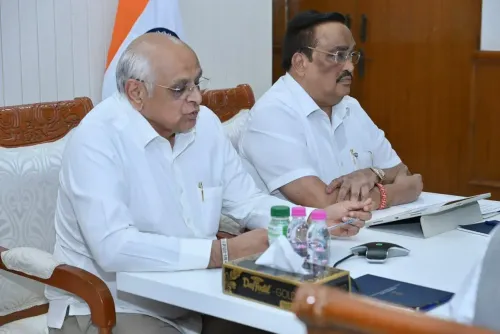
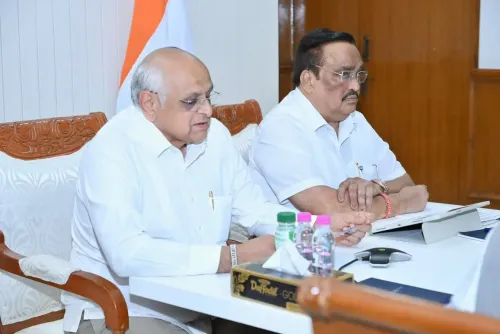
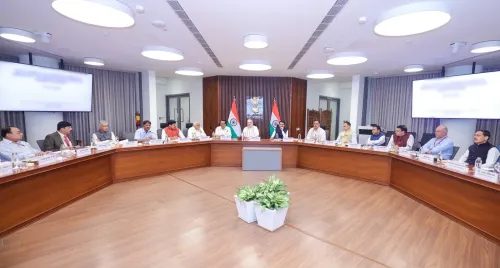
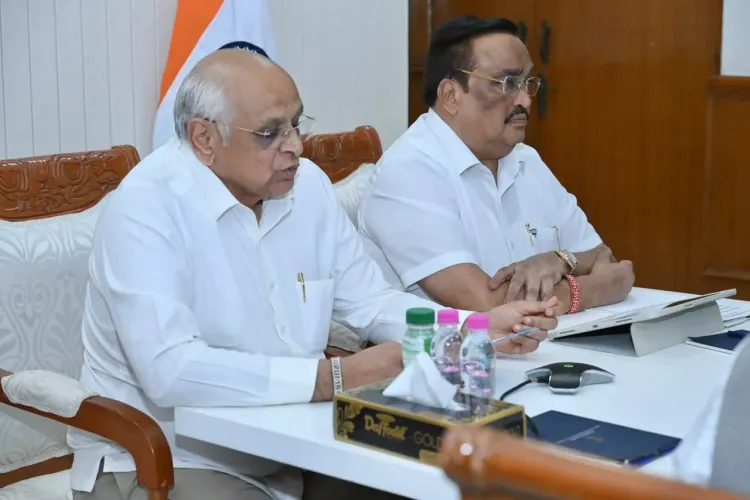
Decades of inter-state friction over the Sardar Sarovar Project moved closer to resolution on Tuesday, 27 October 2026, as the 15th meeting of the Review Committee of the Narmada Control Authority (RCNCA) formally approved a landmark MoU among Gujarat, Rajasthan, Madhya Pradesh, and Maharashtra. Gujarat Chief Minister Bhupendra Patel attended the meeting in New Delhi, chaired by Union Jal Shakti Minister C. R. Patil, while the chief ministers of the three other riparian states joined via video conference.
What the 15th RCNCA meeting actually decided
The centrepiece of the meeting was the formal approval of an MoU that addresses long-pending issues tied to the Sardar Sarovar Project — issues that have simmered since the Narmada Water Disputes Tribunal delivered its final award in 1979 and the Narmada Control Authority (NCA) was constituted in 1980 to oversee implementation. CM Patel noted that the MoU had already been facilitated in the presence of Union Home and Cooperation Minister Amit Shah, and that today's RCNCA session gave it formal institutional endorsement.
Beyond the MoU, the meeting saw 'constructive discussion' on several Narmada-related subjects, with mutual understanding reached among all four states. Remaining issues, CM Patel indicated, would continue to be addressed through dialogue and cooperation — not litigation.
Why the Sardar Sarovar disputes ran so long
The Sardar Sarovar Dam on the Narmada river is one of India's largest multipurpose infrastructure projects, built to deliver irrigation water, drinking water, and hydropower to communities across four states — with Gujarat as its principal beneficiary. The 1979 Tribunal award allocated specific water shares to each state, but translating those allocations into on-ground operations produced decades of disputes: over submergence compensation, backwater effects, canal networks, and power sharing. The NCA forum became the primary arena for managing these tensions — and successive meetings have attempted, with varying success, to convert the Tribunal's mandate into working inter-state consensus.
'Cooperative federalism' lands on the ground
CM Patel framed the outcome explicitly through the language of Prime Minister Narendra Modi's 'cooperative federalism' doctrine — the idea that Centre-state and inter-state relationships should be built on mutual respect rather than competitive jostling. 'Sahkari Sanghavad ka mantra aaj dharatal par sakar ho raha hai' (The mantra of cooperative federalism is taking shape on the ground today), he wrote, describing the MoU as proof that even a sensitive and technically complex domain like water-sharing can yield unanimous solutions when political will aligns across governments.
The presence of four chief ministers — whether in person or on screen — alongside the Union Jal Shakti minister signals that this was not a routine procedural meeting. It was a calibrated show of political consensus on an issue that has, at various points, provoked protests, court petitions, and inter-state standoffs.
What farmers in four states are watching next
The immediate beneficiaries of any durable Narmada settlement are the millions of farmers and rural households across Gujarat, Rajasthan, Madhya Pradesh, and Maharashtra who depend on the river's waters for irrigation and drinking supply. The approved MoU clears a path — but the harder work of implementation now begins. Future NCA and RCNCA sessions will track whether canal networks get commissioned on schedule, whether water releases match agreed allocations, and whether the remaining unresolved subjects find the same consensual resolution this meeting demonstrated.
If the spirit of today's agreement holds, Sardar Sarovar's long-promised benefits could finally reach the fields and taps it was designed to serve. That is the benchmark against which this MoU will ultimately be judged.
Point of View
Protests, and political standoffs. By anchoring the outcome in Prime Minister Modi's 'cooperative federalism' framing, the BJP governments in all four states and at the Centre are projecting inter-state water management as a governance success story ahead of assembly cycles in riparian states. The real test is implementation: past NCA agreements have stalled at the canal-network and compensation stage, and farmers in Rajasthan and Madhya Pradesh have historically received less than their allocated shares. Whether this MoU breaks that pattern will determine its lasting significance.
NationPress
27 Oct 2026
Frequently Asked Questions
What is the RCNCA and why does it matter for Narmada?
The Review Committee of the Narmada Control Authority (RCNCA) is a high-level inter-state forum that oversees implementation of the 1979 Narmada Water Disputes Tribunal award and resolves disputes among Gujarat, Rajasthan, Madhya Pradesh, and Maharashtra over the Sardar Sarovar Project and related infrastructure.
What was decided at the 15th RCNCA meeting on 27 October 2026?
The meeting formally approved a multi-state MoU aimed at resolving long-pending issues related to the Sardar Sarovar Project, and held constructive discussions on other Narmada-related subjects with consensus reached among all four riparian states.
What is the Sardar Sarovar Project?
The Sardar Sarovar Dam is a major multipurpose project on the Narmada river in Gujarat, designed to provide irrigation water, drinking water, and hydropower to millions of people across Gujarat, Rajasthan, Madhya Pradesh, and Maharashtra.
Who attended the 15th RCNCA meeting?
Union Jal Shakti Minister C. R. Patil chaired the meeting in New Delhi. Gujarat CM Bhupendra Patel attended in person, while the chief ministers of Rajasthan, Madhya Pradesh, and Maharashtra participated via video conference.
What role did Amit Shah play in the Narmada MoU?
Union Home and Cooperation Minister Amit Shah presided over the signing of the inter-state MoU at an earlier occasion; the 15th RCNCA meeting gave that MoU formal institutional approval among the four riparian states.