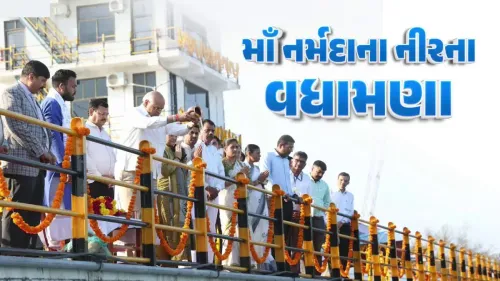
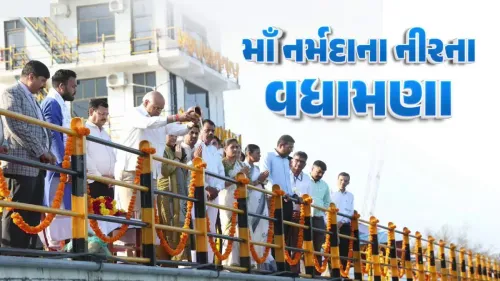
CM Bhupendra Patel Orders Narmada Canal Release from June 11
Synopsis
Chief Minister Bhupendra Patel has advanced the Narmada Yojana canal water release to 11 June 2026, following a high-level meeting with scheme officials. The decision prioritises irrigation access for Gujarat farmers ahead of the kharif sowing season, drawing on the state's 9 MAF Narmada water entitlement.
Key Takeaways
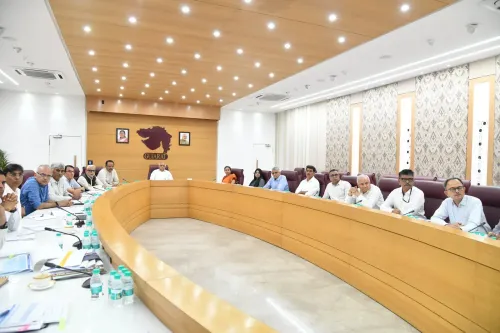
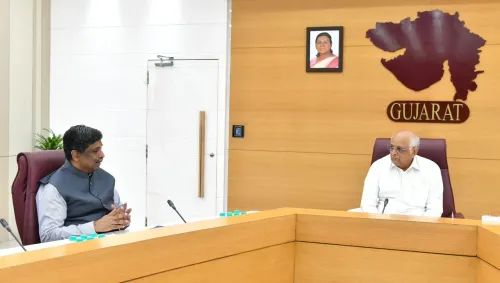
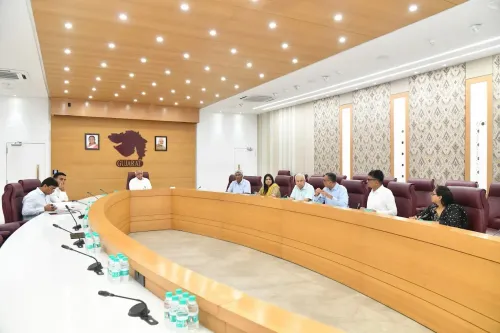
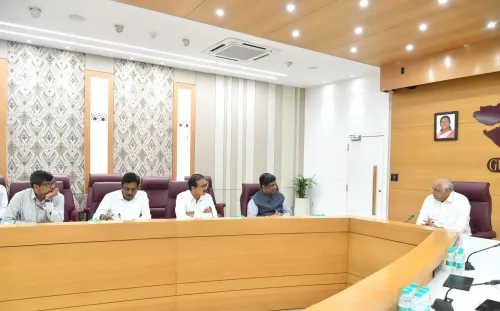
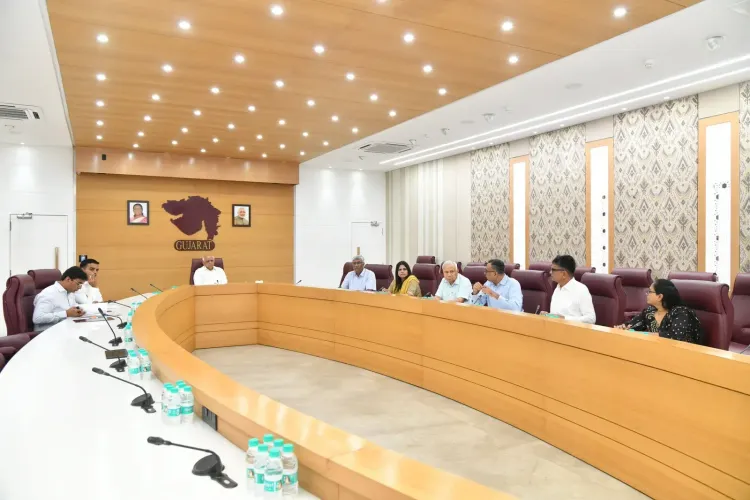
Chief Minister Bhupendra Patel chaired a high-level meeting with senior Narmada Yojana officials on 9 June 2026 .
Irrigation water will be released through Narmada canals starting Thursday, 11 June 2026 , ahead of the originally planned date.
The decision was taken in the interest of Gujarat farmers to meet crop irrigation requirements during the kharif sowing season.
Gujarat holds an entitlement of 9 MAF of Narmada water for irrigation under the tribunal award.
The Sardar Sarovar Project canal network serves drought-prone regions including Saurashtra , North Gujarat , and Kutch .
Actual release volumes and district-level prioritisation will be determined by the state irrigation department based on monsoon progress.
The Chief Minister's Office of Gujarat announced on Tuesday, 9 June 2026 that Chief Minister Bhupendra Patel has decided to release irrigation water through the Narmada Yojana canal network starting Thursday, 11 June 2026 — ahead of the originally scheduled date — to meet the irrigation needs of farmers across the state.
The decision was taken at a high-level meeting chaired by Chief Minister Patel with senior officials of the Narmada Yojana. The Gujarati-language post from the CMO stated that the move was made 'ખેડૂતોના વિશાળ હિતમાં' (in the broad interest of farmers), taking into account crop irrigation requirements ahead of the kharif sowing season.
Context
The Narmada Yojana, anchored by the Sardar Sarovar Project, is Gujarat's most significant irrigation infrastructure. The canal network was designed to carry water to the state's drought-prone semi-arid belts, including Saurashtra, North Gujarat, and Kutch. The Sardar Sarovar Dam reached its full design height and reservoir level in 2017, enabling year-round canal operations at scale.
Gujarat's entitlement under the Narmada Water Disputes Tribunal award — originally issued in 1979 and amended in 2017 — stands at 9 MAF (million acre-feet) of water for irrigation use, making it the largest single beneficiary state in the project's framework.
Policy Backdrop
Early June canal releases ahead of the monsoon have been a recurring feature of Gujarat's irrigation management strategy. Successive state governments have used pre-monsoon Narmada releases as a risk-mitigation tool against rainfall variability, ensuring that farmers can begin sowing without waiting for adequate rains.
The decision to advance the release date this year reflects the same logic: by opening canals on 11 June, the state aims to give farmers in the command area access to assured water at the critical pre-sowing stage, reducing dependence on an uncertain monsoon onset. The move aligns with long-term state irrigation expansion targets that gained momentum after interstate water-sharing disputes were largely settled through tribunal processes.
Stakeholders and Impact
The primary beneficiaries are cultivators within the Narmada canal command area — a large and geographically dispersed farming population spread across multiple districts of Gujarat. For farmers in semi-arid zones, timely canal water can determine whether a kharif crop is planted at all in a given season.
The high-level nature of the meeting — involving senior Narmada Yojana officials directly with the Chief Minister — signals that the state administration is treating this as a priority agricultural decision rather than a routine operational one. The CMO's public communication of the decision through official social media channels further underscores its political salience ahead of the sowing season.
What's Next
The critical marker will be the actual commencement of canal releases on 11 June 2026. The state irrigation department is expected to monitor water flow and adjust volumes based on evolving monsoon progress. Any revision to the schedule — upward or downward — would likely depend on rainfall assessments in the coming days.
If the monsoon arrives on schedule or early, the canal release could complement rather than substitute natural rainfall, giving Gujarat's farming sector a double buffer during the crucial early-kharif window. The state's ability to coordinate canal operations with real-time weather data will be closely watched by agricultural stakeholders across the region.
Point of View
Where the gap between timely and delayed sowing can affect an entire kharif season. The high-level meeting format and CMO-level public communication suggest the government is keen to project proactive farmer-welfare credentials ahead of the monsoon. This fits a broader pattern of Gujarat administrations using Narmada water management as both a policy instrument and a visible political signal to the farming constituency. The move also reflects the maturation of the Sardar Sarovar infrastructure: the state now has the operational capacity to make such advance decisions with confidence, a contrast to the decades of litigation and uncertainty that preceded full dam commissioning.
NationPress
23 Oct 2026
Frequently Asked Questions
When will Narmada canal water be released for irrigation in Gujarat in 2026?
Chief Minister Bhupendra Patel has ordered the release of Narmada Yojana canal water for irrigation starting Thursday, 11 June 2026 , ahead of the originally scheduled date.
Why did CM Bhupendra Patel advance the Narmada canal water release?
The decision was taken at a high-level meeting to address the irrigation water needs of Gujarat farmers for their crops, particularly ahead of the kharif sowing season.
What is the Narmada Yojana and how does it help Gujarat farmers?
The Narmada Yojana , centred on the Sardar Sarovar Project , is an interstate multipurpose river project whose canal network delivers irrigation water to drought-prone areas of Gujarat including Saurashtra, North Gujarat, and Kutch.
How much Narmada water is Gujarat entitled to use?
Under the Narmada Water Disputes Tribunal award, Gujarat is entitled to 9 MAF (million acre-feet) of water for irrigation purposes.
Who attended the high-level meeting on Narmada canal releases?
Chief Minister Bhupendra Patel chaired the meeting, which was attended by senior officials of the Narmada Yojana , according to the official CMO Gujarat post.