Puri at ETM-2026: India's US LPG Deal a Lifeline in Energy Crisis
Synopsis
At ETM-2026 in Goa, Petroleum Minister Hardeep Singh Puri credited a January 2026 US LPG sourcing deal covering 10% of India's needs as pivotal during the recent global energy crisis, while outlining expanded partnerships with Algeria, Canada, East Asia and Qatar.
Key Takeaways
India signed a deal in January 2026 to source 10% of its LPG requirements from the United States , which Puri described as 'crucial' during the recent global energy crisis.
The announcement came at the 29th Energy Technology & Innovation Meet (ETM-2026) held in Goa on October 27, 2026 .
India is actively expanding energy ties with Algeria , Canada , East Asian nations and Qatar to broaden its supplier base.
The multi-vector diversification strategy intensified after the 2022 global supply disruptions and is anchored by the India-US Strategic Energy Partnership launched in 2018 .
India imports over 85% of its crude oil, making supplier diversification a core element of national energy security planning.
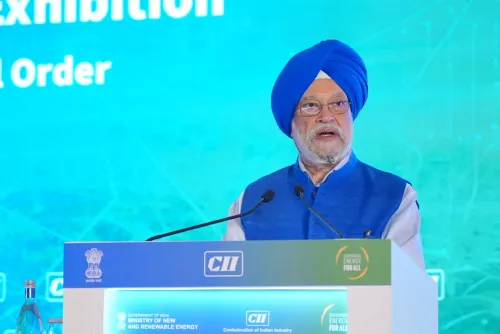
When a global energy crisis hits, the deals signed months earlier either save you or haunt you. At the 29th Energy Technology & Innovation Meet (ETM-2026) in Goa on Tuesday, October 27, 2026, Union Petroleum Minister Hardeep Singh Puri made clear which category India falls into — pointing to a January 2026 agreement to source 10% of India's LPG requirements from the United States as a decision that has already proved its worth.
The January bet that paid off
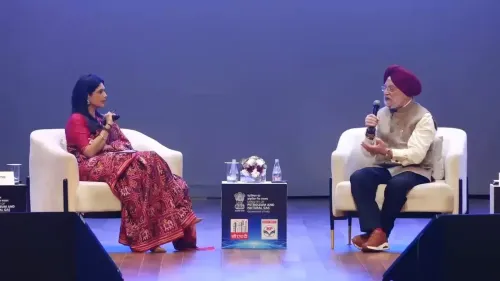
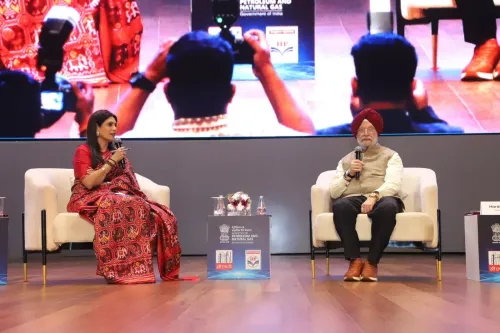
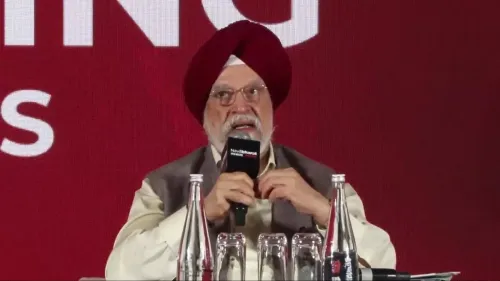
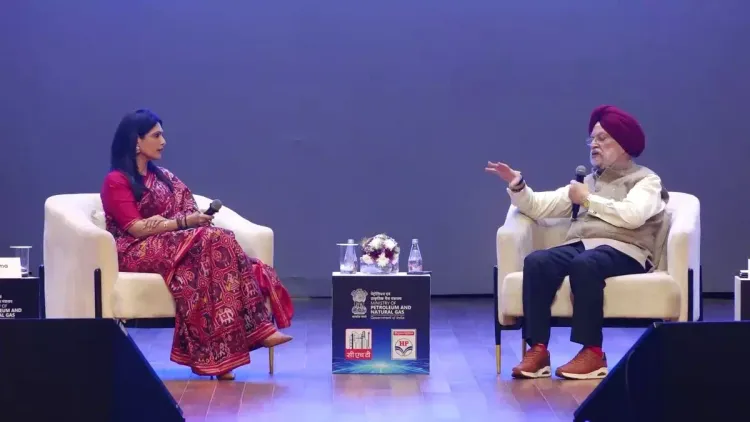
Puri, speaking at a fireside chat at the Goa event, described the US LPG sourcing deal as 'proactive' — and the timing matters. Struck ahead of the recent global energy disruption, the agreement locked in a meaningful share of India's household cooking fuel supply from a stable, high-capacity exporter. For the roughly 300 million LPG subscriber households that depend on subsidised cylinders, supply continuity is not a policy abstraction — it is a kitchen reality.
The move draws from a playbook India has been refining since the 2022 Russia-Ukraine war rattled global hydrocarbon markets. That crisis accelerated a strategic push to diversify away from any single geographic source, with the India-US Strategic Energy Partnership — launched in 2018 — providing the institutional scaffolding for expanded crude and LNG trade. The LPG deal is the latest brick in that architecture.
Algeria, Canada, Qatar and the multi-vector map
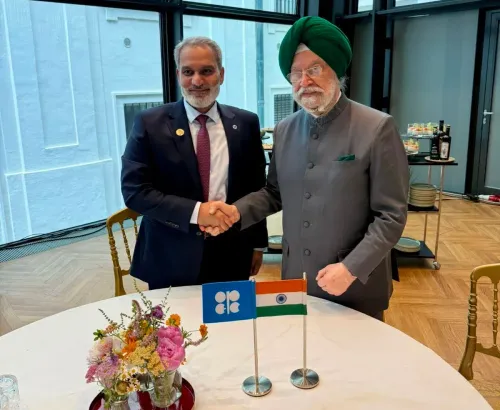
The minister did not stop at the US. Puri named Algeria, Canada, East Asian nations and Qatar as active fronts in India's effort to thicken its supplier web. Qatar is a long-standing LNG anchor for India, underpinned by multiple long-term contracts. Algeria represents a growing North African vector, while Canada's potential as an LNG exporter has attracted Indian interest as Ottawa builds out its Pacific export capacity.
The pattern is deliberate: no single corridor should carry too much weight. After 2022 demonstrated how quickly a regional conflict can ripple into Indian fuel prices and availability, the diversification strategy shifted from aspiration to operational imperative. ETM-2026 provided a public platform to signal that the strategy is not just holding — it is expanding.
What 'energy security' means at scale
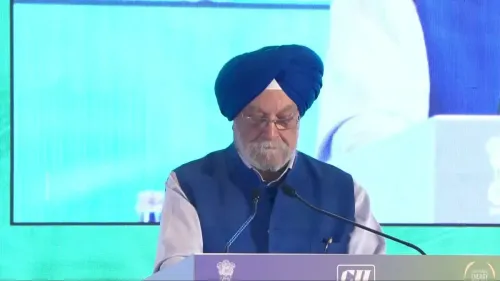
Puri framed the moment in terms that went beyond quarterly supply numbers. 'For Bharat, energy security is not just about meeting today's needs, but securing tomorrow's future,' he said at the event, invoking Prime Minister Narendra Modi's leadership as the directional force behind the partnerships. The language tracks with a broader government narrative: that India's energy choices are sovereign, long-horizon decisions — not reactive scrambles driven by spot-market pressures.
India is the world's third-largest energy consumer, and its import dependency for crude oil sits above 85%. At that scale, even a marginal improvement in supplier diversity — an extra corridor here, a new MoU there — translates into billions of dollars in price negotiating power and millions of households insulated from supply shocks.
The next test will be whether the agreements with Canada and Algeria — still at earlier stages — mature into firm, volume-linked contracts. If they do, India's multi-vector energy map will have meaningfully widened by the time the next global disruption arrives. Puri's message from Goa: India will not be caught flat-footed again.
Point of View
And the government wants that framing locked in public memory before the next price cycle. The US LPG deal — struck in January 2026 and now validated by a live crisis — gives the Ministry a concrete proof-point to defend the broader diversification narrative. Naming Algeria and Canada alongside established partners like Qatar also signals that India is actively courting second-tier suppliers to reduce bargaining concentration among its primary sources. Watched over the next twelve months, the real test is whether these newer corridors harden into firm, volume-backed contracts — or remain diplomatic atmospherics.
NationPress
27 Oct 2026
Frequently Asked Questions
What did India agree with the US about LPG in January 2026?
India signed an agreement in January 2026 to source 10% of its LPG requirements from the United States. Petroleum Minister Hardeep Singh Puri stated at ETM-2026 that this deal proved 'crucial' in shielding India during the recent global energy crisis.
What is ETM-2026 and where was it held?
ETM-2026 refers to the 29th Energy Technology & Innovation Meet , held in Goa in October 2026. It is a platform for discussions on energy technology, supply resilience and India's strategic energy partnerships.
Which countries is India strengthening energy ties with in 2026?
According to Minister Puri, India is deepening energy partnerships with Algeria , Canada , East Asian nations and Qatar , in addition to the United States, as part of its multi-vector diversification strategy.
Why is India diversifying its energy sources?
India imports over 85% of its crude oil, making it vulnerable to global supply shocks. After the disruptions caused by the 2022 Russia-Ukraine war , India accelerated efforts to spread its imports across multiple geographies to protect domestic pricing and fuel availability.
What is the India-US Strategic Energy Partnership?
The India-US Strategic Energy Partnership was launched in 2018 and serves as the institutional framework for expanded hydrocarbon trade and energy technology cooperation between the two countries, underpinning agreements like the 2026 LPG sourcing deal.