US now India's largest LPG supplier with 67% import share: Hardeep Puri
Synopsis
India set out to source just 10% of its LPG from the US — it now buys 67%. Petroleum Minister Hardeep Puri's disclosure on 7 August reveals a supply chain overhaul that few anticipated at this scale, reshaping India's energy import map and raising pointed questions about how dependent the world's third-largest oil importer has become on a single Western supplier.
Key Takeaways
The United States now accounts for 67 per cent of India's total LPG imports , making it India's largest LPG supplier.
The original government target was to source only 10 per cent of LPG requirements from the US.
Petroleum Minister Hardeep Singh Puri confirmed the figures on 7 August .
The shift was described as an independent strategic decision, not a response to Strait of Hormuz disruption fears.
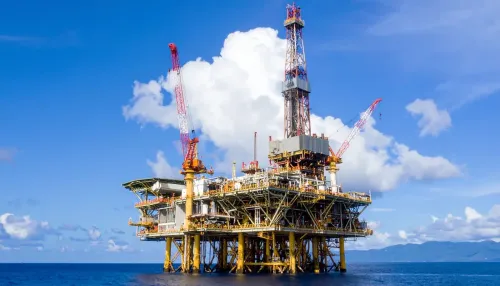
The government has also launched the Samudra Manthan deep-sea hydrocarbon exploration mission with an outlay of ₹84,000 crore .
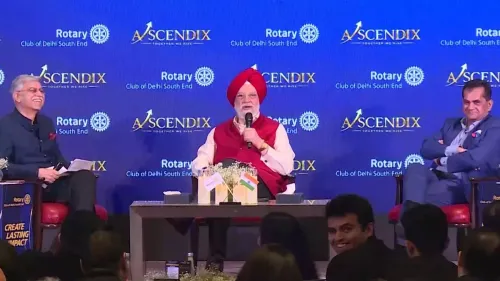
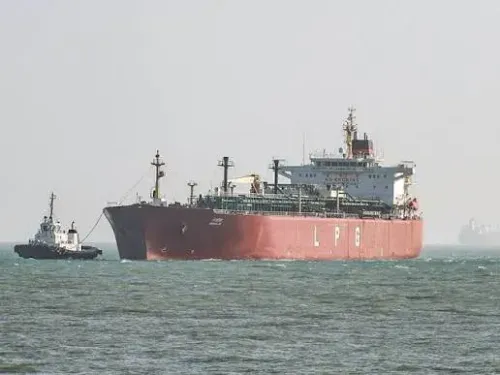
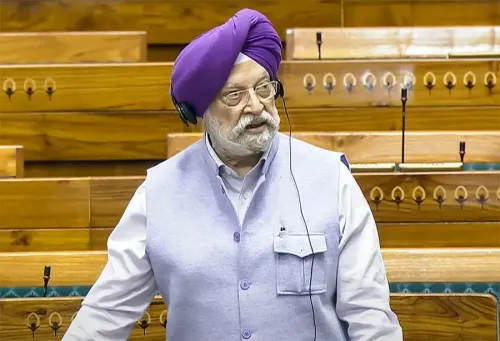
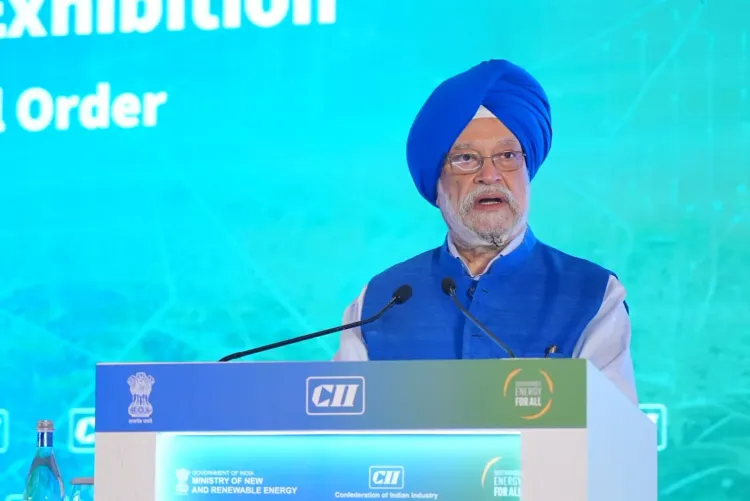
The United States has overtaken all other nations to become India's largest supplier of liquefied petroleum gas (LPG), with its share of India's total LPG imports surging to 67 per cent, Union Minister for Petroleum and Natural Gas Hardeep Singh Puri announced on Friday, 7 August. The dramatic shift marks a significant reorientation of India's energy sourcing strategy away from traditional, geographically closer suppliers.
How the Shift Happened
Puri noted that the government had initially set a modest target of sourcing around 10 per cent of India's LPG requirements from the US — a decision he said was taken independently, and not in response to concerns over potential disruptions along the Strait of Hormuz, the critical global energy shipping chokepoint.
The move had drawn questions at the time, given that India already had established supply arrangements with countries in far closer geographic proximity. However, the import composition has since undergone a dramatic reversal. 'Today I'm happy to inform you that the United States accounts for something like 67 per cent of our LPG imports,' Puri said.
Samudra Manthan: The Deeper-Sea Push
Beyond the LPG sourcing shift, Puri also highlighted a broader domestic energy ambition. He said the government, under Prime Minister Narendra Modi, had launched the 'Samudra Manthan' mission — a ₹84,000 crore initiative aimed at accelerating deep-sea hydrocarbon exploration.
'Through the ₹84,000 crore Samudra Manthan mission, hydrocarbon exploration in the deep sea will be given unprecedented momentum. This is not just an investment, but the greatest proof of faith in India's energy future,' Puri stated. He described the mission as a 'transformative chapter' that would place India more prominently on the global energy map.
India's Broader Energy Diversification
Puri framed both developments within a wider strategic pivot. He argued that India had moved well beyond viewing energy security solely through the lens of hydrocarbons. According to the minister, the country has been simultaneously diversifying energy sources, building resilient supply infrastructure, forging 'trusted partnerships,' developing strategic reserves, and embracing alternative fuels.
This comes amid sustained global energy volatility, with Middle East supply routes under recurring geopolitical pressure. Notably, the Strait of Hormuz — through which a significant share of the world's LPG flows — has faced periodic tension, making supply diversification a strategic imperative for large importers like India.
What This Means for India's Energy Security
India is one of the world's largest consumers of LPG, with demand driven substantially by the Pradhan Mantri Ujjwala Yojana scheme, which brought cooking gas to tens of millions of low-income households. Securing stable, diversified supply lines is therefore both an economic and a social policy priority.
The scale of the US share — jumping from a targeted 10 per cent to an actual 67 per cent — suggests the shift was driven as much by competitive pricing and supply availability as by strategic planning. Whether India will seek to rebalance this concentration or consolidate it further remains to be seen, as the government's stated goal is resilience through diversification rather than dependence on any single source.
Point of View
Just with a different flag on the tanker. The minister's framing of this as strategic energy resilience sits uneasily with the core logic of supply security, which demands spreading exposure, not shifting it. India's stated goal is to reduce dependence on any single corridor; arriving at a two-thirds dependency on one supplier — however trusted — warrants scrutiny. The Samudra Manthan mission is the right long-term answer, but ₹84,000 crore in deep-sea exploration will not yield barrels for years. In the interim, the US LPG concentration is a vulnerability dressed as a victory.
NationPress
22 Sept 2026
Frequently Asked Questions
Why has the US become India's largest LPG supplier?
The US emerged as India's largest LPG supplier after India began a strategic shift in its import sourcing, initially targeting 10 per cent of requirements from the US. The share has since surged to 67 per cent, according to Petroleum Minister Hardeep Singh Puri, driven by supply availability and India's energy diversification strategy.
What is the Samudra Manthan mission announced by the Indian government?
Samudra Manthan is a ₹84,000 crore government initiative focused on accelerating deep-sea hydrocarbon exploration in India. It is aimed at boosting domestic energy production and reducing long-term import dependence, and was described by Minister Puri as a landmark step toward energy self-reliance.
Was India's shift to US LPG driven by Strait of Hormuz concerns?
No. Minister Hardeep Singh Puri explicitly stated that the decision to source LPG from the US was taken independently and was not driven by fears of disruption along the Strait of Hormuz, a critical global energy shipping route through which much of the world's LPG transits.
How significant is LPG supply security for India?
LPG supply security is a major social and economic priority for India, given the scale of the Pradhan Mantri Ujjwala Yojana scheme, which has brought cooking gas to tens of millions of low-income households. Stable and diversified supply lines are essential to sustaining that coverage.
What share of LPG did India originally plan to import from the US?
India had initially planned to source around 10 per cent of its LPG requirements from the United States. The actual share has since risen sharply to 67 per cent, far exceeding the original target, as confirmed by Minister Puri on 7 August.